
About Hanna Kulenty
Born 1961. Hanna Kulenty is a Dutch and Polish composer.
Hanna Kulenty (born March 18, 1961, in Białystok) is a Polish composer of contemporary classical music. Since 1992, she has worked and lived both in Warsaw (Poland) and in Arnhem (Netherlands).
Musical education After studying piano at the Karol Szymanowski School of Music in Warsaw from 1976 to 1980, Kulenty studied composition with Włodzimierz Kotoński at the Fryderyk Chopin Music Academy in Warsaw. From 1986 to 1988 she studied composition with Louis Andriessen at the Royal Conservatory in The Hague. In 1984 and 1988 she participated in Darmstadt International Summer Courses for New Music. In 1983 and 1990 she was participant in the International Courses for Young Composers in Kazimierz, organised by the Polish section of the ISCM — where she attended lectures with Iannis Xenakis, Witold Lutosławski, Thomas Kessler and François-Bernard Mâche.
Main activities From 1989 Kulenty worked as a free-lance composer, and received numerous commissions and scholarships. She has composed 2 operas and 12 works for large orchestra. She has written numerous works for solo instruments and chamber groups. Since 2007 she is also involved in writing music for television plays and for film.
In 1990 she was for one-year guest composer at the German Academic Exchange Service (DAAD) in Berlin. In 1998 she was invited as guest lecturer at three universities around Los Angeles. In 1999/2000 she was composer-in-residence with Het Gelders Orkest in the Netherlands. In November 2000 a portrait concert was organized by Deutschlandfunk in Cologne (released on the CD ‘Arcs & Circles’). She lectured at the Other Minds 10 festival (San Francisco) and at Soundstreams Canada 2005 in Toronto. In 2007 she was guest professor at the ESMUC, Music Academy in Barcelona.
She was a jury member during Munich Biennale in 1995, during the Gaudeamus International Composers Award 2002 in Amsterdam, during the Kazimierz Serocki 9th International Composers’ Competition in Warsaw (2003), during the International New Chamber Opera Competition "Orpheus-Luciano Berio 2003–2004" in Spoleto, and in 2005 and 2007 during the International Competition of Contemporary Chamber Music in Cracow.
Style and technique of composition "Hanna Kulenty’s music is permeated with images of organic transformation and growth. The intuitive shaping of evolving sound patterns, extended phrases and richly detailed textures in these works results from Kulenty’s original compositional technique which she calls ‘the polyphony of arches’ or ‘arcs’. The works include many layers of simultaneous ‘arches’ which may begin at different points of their trajectories and proceed at different speeds.
Her compositional style has evolved during the years since her dazzling orchestral debut, Ad Unum, a powerful, dissonant, dramatic and well-crafted study of convergence towards musical unity. Since that work, Kulenty's preferred medium has been the symphony orchestra.
Through the 1990s the composer developed an original version of ‘post-minimalist’ style, characterized by a reduction of the number and density of musical layers, in comparison with the earlier, saturated and dramatic style of the ‘polyphony of arches’. She called this style her version of the ‘European trance music’. Kulenty seldom used sudden textural cuts and shifts in this period. Instead, she often structured her compositions as single, powerful arches, slowly evolving in time, gradually increasing their gripping intensity of emotion.
Her penchant for musical drama and intensity of emotion found a suitable expression in her music for stage. The ‘intuitive constructivism’ coupled with a heightened emotional intensity of her music is well-suited for highlighting dramatic situations. Kulenty's mastery of time and her ability to structure her musical material into layers moving inexorably, inevitably towards powerful climaxes brings a symphonic dimension to her other theatrical compositions.
Kulenty's latest compositional technique of the ‘polyphony of time dimensions’ emphasizes the circularity of time and the simultaneity of time-events occurring on different temporal planes."
Awards In 1985 Kulenty was awarded the second prize of the European Young Composers’ Competition organized in Amsterdam with Ad Unum for orchestra (1985).
In 1987 she was awarded the Stanislaw Wyspianski Award (2nd class).
In the same year she was awarded the second prize by the Young Composers’ Competition of the Polish Composers' Union with Ride for 6 percussionists (1987).
She was also awarded prizes in the Composers’ Competition from the Warsaw branche of the Polish Composers’ Union: Quinto for 2 piano's (1986), first prize; Breathe for string orchestra (1987), first prize;Cannon for violin and piano (1988) third prize; aaa TRE for viola, cello and double bass (1988) second prize 1989.
In 2003 her composition Trumpet Concerto (2002) won the first prize at the 50th International Rostrum of Composers, for which she received the UNESCO Mozart Medal from the International Music Council.
Her compositions Preludium, Postludium and Psalm, for cello and accordion (2007) and String Quartet No. 3 – Tell me about it (2008), were respectively chosen among the ten best Dutch compositions of 2007 and 2008 during the ‘Toonzetters’ contest in Amsterdam.
About the performances Kulenty's compositions have been premiered at festivals throughout the world, such as the Huddersfield Contemporary Music Festival, Schleswig-Holstein Musik Festival, Munich Biennale, Warsaw Autumn, and Musica Polonica Nova. Her numerous orchestral pieces have been performed by symphony orchestras in the Netherlands (Radio Filharmonisch Orkest), Denmark (Danish National Symphony Orchestra), Poland, and Germany (Radio-Symphonie-Orchester Berlin), with conductors such as David Porcelijn, Antoni Wit, Peter Hirsch, Peter Eötvös, Ingo Metzmacher, Renato Rivolta, and Ronald Zollman. Soloists such as Isabelle van Keulen, Elisabeth Chojnacka, Krzysztof Bąkowski, Marco Blaauw, and Frank Peters have performed her work, as have the Dutch ensemble De Ereprijs, who commissioned her to write pieces on several occasions. In 2008 the Kronos Quartet performed her String Quartet No. 4. Since the success of her opera The Mother of Black-Winged Dreams at the Munich Biennale 1996 she is considered "one of the leading figures on the Polish composers’ scene".
Kulenty's compositions are published by Donemus (part of Music Center the Netherlands) in Amsterdam and by PWM Edition in Cracow.
List of works (by genre)
Operas and other stage works Hoffmanniana (2003) – opera in two acts The Mother of Black-Winged Dreams (1995) – opera in one act Przypowieść o ziarnie [Parable on grain] (1985) – chamber opera / monodrama Island (2006) – stage work for trumpet solo, voice, ensemble and tape Lost & Found twenty-five (2008) – music-dance theater for ensemble and tape
Symphony orchestra and chamber orchestra Ad unum (1985) – symphony orchestra Breathe (1987) – chamber orchestra Certus (1997) – chamber orchestra Part One (1998) – symphony orchestra Passacaglia (1992) – chamber orchestra Piano Concerto No. 2 (1991) – piano, symphony orchestra Piano Concerto No. 3 (2003) – piano, symphony orchestra Quatro (1986) – chamber orchestra Trigon (1989) – chamber orchestra Sinequan Forte A (1994) – solo amplified cello with delay, symphony orchestra Sinequan Forte B (1994) solo amplified cello with delay, chamber orchestra Symphony No. 1 (1986) – symphony orchestra Symphony No. 2 (1987) – symphony orchestra, mixed choir Symphony No. 3 (2000) – symphony orchestra Trumpet Concerto (2002) – trumpet, symphony orchestra Violin Concerto No. 1 (1993) – violin, symphony orchestra Violin Concerto No. 2 (1996) – violin, symphony orchestra
Large ensemble A few minutes for Ereprijs (1992) – ensemble Air (1991) – ensemble Elfen (1997) – ballet music for ensemble Flute Concerto no. 1 (2001) – flute (amplified, delay) and chamber orchestra Going Up 2 (1995) – ensemble Mezzo Tango (2004) – brass band Mezzo Tango 2 (2005) – ensemble Piano Concerto No. 1 (1990) – piano, ensemble Perpetuus (1989) – ensemble Postcard from Europe (2004) – ensemble Violin Concerto No. 1 (1992) – violin, ensemble
Chamber groups Arcus (1988) – three percussionists aaa TRE (1988) – viola, cello, double bass A Cradle Song (1993) – violin, cello, piano A Fourth Circle (1994) – violin (or viola/cello) and piano A Sixth Circle (1995) – trumpet, piano Asjaawaa (2001) – mezzo-soprano, flute, harp, piano, percussion, electronics Blattinus (1996) – saxophone quartet Brass No. 2 (2005) – for horn and trumpet Cannon (1988) – violin, piano Crossing Lines (2001) – violin, clarinet, piano Decimo (2000) – for choir, six voices Going Up 1 (1995) – violin, double bass Kisses & Crosses (2007) – for piano and percussion Lysanxia (1994) – gamelan, tape MM-blues (1999) – two piano's and two percussions Preludium, Postludium and Psalm (2007) – for cello and accordion Quinto (1986) – two pianos Rainbow 3 (2003) – flute, bass clarinet, piano Rapidus (1998) – saxophone quartet Ride (1987) – six percussionists Run (2004) – flute and piano Sierra (1996) – violin, cello Stretto (1998) – flute, clarinet, cello, guitar String Quartet no. 1 (1984) String Quartet No. 2 (1990) String Quartet No. 3 – Tell me about it (2007) String Quartet No. 4 (A Cradle Song) (2007) Tap-Blow-Dance4* (2020) 2 bass clarinets, violoncello, vibraphone [12'] Sugar-Fela Tango (2009) – for piano and four instruments Tell me about it 1 (2006) – for clarinet, cello, trombone and piano Tell me about it 2 (2006) – for bass clarinet, cello, trombone and contra bas Waiting for… (1997) – voice, piano
Solo instruments Arci (1986) – percussion solo A Fifth Circle (1994) – alto flute with delay A Third Circle (1996) – piano solo Brass No. 1 (2004) – trumpet solo Brass No. 2 (2004) – horn and trumpet Brass No. 3 (2005) – horn solo or trumpet solo Brass No. 4 (2007) – tuba solo Cadenza (1992) – violin solo with delay Drive Blues (2000) – piano solo E for E (1991) – harpsichord solo Harmonium (1999) – harmonium solo One by One (1988) – marimba solo Preludium and Psalm (2007) – harmonium solo or another keyboard instrument Sesto (1985) – piano solo Sinequan (1993) – cello solo with optional delay Sinequan (rev. 1993) – cello solo with delay Still Life with a Cello (1993) – cello solo Still Life with a Violin (1985) – violin solo Three Minutes for the Double Bass (1983) – double bass solo
Electroacoustic music Prośba o Słońce [Request for the Sun] (1984) – electroacoustic tape Souvenir from a Sanatorium (1988) – computer music
Don’t just read it —
keep it.
Full-length biographies made to live with: read them, listen on the way to work, watch them tonight.
- E-book
- Audio
- Video
Instant download · yours to keep · every purchase keeps this site free
Important facts
People in Hanna Kulenty's life
Named in this biography and alive at the same time

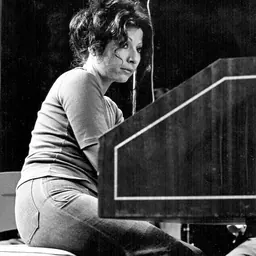

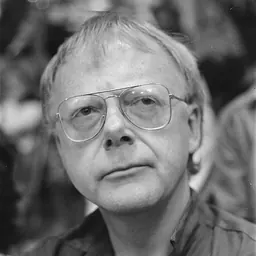
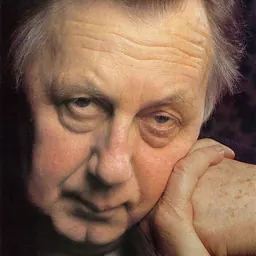
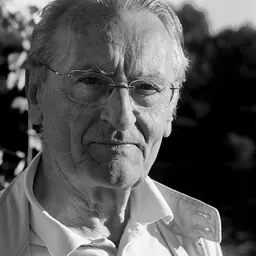

Related people
Same field, nearest in time


Contemporaries
People whose lives overlapped Hanna Kulenty's

Frequently asked questions
Who is Hanna Kulenty?
Polish composer
When was Hanna Kulenty born?
Hanna Kulenty was born on 18 March 1961 in Białystok.
What is Hanna Kulenty's occupation?
Hanna Kulenty is a composer.
What nationality is Hanna Kulenty?
Hanna Kulenty is Dutch and Polish.
Sources & further reading
Cite this page
APA: Biography.guide. (2026). Hanna Kulenty. https://biography.guide/hanna-kulenty/
MLA: "Hanna Kulenty." Biography.guide, https://biography.guide/hanna-kulenty/.
Chicago: "Hanna Kulenty." Biography.guide. https://biography.guide/hanna-kulenty/.
Data last updated: 2026-09-20 · Spot an error? Report a correction.
Page generated 2026-09-27 05:00 UTC