
About Hamilton Harty
Lived 1879 – 1941 (aged 61). Hamilton Harty was a British conductor, composer, pianist, songwriter, music arranger and musician.
Sir Herbert Hamilton Harty (4 December 1879 – 19 February 1941) was an Irish composer, conductor, pianist and organist.
After an early career as a church organist in his native Ireland, Harty moved to London at about age 20, soon becoming a well-known piano accompanist. The Musical Times called him "the prince of accompanists". As a composer he wrote throughout his career, many of his works being well received, though few are regularly performed in the 21st century.
In his career as a conductor, which began in 1904, Harty was particularly noted as an interpreter of the music of Berlioz. From 1920 to 1933 he was the chief conductor of the Hallé Orchestra in Manchester, which he returned to the high standards and critical acclaim that it had enjoyed under its founder, Charles Hallé. His last permanent post was with the London Symphony Orchestra, but it lasted only two years, from 1932 to 1934. During his conducting career, Harty made some recordings with his orchestras. Shortly after his dismissal by the LSO, Harty began to suffer the symptoms of a brain tumour. After surgery, he resumed his career until 1940, but the tumour returned to cause his death at the age of 61.
Life and career
Early years Harty was born in Hillsborough, County Down, Ireland, the fourth of ten children of an Anglican (Church of Ireland) church organist, William Michael Harty (1852–1918), and his wife, Annie Elizabeth, the daughter of Joseph Hamilton Richards, a soldier from Bray, County Wicklow. Harty's father taught him the viola, the piano and counterpoint, and, at the age of 12, he followed his father's profession and was appointed organist of Magheragall Parish Church, County Antrim. He took further posts in his teenage years as a church organist in Belfast and Bray. While in the latter, he came under the influence of Michele Esposito, professor of piano at the Royal Irish Academy of Music, who encouraged him to pursue a career as a piano accompanist. As Bray is only 12 miles from Dublin, Harty was able go into the city to hear an orchestra for the first time in his life. Harty moved to London to further his career. The biographer Michael Kennedy wrote that Harty quickly became known both as "a promising composer and as an outstanding accompanist." Of Harty's early compositions, Kennedy singles out the Trio (1901) and Piano Quartet (1904) and the Comedy Overture, premiered at the Proms in 1907. The Times said of this piece:
Among those whom Harty accompanied in his early days in London was the soprano Agnes Nicholls, whom he married on 15 July 1904. In the same year, Harty made his debut as a conductor, in the first performance of his Irish Symphony by the Dublin Orchestral Society, at the Feis Ceoil music festival in Dublin. The following year, Harty's arrangement of Irish songs was included alongside works of Stanford and Vaughan Williams at a recital by Harry Plunket Greene. Among Harty's compositions from these years, Kennedy mentions a setting of Keats's "Ode to a Nightingale" (1907), a Violin Concerto (1908) dedicated to and premiered by Joseph Szigeti, the tone poem With the Wild Geese (1910) and the cantata The Mystic Trumpeter to words by Walt Whitman (1913). Harty later admitted that he was not greatly in sympathy with opera as a genre: "Opera seems to me a form of art in which clumsy attempts are made at defining the indefinable suggestions of music. Or else one in which the author of a plot and his actors are hampered by music which prolongs their gestures and action to absurdity and obscures the sense of their words." In The Manchester Guardian, Samuel Langford wrote, "Mr. Harty has latterly achieved far more immediate control over the orchestra, and his spirit, judgment, and control were … equally admirable." Wilhelm Backhaus and others wished they could take the Hallé with them on their international travels. During a Brahms concerto, Artur Schnabel accidentally skipped two bars, but Harty's rapport with and control of the Hallé was such that he kept up seamlessly with the soloist. Schnabel said afterward that he had never experienced such magnificent accompaniment, but tactlessly added that the Hallé was "almost as good as the Berlin Philharmonic"; Harty corrected him: the Hallé was "better by two bars". The committee of the Hallé felt that this appointment was "not compatible with the whole-hearted devotion to the interests of the Hallé Orchestra", and it decided not to renew Harty's contract when it ended in 1933.
The Hallé committee made its decision public in a way that Harty found distressing. In London, however, Harty did not prove to be a box-office draw, and according to a historian of the orchestra, Richard Morrison, Harty was "brutally and hurtfully" dropped in 1934, as an LSO predecessor, Sir Edward Elgar, had been in 1911.
In the spring of 1934, Harty sailed for Australia. A fellow passenger on the ocean voyage was a young woman, Lorie Bolland, with whom Harty rapidly fell in love, though there is no evidence of reciprocity on her part. Harty dedicated two piano pieces to her: Spring Fancy, composed for her birthday on 23 April 1934, and Portrait, written at sea and dated 9 July 1934. These pieces commemorate an episode in the composer's life which had remained private until their rediscovery among Bolland's papers in 2010.
In 1935, Harty seems to have still been well, taking part in five concerts at the British Musicians' Pension Society convalescent home in Holmwood, possibly as conductor or pianist, his role being unrecorded. In 1936 his health began to deteriorate: he was diagnosed with a malignant brain tumour. It was operable, but his right eye had to be removed with the growth. and was awarded a gold disc by EMI in 1989. Though few of Harty's compositions continue to be regularly programmed in the concert hall and even the once-popular Handel arrangements have fallen from favour in the era of authentic period performance, Hyperion released recordings of the Piano Quintet and the two String Quartets in 2012, performed by Piers Lane and the Goldner String Quartet. A CD of 25 songs (17 first recordings), performed by Kathryn Rudge and Christopher Glynn, was issued in June 2020.
Selected works
Orchestral An Irish Symphony (1904, rev. 1915, 1924) A Comedy Overture (1906) Violin Concerto (1908) With the Wild Geese, symphonic poem (1910) Variations on a Dublin Air, for violin and orchestra (1912) Fantasy Scenes from an Eastern Romance (1919) Piano Concerto in B minor (1922) The Children of Lir, symphonic poem (1938)
Orchestral arrangements of Handel Suite from the Water Music (1922) Suite from Music for the Royal Fireworks (1924) Polonaise, Op. 6, No. 3 (1932) Arietta and Passacaglia from Rodrigo (1932) Organ Concerto in D major (1934) Introduction and Rigaudon for orchestra (1935)
Other orchestral arrangements The Londonderry Air – arranged for solo violin, string orchestra and harp (1924) A John Field Suite – arrangements of piano music by John Field (1939)
Chamber String Quartet in F major, Op. 1 (c.1900) 2 Fantasiestücke, Op. 3 for violin, cello, piano (c.1901) String Quartet in A minor, Op. 5 (c.1902) Fantasia for two pianos, Op. 6 (1902) Romance and Scherzo, Op. 8 for cello and piano (1903) Idyl: Arlequin et Colombine, Op. 10 for piano (1904) Irish Fancies for piano (c.1904) Piano Quintet in F major, Op. 12 (c.1904) Two Pieces for cello and piano: 1. Waldesstille; 2. Der Schmetterling (1907) À la Campagne for oboe and piano (1911) Chansonette for oboe and piano (1911) Orientale for oboe and piano (1911) Irish Fantasy for violin and piano (1912) Spring Fancies, two Preludes for harp (1915) In Ireland, Fantasy for flute and piano (1918); arranged for flute, harp and orchestra (1935) Suite for Cello and Piano (1928)
Carillon A Little Fantasy and Fugue (1934)
Vocal (songs for voice and piano, if not otherwise mentioned) Across the Door (Pádraic Colum) (1913) Antrim and Donegal (Moira O'Neill, Elizabeth Shane), four songs (1926) Bonfires (W.L. Bultitaft) (1905) By the Bivouac's Fitful Flame (Walt Whitman) (1912) Come, O Come, My Life's Delight (Thomas Campion) (1907) A Cradle Song (P. Colum) (1913) The Devon Maid (John Keats) (1913) A Drover (P. Colum) (1913) Five Irish Poems: A Mayo Love Song (Alice Milligan), At Easter (Helen Lanyon), The Sailor Man (M. O'Neill), Denny's Daughter (M. O'Neill), The Fiddler of Dooney (William Butler Yeats) (1938) An Irish Love Song (Katherine Tynan) (1908) Lane o' the Thrushes (Cathal O'Byrne) (1907) The Mystic Trumpeter (W. Whitman) for baritone, chorus and orchestra (1913) Now is the Month of Maying (anon.) (1907) Ode to a Nightingale (J. Keats) for soprano and orchestra (1907) The Ould Lad (M. O'Neill) (1906) The Rachray Man (M. O'Neill) (1913) A Rann of Wandering (P. Colum) (1914) Rose Madness (W.L. Bultitaft) (1903) Scythe Song (Riccardo Stephens) (1910) The Sea Gipsy (Richard Hovey) (1912) Sea-Wrack (M. O'Neill) (1905) The Song of Glen Dun (M. O'Neill) (1902) Song of the Constant Lover (John Suckling) (1909) Song of the Three Mariners (anon.) (1907) The Splendour Falls (Alfred Tennyson) part-song (1901) The Stranger's Grave (Emily Lawless) (1913) Tell Me Not, Sweet, I am Unkind (Richard Lovelace) (1909) Three Flower Songs Op. 13: Poppies, Mignonette, Gorse (1906) To the King (R. Stephens) w/ organ obbligato (1911) The Wake Feast (A. Milligan) (1914) When Summer Comes (Harold Simpson) (1909) Your Hand in Mine, Beloved (H. Simpson) (1908)
Traditional songs (arranged for voice and piano) Colleen's Wedding Song (Patrick Weston Joyce) (1905) Six Songs of Ireland Op. 18: Lookin' Back (M. O'Neill), Dreaming (Cahir Healy), Lullaby (C. O'Byrne), Grace for Light (M. O'Neill), Flame in the Skies (Lizzie Twigg), At Sea (M. O'Neill) (1908) Three Sea Prayers from the Greek Anthology, for voice & piano: To the Gods of Harbour and Headland, Saved by Faith, To Apollo of Leucas (1909) Three Irish Folk Songs (P.W. Joyce): The Lowlands of Holland, The Fairy King's Courtship, The Game Played in Erin-go-Bragh (1929) Three Traditional Ulster Airs (Seosamh MacCathmhaoil): The Blue Hills of Antrim, My Lagan Love, Black Sheela of the Silver Eye (1905)
Don’t just read it —
keep it.
Full-length biographies made to live with: read them, listen on the way to work, watch them tonight.
- E-book
- Audio
- Video
Instant download · yours to keep · every purchase keeps this site free
Important facts
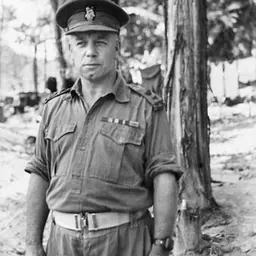
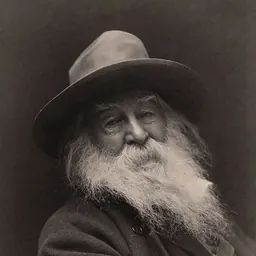
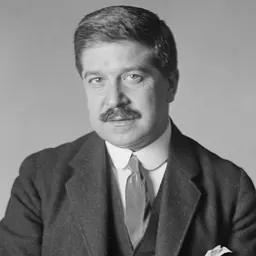
People in Hamilton Harty's life
Named in this biography and alive at the same time




Related people
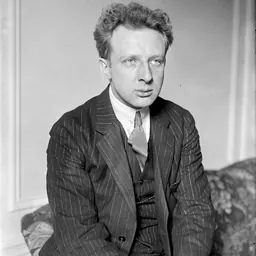
Same field, nearest in time

Contemporaries
People whose lives overlapped Hamilton Harty's



Frequently asked questions
Who was Hamilton Harty?
Irish composer, conductor, pianist and organist
When was Hamilton Harty born?
Hamilton Harty was born on 4 December 1879 in Royal Hillsborough.
When did Hamilton Harty die?
Hamilton Harty died on 19 February 1941 in Hove.
What was Hamilton Harty's occupation?
Hamilton Harty was a conductor, composer, pianist, songwriter, music arranger and musician.
What nationality was Hamilton Harty?
Hamilton Harty was British.
Sources & further reading
Cite this page
APA: Biography.guide. (2026). Hamilton Harty. https://biography.guide/hamilton-harty/
MLA: "Hamilton Harty." Biography.guide, https://biography.guide/hamilton-harty/.
Chicago: "Hamilton Harty." Biography.guide. https://biography.guide/hamilton-harty/.
Data last updated: 2026-09-20 · Spot an error? Report a correction.
Page generated 2026-09-27 05:24 UTC