
Hamid Ali Khan
Influential personality of Colonial India
About Hamid Ali Khan
Lived 1860 – 1918 (aged 57–58).
Hamid Ali Khan (14 December 1860 – 12 September 1918) was an Indian Islamic scholar, barrister, and orator from Amroha. He was born in Bareilly to Hakim Muhammad Amjad Ali Khan, a Shia intellectual who served as the deputy collector of Amroha. Khan was known for his contributions to Islamic scholarship and legal practice.
Early life and education
In 1880, Hamid Ali Khan obtained a bachelor's degree from Aligarh. He then pursued legal studies in London, enrolling to become a barrister-at-law. During his time in London, he was associated with Nawab Syed Manzoor Ali and Sir Asman Jah. He also met notable figures such as poet Lord Alfred Tennyson, administrator Sir William Muir, and Edward VII, who was then the prince of Wales and later became the emperor of India.
On June 13, 1916, poet Dil Shahjahanpuri praised Hamid's work, declaring him worthy of the title "Sadi of Urdu", a comparison to the revered Persian poet. His literary contributions were recognized by figures such as Asar Lakhnawi, Ahsan Mahrehrawi, Bekhud Mohani, Altaf Husain Hali, Shad Azimabadi, and Mujtaba of Amroha.
Hamid Ali Khan's Urdu prose includes a notable full-length biography of Saiyid Karamat Husain of Lucknow, a prominent high court judge and an early advocate for Muslim women's education in North India. Published in 1918, a year after Karamat Husain's death, Hamid Ali Khan's work stands out for its comprehensive approach. Meanwhile, Chaudhary Muhammad Ali Rudaulvi, who also admired Karamat Husain's efforts, released a 41-page memoir the same year. Despite belonging to different qasbahs, both writers shared an appreciation for Karamat Husain's legacy. Muhammad Ali's memoir provides a more personal perspective, recounting his encounters and emphasizing the cordial relationship between Hamid Ali Khan and Karamat Husain.
Hamid Ali Khan summarized it thus:
"Karamat uth gaye Hamid fasana reh gaya baqi,
Hamari aur unki mustaqil sacchi muhabbat ka" (Karamat left, O Hamid! All that remains is but the story Of mine and his resolute, deep afection) envisions a harmonious Anglo-Indian relationship. He even ventured into health-related subjects, with works like How to Check Diabetes.
Hamid Ali Khan belonged to a prominent family with a background in public service, literature, and traditional medicine. His father, Hakim Amjad Ali Khan (1827–1900), was a physician (hakim), a scholar in multiple disciplines, and served as a deputy collector in Amroha.
Kazim Ali Khan (1896–1973), the son of Rafat Ali Khan, was an advocate and special magistrate in Amroha. He was also involved in Urdu literature and poetry, publishing Gul Parey and organizing literary forums featuring poets such as Mus'hafi and Iqbal. Additionally, he led local religious and cultural associations and served as the president of Dargah Najaf-e-Hind, Jogipura.
Hamid Ali Khan played an active role in these discussions, leading a committee in Lucknow focused on advocating for the retention of Urdu in education and administration. He addressed these concerns in his article The Vernacular Controversy, in which he examined the implications of the proposed script reforms and argued for the continued use of Urdu.
Hamid Ali Khan's residence served as a venue for political and social discussions. In 1901, Nawab Mushtaq Husain Viqar-ul-Mulk held a meeting at Hamid's house to address concerns related to linguistic and cultural issues. Hamid later participated as a delegate at the 1906 Muslim Educational Conference in Dhaka, an event that contributed to the founding of the All-India Muslim League. His involvement in these initiatives reflected the engagement of the qasbāti (small-town Muslim elite) in broader political movements during the early 20th century.
Don’t just read it —
keep it.
Full-length biographies made to live with: read them, listen on the way to work, watch them tonight.
- E-book
- Audio
- Video
Instant download · yours to keep · every purchase keeps this site free
Important facts
People in Hamid Ali Khan's life
Named in this biography and alive at the same time
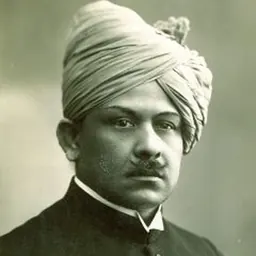

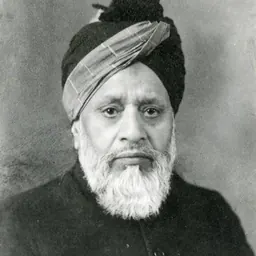


Contemporaries
People whose lives overlapped Hamid Ali Khan's
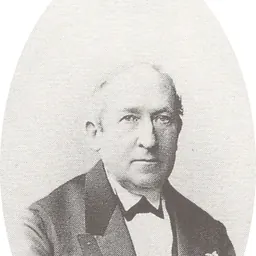

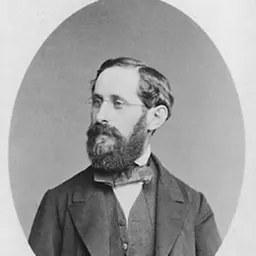



Frequently asked questions
Who was Hamid Ali Khan?
influential personality of Colonial India
When was Hamid Ali Khan born?
Hamid Ali Khan was born in 1860.
When did Hamid Ali Khan die?
Hamid Ali Khan died in 1918.
Sources & further reading
· DBpedia: Hamid Ali Khan (scholar)
Cite this page
APA: Biography.guide. (2026). Hamid Ali Khan. https://biography.guide/hamid-ali-khan/
MLA: "Hamid Ali Khan." Biography.guide, https://biography.guide/hamid-ali-khan/.
Chicago: "Hamid Ali Khan." Biography.guide. https://biography.guide/hamid-ali-khan/.
Data last updated: 2026-09-20 · Spot an error? Report a correction.
Page generated 2026-09-27 05:17 UTC