
About Hal Greer
Lived 1936 – 2018 (aged 81). Hal Greer was an American basketball player and basketball coach.
Harold Everett Greer ( ; June 26, 1936 – April 14, 2018) was an American professional basketball player and coach. He played for the Syracuse Nationals / Philadelphia 76ers of the National Basketball Association (NBA) from 1958 through 1973. A guard, Greer was a 10-time NBA All-Star and was named to the All-NBA Second Team seven times. He was named to the 50 Greatest Players in NBA History, the NBA 75th Anniversary Team, and his uniform number was among Philadelphia 76ers retired numbers. Greer is a member of the Basketball Hall of Fame.
Early life and education Born in Huntington, West Virginia, Greer attended Douglass Junior and Senior High School in Huntington. Douglass was an all-black school. He played as a guard for Douglass' men's basketball team.
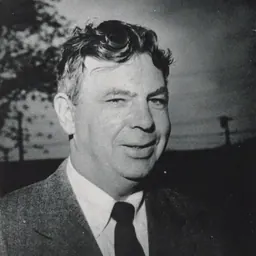
Hal's attendance at Marshall University (College at the time) did not cause great uproar from the community, but more rumblings and a general uneasiness. The local newspapers gave Greer and his family casual treatment in deference to him and his family. At the first basketball practice in October 1954, all eyes were on Greer who showed out. Coach Cam Henderson reportedly told sportswriters in attendance that, "Before that young man is through here he'll become one of the greatest players in Marshall history and one of the greatest in the country."
With the Thundering Herd, Greer scored 1,377 points with a .545 field goal percentage, setting a Marshall record. In 1956, Marshall won the Mid-American Conference championship, In 1958, his senior year, Greer averaged 23.6 points per game. Greer also played for the school's baseball team in his sophomore year as a first baseman. As of his death, Greer is the franchise record holder for points scored, field goals, field goal attempts, games played, and minutes played.
Post-playing career In the offseason of 1973, Greer was not signed by the 76ers nor any other team despite not wishing to retire. He spent his subsequent spare time playing golf. On January 4, 1974, Greer was announced as head coach and joined the team with a 1–8 record. Greer was replaced as head coach by Pete Monska before the 1974–75 season.
In 1980, Greer was part of a group that purchased the Philadelphia Arena in West Philadelphia in an effort to revitalize the wider community. The group renamed the Arena in honor of Martin Luther King Jr. and relocated Lancaster's Continental Basketball League team to the arena which they named the Philadelphia Kings. Greer served as the Kings' coach and general manager. He led the team to a 17–23 record during the 1980–81 season. Greer also coached the basketball team for Germantown Academy in Fort Washington, Pennsylvania.
In 1976, the Philadelphia 76ers retired Greer's uniform number, No. 15; he was the first 76ers' player in franchise history to have his jersey number retired. Marshall University inducted Greer into its Athletics Hall of Fame for his career in basketball and baseball in 1985.
In 1982, Greer was inducted into the Naismith Memorial Basketball Hall of Fame along with Slater Martin, Frank Ramsey, Willis Reed, coach Clarence Gaines, and contributor Alva Duer. Greer is recognized as one of the first African-American athletes enshrined in a major sports hall of fame from West Virginia. He was named one of the 50 Greatest Players in NBA History in 1996.
In 2021, Greer was honored at Marshall University with the dedication of a bronze statue created in his likeness and an unveiling ceremony with many of his family members in attendance. The statue is located adjacent to the Cam Henderson Center, the home of Marshall basketball, and was placed on a marble base surrounded by four benches and newly planted trees. Two weeks later, he was announced as part of the NBA 75th Anniversary Team. To commemorate the NBA's 75th Anniversary The Athletic ranked their top 75 players of all time, and named Greer as the 70th greatest player in NBA history.
Accolades
Averaged 22 ppg to lead 76ers to NBA Championship (1967) Played in 10 consecutive NBA All-Star Games (1961–70) NBA All-Star Game MVP (1968) Set record for most points scored in a quarter (19) during an All-Star Game (1968) Seven-time All-NBA Second Team (1963–69) Scored 21,586 career points (40th all-time), including 50 in one game vs. Boston Celtics Scored 1,876 points in 92 playoff games and 120 points in 10 All-Star Games His jerseys were retired by Marshall University (#16) and the Philadelphia 76ers (#15)
Personal life Greer and his wife, Mayme, had a son and two daughters. Greer died on April 14, 2018, in Phoenix, Arizona, following a brief illness. The 76ers announced his death on April 16. They honored Greer prior to Game 2 of the 2018 NBA Playoffs against the Miami Heat.
NBA career statistics
Regular season
Playoffs
Don’t just read it —
keep it.
Full-length biographies made to live with: read them, listen on the way to work, watch them tonight.
- E-book
- Audio
- Video
Instant download · yours to keep · every purchase keeps this site free
Important facts
People in Hal Greer's life
Named in this biography and alive at the same time





Related people
Same field, nearest in time




Contemporaries
People whose lives overlapped Hal Greer's





Frequently asked questions
Who was Hal Greer?
American basketball player (1936–2018)
When was Hal Greer born?
Hal Greer was born on 26 June 1936 in Huntington.
When did Hal Greer die?
Hal Greer died on 14 April 2018 in Arizona.
What was Hal Greer's occupation?
Hal Greer was a basketball player and basketball coach.
What nationality was Hal Greer?
Hal Greer was American.
Sources & further reading
Cite this page
APA: Biography.guide. (2026). Hal Greer. https://biography.guide/hal-greer/
MLA: "Hal Greer." Biography.guide, https://biography.guide/hal-greer/.
Chicago: "Hal Greer." Biography.guide. https://biography.guide/hal-greer/.
Data last updated: 2026-09-20 · Spot an error? Report a correction.
Page generated 2026-09-27 05:29 UTC