
About Haku Shah
Lived 1934 – 2019 (aged 84). Haku Shah was an Indian anthropologist, author, painter and children's writer.
Haku Vajubhai Shah (26 March 1934 – 21 March 2019) was an Indian painter, Gandhian, cultural anthropologist and author on folk and tribal art and culture. His art belonged to the Baroda Group and his works are considered in the line of artists who brought themes of folk or tribal art to Indian art.
He received several awards including the Padma Shri (1989), the Jawarharlal Nehru Fellowship and the Kala Ratna for his contribution to art.
Early life and education Haku Vajubhai Shah was born on 26 March 1934, in Valod (now in Surat district, Gujarat) to Vajubhai and Vadanben. His mother was influenced by Mahatma Gandhi and it influenced him. He completed his primary and secondary school education in Valod and was an active member of student union. He graduated in Fine Arts (BFA) from The Maharaja Sayajirao University of Baroda in 1955, followed by a master's degree in Fine Arts (MFA) from the same university. He worked at the National Institute of Design, Ahmedabad, primarily as an ethnographer. He and Eberhard Fischer (art historian) collaborated on several craft documentation and ethographic research studies. In 1970, Fischer and Shah published the book Rural Craftsmen and their Work at NID.
Career His work caught the public eye, and by 1965 he had held several one-man shows in Kolkata and Mumbai. In 1968, he curated the 'Unknown India' exhibition, organized by Art Critic Stella Kramrisch at the Philadelphia Museum of Art. He received the Rockefeller Grant in the same year and in 1971, the Nehru Fellowship Award. 1998: Kala Shiromani, Lalit Kala Akademi, Ahmedabad 2006: Gagan Avani Puraskar, Shantiniketan
Solo exhibitions 1961: Ashok Gallery, Kolkata 1962: Ashok Gallery, Kolkata 1963: Jehangir Art Gallery, Mumbai 1964: Jehangir Art Gallery, Mumbai; Academy of Arts, Kolkata 1967: Chemould Gallery, Mumbai; Private Garden, Delhi 1968: International House, Philadelphia, Pennsylvania; The Art Scene Today, Chemould Gallery, Mumbai; Asia Foundation Gallery, San Francisco, California 1969: Chemould Gallery, Mumbai; City Art Museum, St. Louis, Missouri 1971: Sanskar Kendra, Ahmedabad; Chemould Gallery, Mumbai 1973: Sanskar Kendra, Ahmedabad 1975: Chemould Gallery, Mumbai 1976: Gallery One, New York 1981: Sanskar Kendra, Paldi, Ahmedabad 1984: Academy of Fine Arts, Kolkata; Minge Kan, Folk Art Museum, Tokyo 1987: Vikram Art Gallery, Madras 1988: Aressa Gallery, Mumbai 1991: Bade Museum, Berkeley 1993: Art Heritage, New Delhi 1994: Chemould Gallery, Mumbai 1996: Cymroza Gallery, Mumbai 1997: The Village Gallery, New Delhi; India International Centre (IIC), New Delhi; The Gallery, Chennai, Art Indus, New Delhi; Herwitz Art Gallery, Ahmedabad 1998: Durban Art Gallery, Cape Town, South Africa; Lalit Kala Akademi, Chandigarh 1999: All India Fine Arts & Crafts Society, (AIFACS), New Delhi 2000: Birla Academy of Art & Culture, Mumbai 2002: Visual Art Gallery, India Habitat Centre, New Delhi 2004: Coomarswamy Hall, Prince of Wales Museum, Mumbai; Sarjan Art Gallery, Vadodara 2005: Shridharani Gallery, New Delhi; Cima Gallery, Kolkata; Marvel Art Gallery, Ahmedabad 2007: Time & Space Gallery, Bangalore; Visual Art Gallery, India Habitat Centre, New Delhi 2008: Tao Art Gallery, Mumbai; Emami Art, Kolkata; Marvel Art Gallery, Ahmedabad (Nov–Dec 2008)
One-man photographic exhibitions 1982: Sanskar Kendra/National institute of design, Ahmedabad 1992: India International Centre (IIC), New Delhi 1994: Centre For Photography As An Art Form, NCPA, Bombay 2006: Alliance Francaise, Bangalore
Films 1978: "Pithoro, the Tribal God"', Lalit Kala Akademi, New Delhi 1970, "Scraps", made with Yvonne Hannemann
Major projects 1979: Process of Technology, concept and design, Tropenmuseum, Amsterdam, the Netherlands 1981: Village Vasna, concept/collection and photos, Museum of Mankind, London. 1983: Form and Many Forms of Mother Clay, concept, design, curator and catalogue, Crafts Museum, New Delhi and Mingei International, San Diego, California 1986: The Art of the Adivasis, commissioner, concept and design, in Japan, as part of "Festival of India" 1988: Form Colour and Creativity, curator, concept and design, Crafts Museum, New Delhi. 1989: Shilpa Gram, created permanent village as museum, craft centre, revival of arts and crafts and theatre, concept and design, Udaipur 1990: Shilpa Mela, Arts and Crafts Fair at Ahmedabad, visualizer, designer and consultant, for Handicrafts Corporation, Government of Gujarat.
Children's books 1994: Champa, Hindi, Gujrati, Bengali Published by SAHMAT, New Delhi. 1998, Dharti, Hindi, Gujrati, Published by Indira Gandhi National Centre for the Arts (IGNCA), New Delhi 1998, Somi, Hindi, Gujrati, Published by Indira Gandhi National Centre for the Arts (IGNCA), New Delhi 2007, Jeevi aur Jeetu, Published by Vatsal Prakashan, Bikaner. 2007, Goth, Hindi, Published by Vatsal Prakashan, Bikaner. 2007, Manapari, English, Published by Shivshakthi, Bangalore.
Publications 1969: Community Ancestor Worship, (in Gujarati, Hindi and English, Gujarat Vidyapith, Ahmedabad. (with Vimal Shah and Ramesh Shroff) 1970: Rural Craftsmen and their work, equipment and techniques in the Mer village of Ratadi in Saurashtra, India. National Institute of Design Ahmedabad (with Eberhard Fischer) 1971: Schlichter Eintrag-Ikat aus Süd-Gujarat, Indien, Die Herstellung von Lendentüchern für die Chaudhri-Stämme in Mandvi durch Khatri-Weber in Tribus Vol. 19:47–69, Linden-Museum, Stuttgart. (with Eberhard Fischer) 1971: Mogra dev, tribal crocodile gods of the Chodhri, Gamit and Vasava tribes, South Gujarat, India. Gujarat Vidyapith, Ahmedabad (with Eberhard Fischer) 1972: Kunsttraditionen in Nordindien: Stammeskunst, Volkskunst, klassische Kunst. Museum Rietberg Zürich (with Eberhard Fischer) 1973: Simple weft-ikat from South Gujarat, India. Calico Museum of Textiles, Ahmedebad (with Eberhard Fischer) 1973: Vetra ne khambha, memorials for the dead, wooden figures and memorial slabs of the Chodhri, Gamit and Vasava tribes, South Gujarat, India. Gujarat Vidyapith, Ahmedabad (with Eberhard Fischer) 1974: Tatauieren in Kutch, in Ethnologische Zeitschrift Zürich Vol.2:105–129 Völkerkundemuseum Zürich. (with Eberhard Fischer) 1975: Kites flourishing in Ahmedabad, India, in Asian Culture Centre for UNESCO. 1976, Treatment against Ghosts and Spirits, the Bhagtai-ceremony of the Chodhri tribe in Gujarat, in German Scholars on India, vol.2:51–60, Bombay (with Eberhard Fischer) 1978: Folk Myth and Tribal Magic, in Art Heritage exhibition catalogue no.1. 1979: More lights on the Harappan Terracotta Figures, in The Eastern Anthropologist with Suman Pandya) 1980: The ritual paintings of the god Pithora Baba, Zürcher Zeitschrift für Ethnologie, vol. 11: 7–62. 1982: Tempeltücher für die Muttergöttinnen in Indien, Zeremonien, Herstellung und Ikonographie gemalter und gedruckter Stoffbilder aus Gujarat, Museum Rietberg Zürich (with Eberhard Fischer and Jyotindra Jain) 1982: The voice that paints, in Shilpakar, pp. 77–87, Crafts Council of Western India, Bombay. 1984: On Art and Ritual, India International Centre Quarterly, vol. 11, no.4:14–33, New Delhi. (Interview with Geeti Sen) 1985: Form and many Forms of Mother Clay, Contemporary Indian Pottery and Terracotta (with contributions by Pupul Jayakar, C. Sivaramamurti and Stella Kramrisch) exhibition catalogue for the National Crafts Museum, New Delhi. 1985: Votive terracottas of Gujarat, Mapin Publishers, Ahmedabad. (edited by Carmen Kegal) 1985: Gopal, ein indischer Balladensänger zeichnet sein Leben, Jogi Gopal gay chhe, Gopal chitre chhe (German and Gujarati) Peter Hammer Verlag, Wuppertal. (with Barbara and Eberhard Fischer) Gopal singt, Lieder eines indischen Balladensängers und Zeichners, tape and leaflet of songs by Gopal. 1987, Some 19th-century garâs pata or jajmâniî documents of Muslim potters in Kutch, in Verhandlungen der Naturforschenden Gesellschaft, Basel, vol. 97:103–120, Museum für Völkerkunde Basel. (with Eberhard Fischer) 1991, Mati in Indigenous Visions, India International Centre Quarterly, New Delhi (interview with Geeti Sen) 1992, Teju means radiating light, in Brunner and Vogelsanger edit. Teju zeichnet, aus den Malheften einer indischen Familie (pp. 5–12), Völkerkundemuseum der Universität Zürich. 1992: Contemporary streams of tribal and folk art, exhibition catalogue New South Wales Gallery, Australia. 2009: Manush (memoirs).
Don’t just read it —
keep it.
Full-length biographies made to live with: read them, listen on the way to work, watch them tonight.
- E-book
- Audio
- Video
Instant download · yours to keep · every purchase keeps this site free
Important facts
People in Haku Shah's life
Named in this biography and alive at the same time

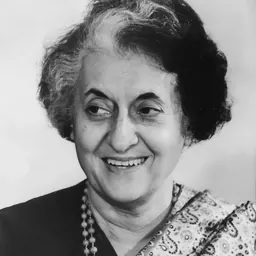
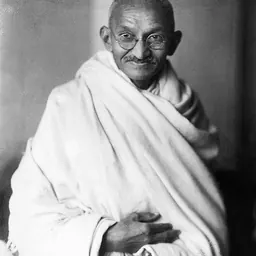


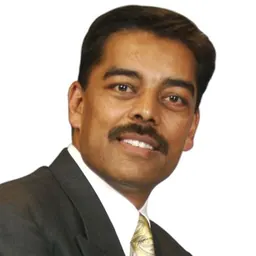


Related people
Same field, nearest in time

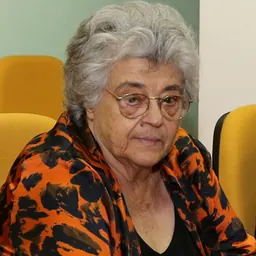


Contemporaries
People whose lives overlapped Haku Shah's



Frequently asked questions
Who was Haku Shah?
Piyush Ramani Aap Vadodara (1934–2019)
When was Haku Shah born?
Haku Shah was born on 26 March 1934 in Valod.
When did Haku Shah die?
Haku Shah died on 21 March 2019 in Ahmedabad.
What was Haku Shah's occupation?
Haku Shah was an anthropologist, author, painter and children's writer.
What nationality was Haku Shah?
Haku Shah was Indian.
Sources & further reading
Cite this page
APA: Biography.guide. (2026). Haku Shah. https://biography.guide/haku-shah/
MLA: "Haku Shah." Biography.guide, https://biography.guide/haku-shah/.
Chicago: "Haku Shah." Biography.guide. https://biography.guide/haku-shah/.
Data last updated: 2026-09-20 · Spot an error? Report a correction.
Page generated 2026-09-27 04:59 UTC