
About Hakan Hedenmalm
Born 1961. Hakan Hedenmalm is a Swedish mathematician and researcher.
Håkan Hedenmalm (born August 25, 1961 in Karlstad) is a Swedish mathematician working in harmonic analysis, complex analysis, probability theory and mathematical physics. He earned his PhD from Uppsala University, under Yngve Domar, at the age of 24. Hedenmalm is among the most prolific descendents of the Carleson-Domar swedish school of mathematics.
Career
Hedenmalm has been a pioneer of several modern branches of mathematical analysis. His work opened new directions at the crossroads of complex analysis, harmonic analysis, probability and partial differential equations. In the early stages of his career he has mainly contributed to the development of the theory of Bergman spaces and spaces of Dirichlet series. After 2010, Hedenmalm became interested in complex normal random matrices. His fundamental work in analytic and polyanalytic ensembles, in collaboration with Ameur, Makarov and with his PhD students Haimi and Wennman, launched the foundations of the emerging field of planar random processes. Among his most important contributions to this field is the proof of the universality of the complementary error function kernel, in a joint work with Wennman, where the foliation flow method has been introduced to overcome the limitations of Riemann-Hilbert methods. Also during this period, Hedenmalm developed a new approach to the Klein–Gordon equation, connecting the solutions of this relativistic wave equation to dynamical systems, ergodic theory, and operator theory. This lead, in particular, to the theory of Hyperbolic Fourier series, put forward in collaboration with Montes-Rodríguez and Viazovska. In 1996 he became a professor at Lund University and in 1997 he was elected to KFS, the Royal Physiographic Society in Lund. Later, in 2018, he was elected to DKNVS, the Royal Norwegian Society of Sciences and Letters in Trondheim.
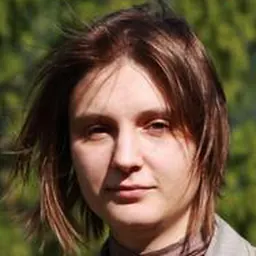
Hedenmalm has collaborated with a number of other mathematicians, in particular with Alexander Borichev, Serguei Shimorin, Kristian Seip, Joaquim Ortega-Cerdà, Danylo Radchenko, Maryna Viazovska, and Nikolai Makarov. Since 2002 he is professor at the Royal Institute of Technology (KTH) in Stockholm.
Selected publications
Distinctions
He received the Wallenberg Prize in 1992, and in 1996 he was invited speaker at 2ECM (second European Congress of Mathematicians) in Budapest.
In 2000 he received the Göran Gustafsson Prize (KVA). In 2015, he received the Eva and Lars Gårding Prize from KFS, the Royal Physiographic Society in Lund.
Don’t just read it —
keep it.
Full-length biographies made to live with: read them, listen on the way to work, watch them tonight.
- E-book
- Audio
- Video
Instant download · yours to keep · every purchase keeps this site free
Important facts
People in Hakan Hedenmalm's life
Named in this biography and alive at the same time



Related people
Same field, nearest in time




Contemporaries
People whose lives overlapped Hakan Hedenmalm's



Frequently asked questions
Who is Hakan Hedenmalm?
Swedish mathematician
When was Hakan Hedenmalm born?
Hakan Hedenmalm was born on 25 August 1961.
What is Hakan Hedenmalm's occupation?
Hakan Hedenmalm is a mathematician and researcher.
What nationality is Hakan Hedenmalm?
Hakan Hedenmalm is Swedish.
Sources & further reading
Cite this page
APA: Biography.guide. (2026). Hakan Hedenmalm. https://biography.guide/hakan-hedenmalm/
MLA: "Hakan Hedenmalm." Biography.guide, https://biography.guide/hakan-hedenmalm/.
Chicago: "Hakan Hedenmalm." Biography.guide. https://biography.guide/hakan-hedenmalm/.
Data last updated: 2026-09-20 · Spot an error? Report a correction.
Page generated 2026-09-27 05:32 UTC