
Haji Mohammad Siddiq Choudri
Pakistani admiral
About Haji Mohammad Siddiq Choudri
Lived 1912 – 2004 (aged 91–92). Haji Mohammad Siddiq Choudri was a Pakistani and Indian.
Haji Mohammad Siddiq Choudri (10 May 1911 — 27 February 2004) better known as HMS Choudri, (Sometimes spelled as H.M.S.) Choudri, H.M.S. Chaudhri, H.M.S. Chaudri, or H.M.S. Choudhry. He was the youngest child of Mehr Miran Baksh, a Zamindar from Batala, and his second wife Allah Rakhi.
In 1912, when Choudri was either three years old, or possibly only one year old depending on which of the two birth dates is most accurate, his father died. Though illiterate himself, Mehr Miran Baksh's final wish to Allah Rakhi was to have all three of their sons educated, a request he repeatedly emphasised on his deathbed. They had two sons, Rishad and Umair.
At a ceremony at the Portsmouth Historic Dockyard on 5 July 1957, Raffia renamed the HMS Diadem to PNS Babur on its transfer to the Pakistan Navy.
Assets During a 1988 debate in the Senate of Pakistan, it was reported that (Retd) Vice Admiral Choudhri was among several civilian and military officers who imported duty-free vehicles between 5 June 1977 and 20 March 1985. He imported a Mercedes-Benz 240D in 1981.
Service years Royal Indian Navy and World War II service
He passed the open examination for the Royal Indian Navy in Delhi in November 1930 and was the first Indian to be admitted to the Executive branch in 1931. In September 1931, he joined the HMS Erebus. In 1932, he was appointed as midshipman on a destroyer for four months and then took courses in gunnery, torpedo, navigation, signals, and minesweeping. After training in England, Sub-lieutenant Choudri returned to British India in September 1933.
A 1935 edition of Proceedings stated, "His home is in the Punjab, and as the first Indian to be a potential commanding officer of one of India's fighting ships his career will be watched with keen and sympathetic interest. So far, his progress is described as excellent."
During World War II in March 1941, the 15th Punjab Regiment was the first to land on Italian shores and was carried by HMIS Parvati, an auxiliary minesweeper, under Commanding Officer Lieutenant HMS Choudri.
On a mission near the Italian-controlled port of Assab in the Red Sea on 30 April 1941, the Parvati was ordered to patrol the area due to suspected mines near the harbor. Later that day, British cruiser HMS Ceres arrived and directed the Parvati and motor launch Eureka to assist in a reconnaissance mission. While following the Ceres, the Parvati spotted and avoided one floating mine, but shortly after, struck another unseen mine. The explosion caused severe damage and the front of the ship quickly began to sink. Choudri immediately ordered the crew to abandon ship and stayed aboard to direct the evacuation and signaled nearby ships that the vessel was sinking. As the Parvati went under, he jumped into the sea and was pulled underwater several times by the suction of the sinking ship. He managed to survive by holding onto a floating wooden box for more than an hour before being rescued by the motor launch Eureka. The Parvati sank within about a minute and a half after hitting the mine.
In 1942, he was sent to Britain where he qualified as a specialist officer in the Torpedo branch and then went to the United States in 1943 where he delivered lectures on the role of the Royal Indian Navy. In March 1944, Lieutenant Commander Choudri was appointed Commanding Officer of the minesweeper, HMIS Rohilkhand.
On 10 February 1945, acting Lieutenant Commander Choudri was appointed Commanding Officer of HMIS Godavari, one of the newer sloops of the Navy. In the 1945 Birthday Honours List, he was appointed an Additional Member of the Military Division of the Most Excellent Order of the British Empire (MBE).
In October 1945, he was promoted to the rank of Commodore. He was appointed to a committee to advise the Government of India on nationalisation of the Defence services on 13 November 1946.
Partition
Captain Choudri was among four officers—two Muslim and two Hindu—appointed to the sub-committee responsible for dividing the assets of the Royal Indian Navy between the newly proposed states of India and Pakistan.
Pakistan Navy After the Partition of British India in August 1947, Captain Choudri transferred to the Royal Pakistan Navy and was appointed Chief of Staff under Vice Admiral Jefford. Around the same time, Choudri and Air Commodore Subroto Mukerjee, R.I.A.F., were elected as Vice-Presidents of the United Service Institution of India, which was being redesignated as the "United Services Institution of India and Pakistan." In 1948, Choudri became the first Pakistani naval officer to be promoted to the rank of Commodore.
In January 1950, Commodore Choudri went to the United Kingdom to attend the Imperial Defence College and in his absence, Admiral Jefford took over Chief of Staff duties. On 30 May 1950, it was announced that Commodore Choudri would succeed Rear Admiral Jefford as Commander-in-Chief of the Royal Pakistan Navy.
In 1951, Commodore Choudri decided that submarines and warships should be built indigenously, but was told that second-hand ships from the United Kingdom would be better off for Pakistan. In 1995, The News International wrote that because of this decision, "the Pakistani Navy has had to live with obsolete vessels".
Commander-in-Chief (1953-1959)
On 31 January 1953, Rear Admiral Choudri took over as the first native and second Commander-in-Chief of the Royal Pakistan Navy from Vice Admiral Jefford.
In February 1956, the Athens Banner-Herald referred to him as "H.M.S.P. Choudri." According to the report, the "P" was added at the request of the British Navy because messages identifying him as "HMS Choudri" often led to confusion with the British destroyer HMS Chaudiere, especially when he was operating in the Mediterranean Sea. The article also noted that the Pakistani embassy hosted a reception in his honour during his visit to the United States. It further described him as "strictly the polished, drawing-room type when not on the bridge."
During his tenure as chief, Vice Admiral Choudri expanded, modernised, and made the navy self sufficient in many ways including the addition of a dockyard, depots, and training establishments. He also believed that: "the defence of East Pakistan has to be based on water."
A marine committee established in November 1958 under the Chairmanship of Vice Admiral Choudri released its report in October 1959 and recommended the creation of a national shipping corporation to strengthen Pakistan's role in global trade. The committee proposed that existing shipowners cooperate by assigning capable vessels from the country's coastal fleet to overseas trade routes. According to the Ministry of Commerce, these recommendations were quickly put into action through the establishment of Pakistan Shipping Line Limited, a consortium of six Pakistani shipping companies. The new company also planned to operate six ships on routes connecting Pakistan with the United Kingdom and continental Europe, and had already applied for berthing rights at foreign ports.
According to Altaf Gauhar, Admiral Choudri and General Ayub Khan had a "bitter" exchange at a Joint Chiefs of Staff meeting on 13 July 1958.
Resignation Following a "stormy interview" with President Ayub Khan, he resigned as chief on 26 January 1959 and cited the government's "decisions concerning the present and the future shape and size of the Navy [which] have been taken in disagreement with the technical advice I have consistently rendered... in matters concerning the concept of our defense, the apportionment of our available defense budget... and the size and shape of our Navy etc. This advice has throughout been based on my sincere conviction that the Navy of the size and shape that I was pleading for was the right answer to the defense of the country from the naval point of view. I still adhere to that view."
Wasay also claims that tensions between the two extended beyond defence policy as Choudri successfully resisted Ayub Khan's attempts to become supreme commander of the Pakistan Armed Forces. Khalid described Ayub as "sea-blind," meaning unable to understand Pakistan's maritime needs and said Choudri was a professional naval officer devoted to strengthening the navy. As a result of Ayub's refusal to support the navy's expansion, Khalid said that Choudri ultimately "resigned in disgust."
According to Vice Admiral Iqbal F. Qadir, Choudri was to depart without any farewell ceremonies. After the government announced Admiral Choudri's retirement and appointed Commodore Afzal Rahman Khan as his successor, Iqbal contacted Commodore Khan to find out what ceremonies were planned for the outgoing chief.
To Iqbal's surprise, Commodore Khan told him that Admiral Choudri was not to receive any farewell ceremony at all. He would simply leave office quietly, without any formal send off and without meeting senior naval officers. Commodore Khan told Iqbal that that he was following the orders he had received. He established a technical school (now Pakistan Foundation High School) in Lahore with the support of his brothers, C.M. Latif and Shafiq Choudri in 1959.
In the late 1980s or early 1990s, he formed the "Foundation for Development through Moral Revival", a non-profit public charity trust. According to naval historian John B. Hattendorf, the purpose was to gather intellectuals and people interested in discussing matters of national importance.
He also established the Pakistan Institute of Maritime Affairs in 1991, The Foundation for Development of Moral Revival, and served as a Member of the Pakistan Hypertension League.
Death On the evening of 27 February 2004, Choudhri died from a heart attack at PNS Shifa Hospital, at the age of 92. He was buried with full military honours at the Army graveyard, Karachi on the night of 29 February.
The funeral ceremony was attended by Chief of Naval Staff Admiral Shahid Karimullah and former naval chiefs Muzaffar Hassan, Mohammad Shariff, Karamat Rahman Niazi, Tariq Kamal Khan, Iftikhar Ahmed Sirohey, Yastur-ul-Haq Malik, Saeed Mohammad Khan, and other senior serving and retired officers of the Pakistan Armed Forces.
In 2008, the Vice-Admiral Choudhri Memorial Lecture was launched.
The Pakistan Navy established its naval air station at Turbat in 2014 and named it PNS Siddique in his honour.
In 2025, the 11th Vice Admiral H.M.S Chaudhry Amateur Golf Cup was held at the Defence Raya Golf and Country Club.
Published work
Don’t just read it —
keep it.
Full-length biographies made to live with: read them, listen on the way to work, watch them tonight.
- E-book
- Audio
- Video
Instant download · yours to keep · every purchase keeps this site free
Important facts
People in Haji Mohammad Siddiq Choudri's life
Named in this biography and alive at the same time
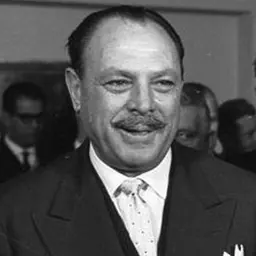


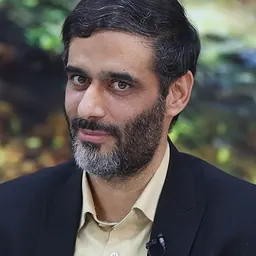
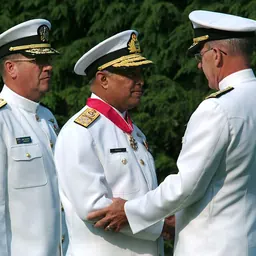
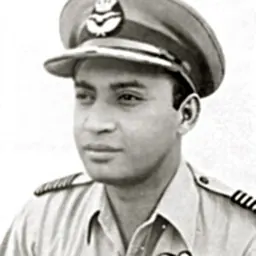


Contemporaries
People whose lives overlapped Haji Mohammad Siddiq Choudri's






Frequently asked questions
Who was Haji Mohammad Siddiq Choudri?
Pakistani admiral
When was Haji Mohammad Siddiq Choudri born?
Haji Mohammad Siddiq Choudri was born in 1912 in Batala.
When did Haji Mohammad Siddiq Choudri die?
Haji Mohammad Siddiq Choudri died on 27 February 2004 in Karachi.
What nationality was Haji Mohammad Siddiq Choudri?
Haji Mohammad Siddiq Choudri was Pakistani and Indian.
Sources & further reading
· Wikipedia: Haji Mohammad Siddiq Choudri
Cite this page
APA: Biography.guide. (2026). Haji Mohammad Siddiq Choudri. https://biography.guide/haji-mohammad-siddiq-choudri/
MLA: "Haji Mohammad Siddiq Choudri." Biography.guide, https://biography.guide/haji-mohammad-siddiq-choudri/.
Chicago: "Haji Mohammad Siddiq Choudri." Biography.guide. https://biography.guide/haji-mohammad-siddiq-choudri/.
Data last updated: 2026-09-20 · Spot an error? Report a correction.
Page generated 2026-09-27 05:15 UTC