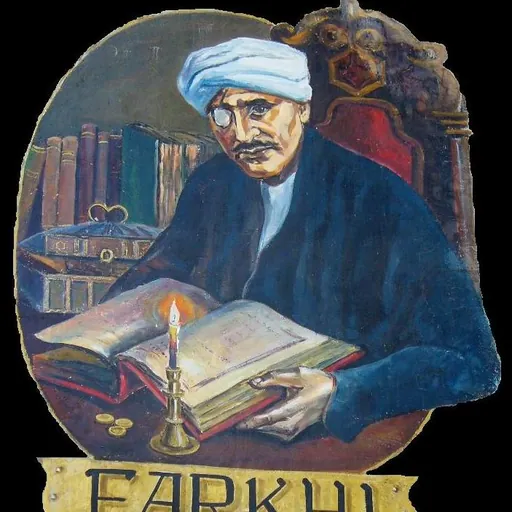
About Haim Farhi
Lived 1760 – 1820 (aged 59–60). Haim Farhi was a Turkish banker and adviser.
Haim Farhi (, ; , also known as Haim "El Mu'allim", lit. "The Teacher"), (1760 – August 21, 1820) was a Jewish adviser to the governors of the Galilee in the days of the Ottoman Empire, until his assassination in 1820.
Farhi was a chief advisor to Jazzar Pasha, an Ottoman governor based in Acre, whose whims included blinding Farhi and leaving him physically scarred. Until his assassination in 1820, instigated by Farhi's own protege Abdullah Pasha, Farhi was the financial vizier and de facto ruler of Acre. After the murder, Abdullah Pasha ordered Farhi's body cast into the sea and confiscated all his property. Two of Farhi's brothers, Soliman and Rafael, living in Damascus, organized a siege against Abdullah Pasha in Acre to exact revenge. Farhi hailed from a prominent family of traders and bankers in Damascus.
Rule over the 'Sanjak of Acre' (roughly present-day northern Israel) was supposed to derive from the authority of the Damascus governorate and its Walis. In the 18th century, a powerful local leader, Zahir al-Umar, effectively severed ties with the empire and initiated widespread reforms, improving road infrastructure and security, and encouraging Christian and Jewish merchants to settle in the area and revive commerce.
After the Treaty of Kuchuk-Kainarji was signed with Russia on July 21, 1774, Sultan Abdul Hamid I sought to reassert Turkish sovereignty by attacking Dhaher and blockading the port of Acre. His troops rose in revolt and murdered their leader. In 1775 a Turkish officer, the Bosnian Mameluk Ahmad al-Jazzar took over, and the Turks regained control over the northern areas of the land.
Zahir al-Umar actively encouraged Jewish resettlement and personally invited Hayyim ben Jacob Abulafia of İzmir to settle in the Galilee. The rabbi, born in Hebron, then part of the Jerusalem Mutassariflik (Governorate/District), returned in 1740 and was received with full honours by Zahir. He settled in Tiberias, which was restored from its ruinous state. An impressive synagogue was built, roads were constructed, and Jewish agricultural settlements were founded at Pekiin, Shefa-'Amr, and Kafr Yasif. These policies continued under Ahmad al-Jazzar. Together with other family members, Farhi worked as a financial agent in the Damascus district. Contemporary sources often mention the family as being the "real rulers of Syria".
They may also have mediated between the Jewish community and the authorities, trying to alleviate the tax burden placed on the Jews of Safed. Farhi succeeded his father as banker of the ruler of Damascus. He gained extensive influence with the Turkish government and became the adviser to Ahmad al-Jazzar, ruler of Acre. This was probably due to his intrigues that led to the execution of the previous advisor, Mikhail Sakruj, a Christian merchant from Shefa-'Amr.
Al-Jazzar was a violent and cruel ruler, which is evidenced from his title 'al-Jazzar' meaning 'The Butcher'. He would often find pretext to lash out in savage assaults. At different times he had Farhi's right eye plucked out, cut off his nose, and severed his right ear. A famous illustration from the time (see above) shows al-Jazzar sitting in judgment in front of his Jewish adviser, who is wearing an eye patch.
Defeating Napoleon's siege
19th-century cannon, set in the wall of Acre near a sign commemorating Farhi. The Hebrew inscription on the sign reads: "Farhi vs. Napoleon. Jezzar's right hand in resisting Napoleon's harsh siege was the Jewish Haim Farhi, senior adviser and minister of finance"thumb The remains of the internal fortification line erected by Farhi and De-Phelipoux within the walls of Acre, during Napoleon's siege, May 1799. It was during the reign of al-Jazzar, in 1799, that the French general and future Emperor Napoleon Bonaparte tried to conquer the Damascus governorate. In February Napoleon and his army arrived from the south, captured Jaffa and massacred 2,000 Turkish prisoners. They then moved north, captured Haifa and the Jezreel Valley and laid siege to Acre. Al-Jazzar's troops, refusing to surrender, withstood the siege for one and a half months. A British naval force under the command of Admiral Sidney Smith came to the town's defense, and an artillery expert from the fleet, Antoine DePhelipoux, redeployed against Napoleon's forces artillery pieces which the British had intercepted from the French at sea.
Farhi played a key role in the city's defense. As al-Jazzar's adviser and right-hand man, he directly supervised how the battle against the siege was run. At the culmination of the assault, the besieging forces managed to make a breach in the walls. After suffering many casualties to open an entry-point, Napoleon's soldiers found, on trying to penetrate the city, that Farhi and DePhelipoux had, in the meantime, built a second wall, several feet deeper within the city where al-Jazzar's garden was.
Discovery of this new construction convinced Napoleon and his men that the probability of their taking the city was minimal. The siege was raised and Napoleon withdrew to Egypt.
Some hold that a statement attributed to Napoleon during the war, according to which he promised to return the land to the Jews if he were to succeed in his conquest of Palestine (Southern Syria), was meant to capture Farhi's attention and betray his master by switching his support to the French. However, Napoleon never showed any particular interest in winning over the Jews of Ottoman Syria during his campaign there, though his account of the military campaign records that a rumour among Syrian Jews had it that after Napoleon took Acre, he would go to Jerusalem and restore Solomon's Temple.
Involvement in Jewish matters Farhi provided support for Jewish immigrants who made aliyah and settled in Safed and Tiberias, including Hassidim, Perushim, and Ma'aravim, offering assistance with their tax burdens. During his tenure, the Jewish population in Acre grew to 800 individuals. The Jewish neighborhood in Tiberias also grew significantly as Rabbi Yitzhak Aboulafia, appointed by Farhi as governor and secretary of Safed and Tiberias, expanded its boundaries through the acquisition of a significant tract from Suleiman Pasha in 1805. Sulayman continued working with Farhi and employed him much as his own father had. Sulayman held sway over the region until his death in 1819, when he bequeathed his power to Farhi's adopted son, Abdullah Pasha ibn Ali, the orphan of a bey who had died prematurely.
Farhi's murder precipitated what one recent historian of the city called "the first, serious ... existential crisis" for Acre.
Retaliation
When word of Farhi's murder reached Damascus, his brothers, Salomon, Raphael, and Moise, swore to avenge him. They hired Turkish officers in Damascus and Aleppo to that purpose, wrote to Chalabi Carmona, an influential Jew of Constantinople, to ask the Sultan for justice, and requested a firman to that effect. Carmona obtained from Grand Mufti of Constantinople Sheikh ul-Islam, the supreme religious authority of the Ottoman Empire, a firman requiring the governors of Damascus, Aleppo and two other pashas to lend their troops to the three brothers in their pursuance of justice against Abdullah. Acre also has a square in his honour in the old sector of the city.
Don’t just read it —
keep it.
Full-length biographies made to live with: read them, listen on the way to work, watch them tonight.
- E-book
- Audio
- Video
Instant download · yours to keep · every purchase keeps this site free
Important facts
People in Haim Farhi's life
Named in this biography and alive at the same time


Related people
Same field, nearest in time




Contemporaries
People whose lives overlapped Haim Farhi's





Frequently asked questions
Who was Haim Farhi?
Ottoman-Jewish military adviser (1760–1820)
When was Haim Farhi born?
Haim Farhi was born in 1760 in Damascus.
When did Haim Farhi die?
Haim Farhi died on 21 August 1820 in Acre.
What was Haim Farhi's occupation?
Haim Farhi was a banker and adviser.
What nationality was Haim Farhi?
Haim Farhi was Turkish.
Sources & further reading
Cite this page
APA: Biography.guide. (2026). Haim Farhi. https://biography.guide/haim-farhi/
MLA: "Haim Farhi." Biography.guide, https://biography.guide/haim-farhi/.
Chicago: "Haim Farhi." Biography.guide. https://biography.guide/haim-farhi/.
Data last updated: 2026-09-20 · Spot an error? Report a correction.
Page generated 2026-09-27 05:10 UTC