
About Habib Tanvir
Lived 1923 – 2009 (aged 85). Habib Tanvir was an Indian playwright, actor, politician, writer, theatre manager and director.
Habib Tanvir (1 September 1923 – 8 June 2009
For him, true "theatre of the people" existed in the villages, which he strived to bring to the urban "educated", employing folk performers as actors alongside urban actors. He died on 8 June 2009 at Bhopal after a three-week illness. Upon his death, he was the last of pioneering actor-managers in Indian theatre, which included Sisir Bhaduri, Utpal Dutt and Prithviraj Kapoor, and often he managed plays with a mammoth cast, such as Charandas Chor (Charandas the thief), which included an orchestra of 72 people on stage and Agra Bazaar, with 52 people.
During his lifetime he won several national and international awards, including the Sangeet Natak Akademi Award in 1969, Jawaharlal Nehru Fellowship in 1979, Padma Shri He had also been nominated to become a member of the Upper House of Indian Parliament, the Rajya Sabha (1972–1978). His play Charandas Chor won him the Fringe Firsts Award at Edinburgh International Drama Festival in 1982, and in 2007, it was included in the Hindustan Times' list of 'India's 60 Best works since Independence which said: "an innovative dramaturgy equally impelled by Brecht and folk idioms, Habib Tanvir seduces across language barriers in this his all-time biggest hit about a Robin Hood-style thief."
Biography
Early life He was born in Raipur, Chhattisgarh (erstwhile Madhya Pradesh) to Hafiz Ahmed Khan, who hailed from Peshawar.He passed his matriculation from Laurie Municipal High School, Raipur, After this, he continued to work with non-trained actors and folk artistes like the folk artists of Chhattisgarh.
Stay in Europe In 1955, when he was in his 30s, Habib moved to England. There, he trained in Acting at Royal Academy of Dramatic Arts (RADA) This proved to have a lasting influence on him, as in the coming years, he started using local idioms in his plays, to express trans-cultural tales and ideologies. This, over the years, gave rise to a "theatre of roots", which was marked by an utter simplicity in style, presentation and technique, yet remaining eloquent and powerfully experiential.
Return to India A deeply inspired Habib returned to India in 1958 and took to directing full-time. He produced Mitti ki Gaadi a post-London play, based on Shudraka's Sanskrit work, Mrichakatika. It became his first important production in Chhattisgarhi. This was the result of the work he had been doing since his return – working with six folk actors from Chhattisgarh. He went on to found "Naya Theatre", a theatre company in 1959.
In his exploratory phase, i.e. 1970–73, he broke free from one more theatre restriction – he no longer made the folk artistes, who had been performing in all his plays, speak Hindi. Instead, the artistes switched to Chhattisgarhi, a local language they were more accustomed to. Later, he even started experimenting with "Pandavani", a folk singing style from the region and temple rituals. This made his plays stand out amidst the gamut of plays which still employed traditional theatre techniques like blocking movements or fixing lights on paper. Spontaneity and improvisation became the hallmark of his new theatre style, where the folk artistes were allowed greater freedom of expression.
His next venture with Chhattisgarhi Nach style, saw another breakthrough in 1972, with a staging of the play titled Gaon Ka Naam Sasural, Mor Naam Damaad. This was based on a comic folk tale, where an old man falls in love with a young woman, who eventually elopes with another young man.
By the time he produced his seminal play, Charandas Chor in 1975, the technique became popular. This play immediately established a whole new idiom in modern India theatre; whose highlight was Nach – a chorus that provided commentary through song. He also brought in Govind Ram Nirmalkar, a noted Nacha artist who would later go on to win Padma Shri and Sangeet Natak Akademi Awards, to play the lead role. Later, he collaborated with Shyam Benegal, when he adapted the play to a feature-length film, by the same name, starring Smita Patil and Lalu Ram. He was awarded the prestigious Jawarharlal Nehru Fellowship in 1979 for research on Relevance of Tribal Performing Arts and their Adaptability to A changing Environment. In 1980, he directed the play Moti Ram ka Satyagraha for Janam (Jan Natya Manch) on the request of Safdar Hashmi.
During his career, Habib has acted in over nine feature films, including Richard Attenborough's film, Gandhi (1982), Black and White and in a yet-to-be-released film on the Bhopal gas tragedy.
His first brush with controversy came about in the 1990s, with his production of a traditional Chhattisgarhi play about religious hypocrisy, Ponga Pandit. The play was based on a folk tale and had been created by Chhattisgarhi theatre artists in the 1930s. Though he had been producing it since the sixties, in the changed social climate after the Babri Masjid demolition, the play caused quite an uproar amongst Hindu fundamentalists, especially the Rashtriya Swayamsewak Sangh (RSS), whose supporters disrupted many of its shows, and even emptied the auditoriums, yet he continued to show it all over.
His Chhattisgarhi folk troupe, surprised again, with his rendition of Asghar Wajahat's Jisne Lahore Nahin Dekhya in 1992. Then in 1993 came Kamdeo Ka Apna Basant Ritu Ka Sapna, Tanvir's Hindi adaptation of Shakespeare's A Midsummer Night's Dream. In 1995, he was invited to the United States by the Chicago Actors Ensemble, where he wrote his only English language play, The Broken Bridge. In 2002, he directed Zahareeli Hawa, a translation of Bhopal by the Canadian-Indian playwright Rahul Varma, based on the Bhopal Gas Tragedy. During his illustrious career he brought works from all genres to stage, from ancient Sanskrit works by Shudraka, Bhasa, Vishakhadatta and Bhavabhuti; to European classics by Shakespeare, Molière and Goldoni; modern masters Brecht, Garcia, Lorca, Gorky, and Oscar Wilde; Tagore, Asghar Wajahat, Shankar Shesh, Safdar Hashmi, Rahul Varma, stories by Premchand, Stefan Zweig and Vijaydan Detha, apart from an array of Chhattisgarhi folk tales.
Legacy In 2010, at the 12th Bharat Rang Mahotsav, the annual theatre festival of National School of Drama, Delhi, a tribute exhibition dedicated to life, works and theatre of Habib Tanvir and B.V. Karanth was displayed. The 13th Bharat Rang Mahotsav opened with an Assamese adaptation of his classic play Charandas Chor, directed by Anup Hazarika, a NSD graduate.
Awards He was the recipient of
Sangeet Natak Akademy Award(1969), Jawaharlal Nehru Fellowship(1979), Padma Shri (1983), Padma Bhushan(2002),
among other national and international awards during his lifetime.
Plays Agra Bazar (1954) Ek Aurat Hypathia Bhi Thee (1980s) Jis Lahore Nai Dekhya (1990) Kamdeo ka Apna Basant Ritu ka Sapna (1993) The Broken Bridge (1995) Zahreeli Hawa (2002) Raj Rakt (2006) Kartoos (?) - Quazi Saab (final film role)
Don’t just read it —
keep it.
Full-length biographies made to live with: read them, listen on the way to work, watch them tonight.
- E-book
- Audio
- Video
Instant download · yours to keep · every purchase keeps this site free
Important facts
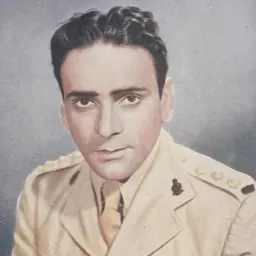
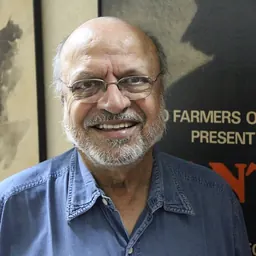
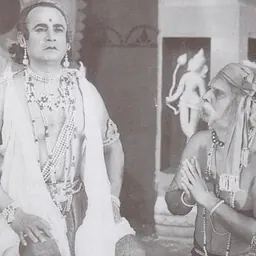
People in Habib Tanvir's life
Named in this biography and alive at the same time




Related people
Same field, nearest in time
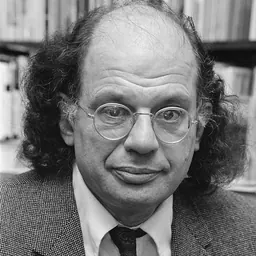

Contemporaries
People whose lives overlapped Habib Tanvir's

Frequently asked questions
Who was Habib Tanvir?
Indian actor (1923–2009)
When was Habib Tanvir born?
Habib Tanvir was born on 1 September 1923 in Raipur.
When did Habib Tanvir die?
Habib Tanvir died on 8 June 2009 in Bhopal.
What was Habib Tanvir's occupation?
Habib Tanvir was a playwright, actor, politician, writer, theatre manager and director.
What nationality was Habib Tanvir?
Habib Tanvir was Indian.
Sources & further reading
Cite this page
APA: Biography.guide. (2026). Habib Tanvir. https://biography.guide/habib-tanvir/
MLA: "Habib Tanvir." Biography.guide, https://biography.guide/habib-tanvir/.
Chicago: "Habib Tanvir." Biography.guide. https://biography.guide/habib-tanvir/.
Data last updated: 2026-09-20 · Spot an error? Report a correction.
Page generated 2026-09-27 05:22 UTC