
About Haakon Lie
Lived 1905 – 2009 (aged 103). Haakon Lie was a Norwegian politician, writer and party secretary.
Haakon Steen Lie (22 September 1905 – 25 May 2009) was a Norwegian politician who served as party secretary for the Norwegian Labour Party from 1945 to 1969. Coming from humble origins, he became involved in the labour movement at an early age, and quickly rose in the party system. After actively working for the resistance movement and the exiled government during World War II, he was elected to the second-highest position in the party after the war, and his years in office were the most successful in the party's history.
Lie is widely considered – along with Einar Gerhardsen – to be the architect of the post-war success of the Labour Party, and of the Norwegian welfare state. At the same time, he has also been the subject of criticism for organising surveillance of Norwegian opposition figures, in particular communists. Lie remained active in Norwegian public life, even after his 100th birthday, and in 2008 he celebrated his 103rd birthday with the release of a new biography, "Slik jeg ser det nå" (As I see it now).
Early life and education Born 22 September 1905 into a family of Finnish origin in Oslo (then named Kristiania), he was baptized Håkon Steen Lie. He would later change the spelling to Haakon during World War II. His father was fireman Andreas Lie (1870-1942) and his mother was homemaker Karen Halvorsdatter Gunderud (1871-1952). Though he describes his childhood as a happy one, his family was poor and, until 1916, his father had to work 120 hours a week. With his parents, two brothers, and two sisters, he grew up at his fathers fire-station sharing one room and a kitchen in the St. Hanshaugen neighborhood. Lie got involved with the labour movement at the age of sixteen, in 1921.
Here he met some of his lifelong friends and colleagues: Martin Tranmæl, Oscar Torp, and Einar Gerhardsen. When the Labour Party left the Third Communist International in 1923, and was split between the new-founded Communist Party and the remaining social democrats, Lie ended up on the latter wing. The bitter strife between the two factions strongly influenced his lifelong anti-communist stance. During the Spanish Civil War in 1936–39, he helped organise aid to those fighting the fascists and, during the winter of 1936–37, he visited the country.
World War II When Norway was invaded by Germany in April 1940, Lie immediately started organising resistance, taking charge of free radio broadcasts from various locations in the country. For two months this work kept him in constant movement around Norway, and on 7 June 1940, when King Haakon VII and the government left the country for London, he was in Vadsø, replacing a broken transmitter. While Haakon was in exile, his brother Per, who was also a labour activist, was arrested in Norway in 1942.
Party secretary On 20 June 1945, Lie returned to Norway. At the national convention of the Labour Party that same year, he was elected party secretary. While Gerhardsen became chairman and prime minister, and gradually assumed his role as "Father of the Nation" ("Landsfaderen"), Lie maintained party discipline and staked out the political strategy in the background. From his position at the head of the party he helped orchestrate the predominant position the party was to hold in the following years, with absolute parliamentary majorities won in the 1945, 1949, 1953 and 1957 elections. During the reconstruction of the post-war years, he helped lead the party onto a more moderate path. Private versus public ownership of industry now became a practical, rather than an ideological question. The policy proved highly successful; the country experienced unprecedented growth, as well as improved conditions for the working class, during his tenure.
Lie himself defended his hard-line tactics, claiming communism had represented a threat to democracy as well as the party, famously exclaiming "The Labour Party is no damn Sunday school! ". There were also external events that aided his cause. The Marshall Plan accepted in 1947 and the Norwegian membership in NATO from 1949 drew the nation closer to the United States. Meanwhile, the Soviet invasion of Czechoslovakia in 1968 demonstrated the threat represented by the Soviet Union. Gerhardsen had grown more and more frustrated at Lie's hard-line tactics against communists and perceived Soviet sympathisers, as well as his attempts to stifle foreign policy debate within the Central Committee. Lie on his part grew embittered over what he perceived was the Gerhardsen-couple protecting key leftists, such as Trygve Bull. According to Bull, Lie and Gerhardsen hardly spoke to each other after 1957.
At the national party convention of 1967 Gerhardsen openly attacked Lie, to which Lie reportedly responded by threatening to "break" Gerhardsen "like a louse" ("Jeg skal knekke deg som en lus"). Gerhardsen later regretted the attack, and later sent Lie a letter of apology - to which the latter never replied. Lie resigned as party secretary in 1969, and Gerhardsen retired from active politics the same year. It was not until 1985, at the behest of former defence minister Jens Christian Hauge, that the pair officially reconciled.
Later life Lie remained active as a public commentator and in politics after his retirement from party politics, and even after his centenary. He led the losing campaign for Norwegian membership in the EEC in the early 1970s, His preferred method of staying updated on current international events was through weekly readings of The Economist. though he later became highly critical of the Israeli government's current treatment of the Palestinians and to the settlement of the West Bank. He however still maintained his "warm sympathies" for Israel for the rest of his life. Friends of Israel in the Norwegian Labour Movement (Norwegian: Venner av Israel i Norsk Arbeiderbevegelse), planted a forest to his memory in Israel.
Personal life Lie was married twice – first in 1929 to Ragnhild Halvorsen (1905-91) a companion from the labour youth movement. They divorced in 1951 because when he was in America he met Minnie Dockterman, who would be his future wife, thereby creating a scandal. He married Minnie Dockterman in 1952 (1912–99). He left three daughters, two; Gro (1932-) and Turid (1938-) by his first wife and one; Karen (1952) by the second wife. In addition he left five grandchildren as well as six great-grandchildren.
Don’t just read it —
keep it.
Full-length biographies made to live with: read them, listen on the way to work, watch them tonight.
- E-book
- Audio
- Video
Instant download · yours to keep · every purchase keeps this site free
Important facts
People in Haakon Lie's life
Named in this biography and alive at the same time


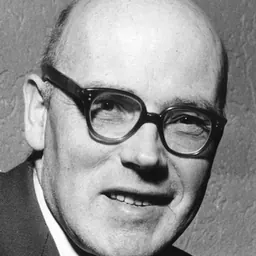





Related people
Same field, nearest in time





Contemporaries
People whose lives overlapped Haakon Lie's
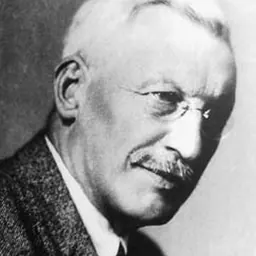
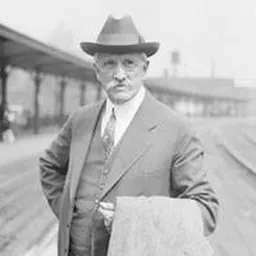
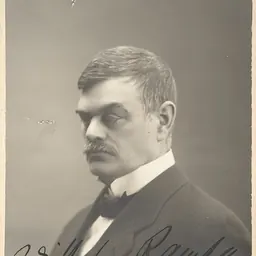

Frequently asked questions
Who was Haakon Lie?
Norwegian politician (1905–2009)
When was Haakon Lie born?
Haakon Lie was born on 22 September 1905 in Christiania.
When did Haakon Lie die?
Haakon Lie died on 25 May 2009 in Oslo.
What was Haakon Lie's occupation?
Haakon Lie was a politician, writer and party secretary.
What nationality was Haakon Lie?
Haakon Lie was Norwegian.
Sources & further reading
Cite this page
APA: Biography.guide. (2026). Haakon Lie. https://biography.guide/haakon-lie-politician/
MLA: "Haakon Lie." Biography.guide, https://biography.guide/haakon-lie-politician/.
Chicago: "Haakon Lie." Biography.guide. https://biography.guide/haakon-lie-politician/.
Data last updated: 2026-09-26 · Spot an error? Report a correction.
Page generated 2026-09-27 05:15 UTC