
About H. W. Gretton
Lived 1914 – 1983 (aged 68–69). H. W. Gretton was a New Zealand journalist, composer, diarist and poet.
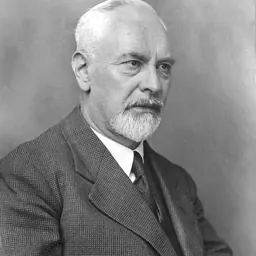
Harold William Gretton (16 March 1914 – 1983) was a New Zealand poet, lyricist, writer, teacher, journalist, linguist, diarist and Second World War soldier. In New Zealand, Gretton's tramping songs (popular between the 1950s and 1970s) are still well known today. His Second World War diary is also of note for its social history of military life, along with his soldier's poem 'Koru and Acanthus'.
Life
Gretton grew up near Palmerston North on a dairy farm in Linton. He was the son of the farmer Thomas Henry Gretton and Margaret Gretton (née Geddes).
He attended Palmerston North Boys' High School and after Victoria University College (1935–1938). At Victoria, Gretton studied for his Bachelor of Arts degree and other interests included running, the University Tramping Club, and contributing to the annual student review, The Spike.
He found work as a copyholder and later cadet reporter for The Dominion before attending Wellington Teachers' Training College while he was also studying part-time at Victoria.
Gretton served in World War II. He was called up for military service in 1941 and served in the 2NZEF infantry. He was teaching at Manaia Primary School in Taranaki at the time of his call-up. In 1942, he became Registrar of the Births and Deaths of Maori at Waitapu.
At the conclusion of his service, Gretton returned to Victoria and teaching, and graduated with a Master of Arts degree in 1948. He next moved to the Bay of Plenty to teach at Rangitahi District High School in Murupara, but returned to Wellington in the 1950s to work at the Wellington Correspondence School, and after lived and taught for many years in Taupō at Taupo-nui-a-Tia College from 1962 to 1978.
Gretton married Derkje (Diana) Gretton (née Hof), who was Dutch.
He died in 1983 at the age of 69.
Literary output
Gretton began writing poetry as a schoolboy at Palmerston North Boys' High School. By 1931, he could produce competent parodies of Romantic Scottish ballads.
He published much of his poetry and prose in The Spike: or, Victoria University College Review between 1935 and 1947.
In 1944, he co-edited (with Martyn Uren and J. L. Grimaldi) the February issue of the troopship magazine, Down the Hatch, which includes a number of sketches by Captain Peter McIntyre. The magazine was produced on Troopship 82 (Mooltan) which left New Zealand on 12 January 1944 carrying 11th Reinforcements.
In 1949, Gretton's poetry appeared in the third edition of the Victoria University College anthology, The Old Clay Patch. He also appears in the Glenco publication, Moa on Lambton Quay: Animal, Vegetable and Funereal Verse (1951).
He has tramping songs included in ephemeral songbooks such as the Tararua Songbook (1971) and collections distributed by New Zealand tramping clubs and student organisations. It appears in The Spike 1947. The poem looks at the apocalyptic effects of war in Europe with reflections on New Zealand's future.
His papers consist of notebooks and a diary. The diary is a social history of the war period through the lens of a 2NZEF infantryman.
Renewal of interest
In 1991, Les Cleveland included Gretton's 'No More Double Bunking' in The Great New Zealand Songbook; and Cleveland again mentions Gretton for his war poem 'Koru and Acanthus' in his essay on 'War Literature: World War 2' in the Oxford Companion to New Zealand Literature (1998).
Academics Harry Ricketts and Hugh Roberts further included seven of Gretton's comic verses and songs in their anthology of New Zealand comic and satiric verse, How You Doing? (1998). This can be seen as the first major inclusion of Gretton's work in a New Zealand anthology since the 1960s whose contributors date back to the 19th century.
In 2001, New Zealand poets and editors Bill Sewell and Lauris Edmond included two of Gretton's poems in their anthology of New Zealand poetry, Essential New Zealand Poems.
In 2002, Les Cleveland contributed an article on Gretton to New Zealand Books. Cleveland notes 'Gretton's poetry is energised by a wry, discerning wit and dexterous capacity for rhyme.'
Don’t just read it —
keep it.
Full-length biographies made to live with: read them, listen on the way to work, watch them tonight.
- E-book
- Audio
- Video
Instant download · yours to keep · every purchase keeps this site free
Important facts
People in H. W. Gretton's life
Named in this biography and alive at the same time




Related people
Same field, nearest in time


Contemporaries
People whose lives overlapped H. W. Gretton's


Frequently asked questions
Who was H. W. Gretton?
New Zealand musician and writer (1914–1983)
When was H. W. Gretton born?
H. W. Gretton was born in 1914.
When did H. W. Gretton die?
H. W. Gretton died in 1983.
What was H. W. Gretton's occupation?
H. W. Gretton was a journalist, composer, diarist and poet.
What nationality was H. W. Gretton?
H. W. Gretton was New Zealand.
Sources & further reading
Cite this page
APA: Biography.guide. (2026). H. W. Gretton. https://biography.guide/h-w-gretton/
MLA: "H. W. Gretton." Biography.guide, https://biography.guide/h-w-gretton/.
Chicago: "H. W. Gretton." Biography.guide. https://biography.guide/h-w-gretton/.
Data last updated: 2026-09-20 · Spot an error? Report a correction.
Page generated 2026-09-27 05:10 UTC