
About H.L. Leonard
Lived 1831 – 1907 (aged 75–76). H.L. Leonard was an American mechanical engineer and businessperson.
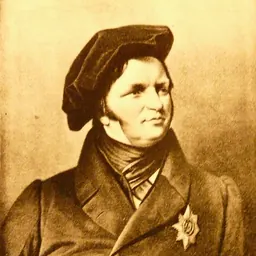
Hiram Lewis Leonard, (January 23, 1831 – January 30, 1907) was the founder of the H.L. Leonard Rod Company. He has been regarded as the father of the modern fly rod. He was also an adventurer, gunsmith, engineer and maker of musical instruments. His exploits as a guide and hunter were written about by Henry David Thoreau. As an innovator in bamboo fly rod construction, manufacture and performance, the rodmakers Leonard trained went on to become leaders in the field of bamboo rodmaking. The rods bearing his name are sought after for their aesthetics, performance and as collectables.
Early life Hiram Lewis Leonard was born January 23, 1831, in Sebec, Piscataquis, Maine, to Lewis Leonard and his wife Hannah Blood. Between 1835 and 1840, the family moved to Wayne County, Pennsylvania. Before he became pioneer of the modern bamboo fly rod, Hiram Leonard was a hunter, guide, gunsmith and self-taught engineer. He also played the flute. Leonard was an outdoorsman in the still undeveloped northeast of the United States. His fearless exploits, innovative approach and wiry strength earned him a reputation as "the Great Hunter" in his own time.
Henry David Thoreau wrote that Leonard was a "handsome man of good height, but not apparently robust, of gentlemanly address and faultless toilet". Thoreau also recounted an incident where Leonard single handedly saved the lives of two passengers who were trapped in their stagecoach which had sunk in the frozen Piscataquis River.
Leonard also briefly served as the president of the Carmel Antimony Mining Company located in Carmel, Maine during the Maine Mining Boom in 1880.
Bamboo rodmaker Ernest Schweibert, in his double volume, Trout, called Hiram Leonard "the father of the modern fly rod”, not only in terms of technical knowledge but also because of the many great rodmakers who were trained in his shop.
In 1869, Leonard set up as a gunsmith in Bangor, Maine.
He worked alone for about a year before he hired a helper. Eventually he employed eleven men, before he moved to Central Valley, New York, in 1881. In 1899 his factory was moved to the site where it remains today, though the original Leonard Rod Company was closed in 1984. It was while working with employee Loman Hawes, that they first developed the "revolutionary" beveler. It allowed Leonard to dramatically increase production as well as increase the quality and consistency of his product. Before this time, fly rods varied greatly rod to rod. Manufacturing was difficult due to the imprecision of the tools available. With his new beveler, Leonard was able to hold tolerances to thousands of an inch. The series of measurements, known as 'tapers', he used as the templates for beveling his rods became standards for every rodmaker thereafter.
Don’t just read it —
keep it.
Full-length biographies made to live with: read them, listen on the way to work, watch them tonight.
- E-book
- Audio
- Video
Instant download · yours to keep · every purchase keeps this site free
Important facts
People in H.L. Leonard's life
Named in this biography and alive at the same time

Related people
Same field, nearest in time



Contemporaries
People whose lives overlapped H.L. Leonard's



Frequently asked questions
Who was H.L. Leonard?
American woodworker and rodmaker
When was H.L. Leonard born?
H.L. Leonard was born on 23 June 1831.
When did H.L. Leonard die?
H.L. Leonard died in 1907.
What was H.L. Leonard's occupation?
H.L. Leonard was a mechanical engineer and businessperson.
What nationality was H.L. Leonard?
H.L. Leonard was American.
Sources & further reading
Cite this page
APA: Biography.guide. (2026). H.L. Leonard. https://biography.guide/h-l-leonard/
MLA: "H.L. Leonard." Biography.guide, https://biography.guide/h-l-leonard/.
Chicago: "H.L. Leonard." Biography.guide. https://biography.guide/h-l-leonard/.
Data last updated: 2026-09-20 · Spot an error? Report a correction.
Page generated 2026-09-27 05:32 UTC