
György Márkus
Hungarian philosopher
About György Márkus
Lived 1934 – 2016 (aged 82). György Márkus was a Hungarian and Australian philosopher, university teacher and cultural studies scholar.
György Márkus (13 April 1934 – 5 October 2016) was a Hungarian philosopher, belonging to the small circle of critical theorists closely associated with György Lukács and usually referred to as the Budapest School.
Biography Márkus was born in Budapest in 1934 and survived the Holocaust as a young boy. After the war and the final victory of the Communist government he was sent to complete his philosophical training at Lomonosov University in Moscow from 1953 until 1957. There he met his future wife Maria Márkus who was also studying philosophy. They had their first of two sons György (Gyuri) in 1956 and Andras two years later in Budapest, where they returned in 1957 shortly after the Hungarian Revolution and where he taught until 1965.
From 1960 he joined a small group of like-minded philosophers established around the internationally renowned Marxist philosopher György Lukács who in his last period founded a programme based on the ‘Renaissance of Marx’. This project was to resurrect the original emancipatory meaning of Marx's works and demonstrate their contemporary relevance. Other notable members of this group included Ágnes Heller, Ferenc Fehér, István Mészáros, Mihály Vajda, György's wife Maria Márkus and later his students György Bence and János Kis. As a specialist in analytical English and American philosophy, Márkus wrote his dissertation on Wittgenstein's Tractatus Logico-Philosophicus, which he had previously translated into Hungarian for the first time, and spent 1965–1966 at the University of Pittsburgh in the United States supervised by Wilfrid Sellars and Willard V. O. Quine. Márkus received the Academy Prize of the Philosophy and Humanities Section of the Hungarian Academy of Sciences in 1966.
In 1977, György and Maria Márkus along with Heller and Feher decided to leave Hungary and by 1978 all four had settled in Australia, where Márkus had been offered an appointment in the Department of General Philosophy at the University of Sydney. Over the next two decades he taught across a range of areas including History of Philosophy, Marxism and Critical Theory, and Aesthetics. He was awarded a personal chair in 1996 and retired in 1998. His first period was concerned with fleshing out a ‘humanist’ Marxism, and saw Markus exploring the idea of a normative philosophical anthropology that could guide this theoretical project - an anthropology that was still largely based on a theory of evolving needs articulated through a more or less traditional Marxist view of historical development.
The second period is marked by a more critical standpoint on Marx and a special focus on the methodological limitations of the orthodox Marxian paradigm of labour. Markus also begins to look to the early Marx (rather than a later teleological theory of history) for the normative underpinnings of his philosophical anthropology. Markus also begins in this period to engage more with non-Marxist theorists like Hans-Georg Gadamer, Leo Strauss as well as renewing his interest in Wittgenstein. Here the extensive scope of Márkus’ grasp of developments in the wider philosophical world allowed him to engage critically with the variety of ways in which ‘language paradigm’ had gained ascendancy in twentieth-century humanistic studies. Márkus argued against this linguistic model, advocating a view of culture as a type of productive process better understood along (expanded) Marxist lines.
The third and final period is even more critical of the narrow Marxist technicist paradigm of production. Via a critique of Habermas’ communicative turn, he argues that the legacy of this paradigm had prevented the critical theoretical tradition from giving a sufficiently rich account of the subject's concrete interactions with nature as also a thoroughly social process. Habermas had also recognised the normative deficit of this paradigm but largely abandoned it altogether, opting instead - in a Kantian twist - for an idealised, transcendental perspective extracted from the conditions of linguistic interaction. For Markus this change of perspective leaves the tradition with, on the one hand, a frozen and idealised form of rationality, and on the other hand, a reductive and purely instrumental idea of historical development. Markus remained committed, for the remainder of his working life, to the idea that a non-reductive paradigm of production could ground a theory of culture, a ‘unified’ theory of social normativity and emancipatory political action.
Selected publications Marxizmus és „antropológia”. Az emberi lényeg fogalma Marx filozófiájában, 1966 (Marxism and Anthropology, 1978) Irányzatok a mai polgári filozófiában, 1972 together with Zádor Tordai Hogyan lehetséges kritikai gazdaságtan?, 1973 together with György Bence and János Kis Diktatúra a szükségletek felett, with Ferenc Feher and Agnes Heller, 1983 (Dictatorship Over Needs, 1983) Why is there no hermeneutics of natural sciences? Some preliminary theses. Science in Context 1987;1:5-51 (pdf ) Kultúra és modernitás. Hermeneutikai kísérletek, 1992 Metafizika – mi végre?, 1998 “The Soul and Life: The Young Lukács and the Problem of Culture”. Telos 32 Language et production, 1982 (Language and production: A critique of the paradigms, 1986) "A Society of Culture: The constitution of modernity" in Rethinking Imagination, 1994 Culture, Science, Society: The Constitution of Cultural Modernity, 2013. Edited by John Grumley Is a Critical Economics Possible? with Janos Kis and Gyorgy Bence, 2021. Edited by John Grumley Critical Theory, Radical Historicism, Science: The Contemporary György Markus, 2021. Edited and Introduced by John Grumley and Harriet Johnson
Prizes Academy Prize of the Philosophy and Humanities Section of the MTA (Hungarian Academy of Sciences), 1966 Lukács György-Prize 2005
Don’t just read it —
keep it.
Full-length biographies made to live with: read them, listen on the way to work, watch them tonight.
- E-book
- Audio
- Video
Instant download · yours to keep · every purchase keeps this site free
Important facts
People in György Márkus's life
Named in this biography and alive at the same time




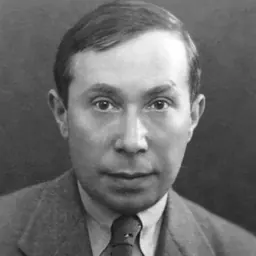
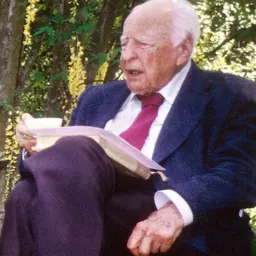
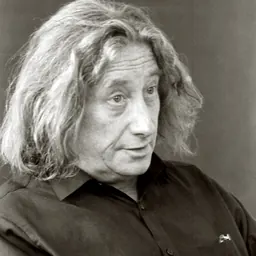
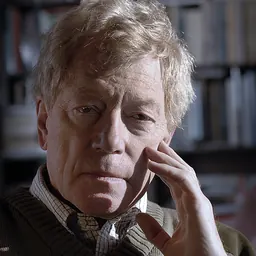
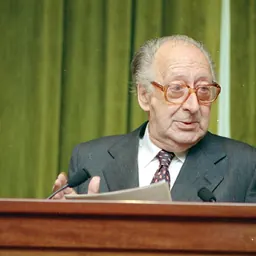
Related people
Same field, nearest in time
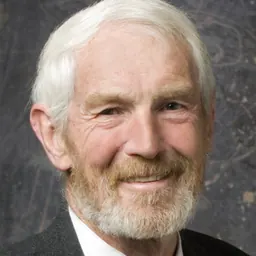



Contemporaries
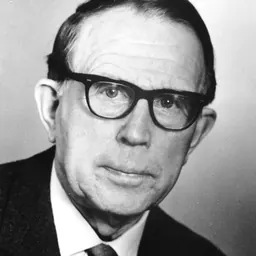
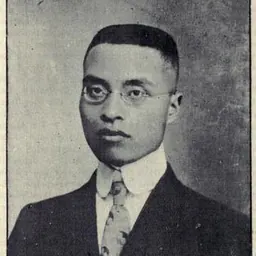
People whose lives overlapped György Márkus's


Frequently asked questions
Who was György Márkus?
Hungarian philosopher (1934-2016)
When was György Márkus born?
György Márkus was born on 13 April 1934 in Budapest.
When did György Márkus die?
György Márkus died on 5 October 2016 in Sydney.
What was György Márkus's occupation?
György Márkus was a philosopher, university teacher and cultural studies scholar.
What nationality was György Márkus?
György Márkus was Hungarian and Australian.
Sources & further reading
Cite this page
APA: Biography.guide. (2026). György Márkus. https://biography.guide/gyorgy-markus/
MLA: "György Márkus." Biography.guide, https://biography.guide/gyorgy-markus/.
Chicago: "György Márkus." Biography.guide. https://biography.guide/gyorgy-markus/.
Data last updated: 2026-09-20 · Spot an error? Report a correction.
Page generated 2026-09-27 05:25 UTC