
About Guy Newton
Lived 1917 – 2018 (aged 100). Guy Newton was a military personnel and manager.
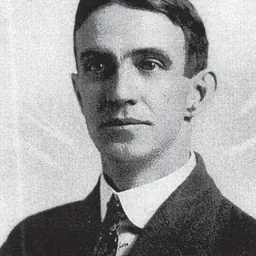
Percival Guy Haig Newton, (29 September 1917 – 24 July 2018) was a flying ace of the Royal New Zealand Air Force (RNZAF) during the Second World War. He was credited with the destruction of at least five enemy aircraft.
Born in Christchurch, Newton joined the Royal Air Force in 1939 but did his flying training in New Zealand with the RNZAF. By the time his training was complete, the Second World War had started and he transferred to the RNZAF. He spent several months on instructing duties before being posted to No. 17 Squadron as a flight commander. In July 1943 he became commanding officer of the squadron and served in the South West Pacific theatre for several months before returning to New Zealand. He spent the rest of the war on staff duties, and was promoted to wing commander in 1945. On returning to civilian life, he worked in the engineering industry and later joined General Motors New Zealand. He subsequently held senior roles with subsidiaries of General Motors before retiring to Melbourne, Australia, in 1980. He died there in 2018, aged 100.
Early life Percival Guy Haig Newton, known as Guy, was born in Christchurch, New Zealand, on 29 September 1917, one of seven children of Arthur and Margaret Newton. He was educated at Rangiora High School and went on to study at Christ's College in Christchurch for his final year of secondary school. He worked as an engineering draughtsman for the Christchurch branch of the Department of Public Works while attending night school at the University of Canterbury. Keenly interested in flying, he enlisted in the Civil Reserve of Pilots in 1937.
Subsequently, Newton applied for a short service commission in the Royal Air Force (RAF). His application was accepted and, in April 1939, he began his flight training with the Royal New Zealand Air Force (RNZAF). He trained at Wigram Aerodrome and received a temporary commission as a pilot officer in June.
Second World War Following the outbreak of the Second World War, Newton was transferred to the RNZAF on a short-service commission instead of proceeding to the United Kingdom to serve with the RAF. Initially retained on the staff at the RNZAF base at Wigram, he was subsequently posted to No. 2 Intermediate Flying Training School after training as an instructor in early 1940 and having been confirmed in the rank of pilot officer. He was promoted to flying officer in January 1941.
In October 1942, No. 17 Squadron was formed at Ohakea and Newton was appointed one of its flight commanders. Equipped with Kittyhawks, the squadron trained in New Zealand for several months until, in July 1943, it deployed to the South West Pacific, initially based at Espiritu Santo.
Service in South West Pacific By this time Newton was commanding officer of No. 17 Squadron, having been promoted to squadron leader. In April 1945, he was promoted to wing commander. He became the RNZAF's Director of Operations in August but the war ended shortly afterwards. He was credited with five Japanese aircraft shot down and another probably destroyed. He and Geoffrey Fisken, who also destroyed five Japanese aircraft, were the most successful fighter pilots of the RNZAF in the Southwest Pacific area of operations.
Later life Newton's service in the RNZAF ceased in April 1946 and he went on to the Reserve of Pilots, where he remained until December 1950. In the meantime, he returned to the engineering profession, working in Christchurch. In 1952, he began to work for General Motors New Zealand, becoming chief engineer for the company three years later. He relocated to Melbourne in Australia in 1957, and rose to become general manager of the Frigidaire Division in 1963. A few years later he moved again, this time to London as managing director of GM Limited. He also held senior positions with Vauxhall Motors and the German company Adam Opel AG and was later president of GM France. At the time, he was the most senior non-American in the company.
Newton retired in 1980, settling back in Melbourne. He died on 24 July 2018, survived by his three children. His wife had predeceased him in 1998.
Don’t just read it —
keep it.
Full-length biographies made to live with: read them, listen on the way to work, watch them tonight.
- E-book
- Audio
- Video
Instant download · yours to keep · every purchase keeps this site free
Important facts
People in Guy Newton's life
Named in this biography and alive at the same time

Related people
Same field, nearest in time



Contemporaries
People whose lives overlapped Guy Newton's

Frequently asked questions
Who was Guy Newton?
New Zealander flying ace
When was Guy Newton born?
Guy Newton was born on 27 September 1917.
When did Guy Newton die?
Guy Newton died on 24 July 2018.
What was Guy Newton's occupation?
Guy Newton was a military personnel and manager.
Sources & further reading
· DBpedia: Guy Newton (RNZAF officer)
Cite this page
APA: Biography.guide. (2026). Guy Newton. https://biography.guide/guy-newton-military-personnel/
MLA: "Guy Newton." Biography.guide, https://biography.guide/guy-newton-military-personnel/.
Chicago: "Guy Newton." Biography.guide. https://biography.guide/guy-newton-military-personnel/.
Data last updated: 2026-09-20 · Spot an error? Report a correction.
Page generated 2026-09-27 05:32 UTC