
About Guy Maddin
Born 1956. Guy Maddin is a Canadian film director, screenwriter, camera operator, actor, cinematographer and film producer.
Guy Maddin (born February 28, 1956) is a Canadian screenwriter, director, author, cinematographer, film editor, and installation artist. Maddin was appointed to the Order of Canada in 2012.
Maddin served as a visiting lecturer at Harvard University's Department of Art, Film, and Visual Studies from 2015 to 2018.
Life and career
Early life (1956–1984) Guy Maddin was born on February 28, 1956, in Winnipeg, Manitoba, to Herdis Maddin (a hairdresser) and Charles "Chas" Maddin (a grain clerk and general manager of the Maroons, a Winnipeg hockey team). Maddin has three older siblings: Ross (b. 1944), Cameron (1946–1963), and Janet (b. 1949). Maddin attended Winnipeg public schools: the Greenway School (elementary school), General Wolfe (junior high school), and the Daniel McIntyre Collegiate Institute (high school). In February 1963, his brother Cameron killed himself on the grave of his girlfriend, who had died in a car crash. That same year, Maddin's father died suddenly after a stroke,
After graduating, Maddin held a variety of odd jobs, including bank manager, house painter, and photo archivist. Maddin began to take film classes at the University of Manitoba. There, Maddin met film professor Stephen Snyder, who held regular film screenings of titles from the school's film library at his home. Maddin attended, as did some early collaborators, including his friend John Boles Harvie, the future star of Maddin's first film, as well as filmmaker John Paizs. Maddin appeared as an actor in two of Paizs' short films,Oak, Ivy, and Other Dead Elms (1982) and The International Style (1983). Maddin drew early inspiration from the films of John Paizs, as well as experimental shorts by Stephen Snyder.
Maddin joined the Winnipeg Film Group around this time, and also became friends with producer Greg Klymkiw, with whom he began making a cable access television show, Survival (c. 1985–1987). Survival was a satirical talk show centred around "surviv[ing] the inevitable social/economic collapse and/or nuclear holocaust." The show became a cult hit in Winnipeg and excerpts were re-released on the compilation DVD Winnipeg Babysitter. Maddin plays a masked character on the show named "Concerned Citizen Stan".
The Dead Father and Tales from the Gimli Hospital (1985–1988) Maddin's first short film (as director, writer, producer, and cinematographer) was The Dead Father, a 25-minute black-and-white film about a young man whose father dies but continues to visit his family and disapprove of his son's life. Its budget is estimated at CA$5,000 . Maddin began shooting The Dead Father in 1982 and finished the film in 1985. Although Maddin did not feel that the film's Winnipeg premiere had gone well, John Paizs convinced him to submit the film to the Toronto Film Festival and the festival accepted the film. At the festival Maddin met Atom Egoyan, Jeremy Podeswa, and Norman Jewison, and began to form connections with Canadian filmmakers across the national scene. The film marks Maddin's first formal collaboration with fellow screenwriter George Toles.
Maddin shot Archangel in black-and-white on 16 mm film, on a budget of CA$430,000. Archangel premiered at the Toronto Film Festival, and in 1991 was awarded Best Experimental Film by the National Society of Film Critics.
Maddin's third feature, Careful (1992), was styled after another early cinema genre, the German mountain film. In 1995, Maddin also became the youngest recipient ever of the Telluride Film Festival's Lifetime Achievement Award.
Maddin's fourth feature, also scripted by Toles and inspired by the novel Pan by Knut Hamsun, was Twilight of the Ice Nymphs (1997), his second feature film in colour and his first shot in 35 mm, on a budget of CA$1.5 million . Impressed with Dawson's short films, Maddin hired Dawson to work on a short film for the Toronto International Film Festival. Maddin was one of a number of directors commissioned to make four-minute short films that would screen prior to the various feature films at the 2000 festival. After hearing rumours that other directors were planning films with a small number of shots, Maddin decided that his film would instead contain over a hundred shots per minute, and enough plot for a feature-length film. Maddin then wrote and shot The Heart of the World (2000) in the style of Russian constructivism, taking the commission at its face value as a call to produce a propaganda film. The plot of The Heart of the World concerns two brothers, Osip and Nikolai, who compete for the love of the same woman: Anna, a state scientist studying Earth's core. Anna discovers that the heart of the world is in danger of a fatal heart attack (which would mean the end of the world). Nikolai is a mortician and tries to impress Anna with assembly-line embalming, while Osip is an actor playing Christ in the Passion Play and tries to impress Anna through his suffering. Anna is instead seduced by an evil capitalist, but has a change of heart and strangles the plutocrat, then slides down into the heart of the world, where she manages to save the world from destruction by transforming into cinema itself, the world's "new and better heart." The Heart of the World won the 2001 Genie Award for Best Short and the 2001 National Society of Film Critics Award for Best Experimental Film. Dracula: Pages from a Virgin's Diary was budgeted at $1.7-million Maddin stayed close to the source material, emphasizing the xenophobia in the reactions of the main characters to Dracula (played by Zhang Wei-Qiang in Maddin's film). The resulting film was greeted with critical acclaim, with an 84% average rating on Metacritic and an 88% rating on Rotten Tomatoes. Roger Ebert gave the film 3½ stars out of 4, writing that it was "jolting to see a film that deals with a familiar story, but looks like no other." Dracula: Pages from a Virgin's Diary won first prize (Prague D'Or) at the 2002 Golden Prague Television Festival, two 2002 Gemini Awards for Best Canadian Performing Arts Show and Best Direction, and a 2002 International Emmy Award for Best Arts Programming. Originally a television feature, Dracula: Pages from a Virgin's Diary was released theatrically in 2003.
Maddin's next feature, The Saddest Music in the World (2003), was budgeted at $3.8-million The film was Maddin's first collaboration with Isabella Rossellini, who subsequently appeared in a number of Maddin's films and co-created a film with him about her father Roberto Rossellini. The film also starred Mark McKinney, Maria de Medeiros, David Fox, and Ross McMillan. Maddin and co-writer Toles based the film on an original screenplay written by novelist Kazuo Ishiguro, from which they kept "the title, the premise and the contest – to determine which country's music was the saddest" but otherwise re-wrote. The action of The Saddest Music in the World centres around a contest run by Beer Baroness Lady Port-Huntley (Rossellini) to discover which country has the saddest music in the world. Chester Kent (McKinney), a failed Broadway producer, returns home to Winnipeg and competes with his father Fyodor (Fox) and brother Roderick (McMillan) to win the contest and its $25,000 prize. It's discovered that Chester's girlfriend, Narcissa (de Medeiros) was Roderick's wife but forgot this due to amnesia resulting from the death of their son. Chester reunites with Port-Huntley, his former lover, who lost her legs in a car accident. Fyodor, who is in love with Port-Huntley, has built prosthetic legs for her out of glass, which she loves although she spurns Fyodor, leading to his drunken death. As the contest proceeds, things end tragically. The Saddest Music in the World won a number of awards, including three Genie Awards (Best Achievement in Costume Design; Best Achievement in Editing; and Best Achievement in Music, Original Score); Maddin was also nominated for Best Achievement in Direction. Maddin a nomination for Best Direction in a Feature Film from the Directors Guild of Canada, which awarded the film Outstanding Achievement in Feature Film Production Design. Maddin won the Film Discovery Jury Award for Best Director at the U.S. Comedy Arts Festival.
Cowards Bend the Knee, Brand Upon the Brain!, My Winnipeg (2003–2007) While in pre-production on The Saddest Music in the World, Maddin directed Cowards Bend the Knee (2003), shooting entirely on Super 8 film with a budget of $30,000. Cowards Bend the Knee is the first in Maddin's autobiographical "Me Trilogy" of feature films starring protagonists named Guy Maddin, the others being Brand upon the Brain! (2006) and My Winnipeg (2007). a hockey player whose forgets his lover as she dies from complications during an illegal abortion. Guy starts a love affair with the daughter of the abortionist, who compels him to murder her mother to avenge the death of her father. Guy meanwhile falls in love with the ghost of his dead lover, not recognizing her, and competes with his own father for her affection. Maddin based the film's premise loosely on the Euripedes play Medea. Critic J. Hoberman of The Village Voice called the film "Maddin's masterpiece."
Maddin was next approached by the Seattle-based not-for-profit film production company The Film Company and offered a budget to make any film he wanted with complete freedom, as long as he shot it in Seattle with local actors. Maddin ended up producing Brand Upon the Brain! (2006) from a script co-written by Toles, shooting the film over nine days and editing it over three months with an estimated budget of $40,000.
In 2005, Maddin was presented with the Award of Distinction from the Manitoba Arts Council Roger Ebert wrote of his work: "For me, Maddin seems to penetrate to the hidden layers beneath the surface of the movies, revealing a surrealistic underworld of fears, fantasies and obsessions."
Maddin's next feature stemmed from a commission to produce a documentary film about his hometown of Winnipeg. Taking what he described as a "docufantasia" approach that melded "personal history, civic tragedy, and mystical hypothesizing," Maddin produced My Winnipeg (2008), with a budget of $500,000. Best Documentary from the 2008 San Francisco Film Critics Circle Awards, Best Canadian Film from the 2009 Toronto Film Critics Association Awards, and Best Experimental Documentary from the 2009 Tehran International Urban Film Festival. In 2007, Maddin also became the first artist-curator of the UCLA Film & Television Archive.
Keyhole, Hauntings, Seances, The Forbidden Room and The Green Fog (2008–2017) Maddin received the Filmmaker on the Edge Award at the 2009 Provincetown International Film Festival and the 2010 Bell Award in Video Art from the Canada Council. Maddin then got a commission for the opening of the Bell Lightbox cultural centre in Toronto, producing an installation series titled Hauntings based on reimaginings of known lost silent films by influential filmmakers which were destroyed or not produced. In December 2010, Maddin married the film critic Kim Morgan, and they separated in 2014.
Maddin shot his tenth feature film, Keyhole (2011), digitally. Filming began in Winnipeg on July 6, 2010. The film screened at the 2011 Toronto International Film Festival and the 2011 Whistler Film Festival, where it won the Best Canadian Film Award. In 2012, Keyhole screened at South by Southwest, the Independent Film Festival Boston, the Wisconsin Film Festival, Fantasporto, and the Berlin International Film Festival. The film was released theatrically in 2012. Keyhole stars Jason Patric as Ulysses Pick, a gangster who leads his gang to break into his former home and who journeys through the haunted house in a plot inspired by Homer's Odyssey, searching room-by-room to find his wife Hyacinth (Isabella Rossellini). The film was co-written by Maddin and Toles and also stars Udo Kier, Brooke Palsson, David Wontner, Louis Negin, and Kevin McDonald.
Also in 2011, Maddin participated in Performa 11 with Tales from the Gimli Hospital: Reframed, a live performance that re-frames the 1988 film. Maddin and composer Matthew Patton gathered a group of musicians to compose and perform the new score, which centered on Icelandic musician Kristín Anna Valtýsdóttir.
In 2012, Maddin produced an installation for the Winnipeg Art Gallery, Only Dream Things, for which he recreated his childhood bedroom and produced a short film by manipulating his family's home movies.
Maddin expanded the approach of his Hauntings installation into another film/installation project, Seances, which combines "a film shoot, an experience and an installation, which will subsequently become a film and an interactive work." Maddin started shooting Seances in 2012 in Paris, France, at the Centre Pompidou and continued shooting at the Phi Centre in Montreal, Quebec, Canada.
Maddin and Evan Johnson also concurrently co-directed and shot a feature film titled The Forbidden Room with the same writers. Although often misreported as the same project, The Forbidden Room "is a feature film with its own separate story and stars." The Forbidden Room had its world premiere in January 2015 at the Sundance Film Festival.
Maddin's next feature film, The Green Fog (2017), premiered at the San Francisco International Film Festival on April 16, 2017. The film features a score by composer Jacob Garchik, performed by the Kronos Quartet, and is a collage-film, "a reimagining of the Hitchcock classic Vertigo, made entirely from archival TV and film footage shot in San Francisco."
Installations Maddin's installations generally include short films screened in unusual fashions, and draw on both his life and on the history of cinema.
Cowards Bend the Knee (2003) Maddin was commissioned by The Power Plant gallery in Toronto and, in an installation curated by Philip Monk, produced a series of ten short films. Each six-minute film is viewed through a peephole and together present a fictionalised autobiography, whose main character (named "Guy Maddin") is embroiled in illegal abortion, murder, sexual rivalry, and hockey. The installation was also exhibited at The Power Plant from March 22 to May 25, 2003. and at Concordia University's Faculty of Fine Arts Gallery from June 1–10, 2012.
Only Dream Things (2012) For a 2012 installation at the Winnipeg Art Gallery, Maddin re-created his teenage bedroom. Other writers on the project included Evan Johnson, Robert Kotyk, Kim Morgan, and John Ashbery. In 2015, Maddin and the National Film Board of Canada released Seances as an interactive project online. The book is introduced by film critic Mark Peranson and published by Coach House Books.
It features reviews of a variety of films including Minority Report and Seven Samurai, an article on the making of The Saddest Music in the World, and writing on Bollywood melodramas. The book contains four film treatments, for the short films The Eye, Like a Strange Balloon, Mounts Towards Infinity; and Maldoror: Tygers; for the feature film Careful; and for an unmade film called The Child Without Qualities, an autobiographical work that reads like an experimental short story.
Cowards Bend the Knee (2003) Maddin wrote a treatment for the feature film Cowards Bend the Knee, which he published as a book through The Power Plant, the gallery in Toronto that commissioned the installation for which Maddin produced the series of short films that collectively make up the feature film.
The book contains a foreword by Wayne Baerwaldt and an introduction by Philip Monk, who also edited the book and curated Maddin's installation. The main text is followed by an interview with Guy Maddin conducted by Robert Enright. The book also contains stills from the film and a list of credits for the film.
Most of the text is Maddin's treatment for the film, which follows the same plot. The story is a fictional "autobiography [that] features a diabolical plot surrounding a coward on a mission [named Guy Maddin] that resembles a cycle of dark spectacles dressed up as, among other things, lewd seduction, Canadian hockey, murder, amputations, hair design, general mayhem, fetish attractions and heartfelt loss." In the interview with Enright, Maddin notes that the book's genesis began with his intention to clarify the narrative of his films, and that he was inspired by Medea.
Telluride Film Festival Silver Medallion Best Canadian Short Film Special Jury Citation Odilon Redon, or The Eye Like a Strange Balloon Mounts Toward Infinity Toronto International Film Festival Awards
National Society of Film Critics Awards Best Experimental Film
International Emmy Awards Best Arts Programming
Best Performing Arts Program or Series
Manitoba Arts Award of Distinction 2007
Toronto International Film Festival Awards Best Canadian Film
Toronto Film Critics Association Awards Best Canadian Film San Francisco Bay Area Film Critics Circle Awards Best Documentary Film
Tehran International Urban Film Festival Best Experimental Documentary Provincetown International Film Festival Filmmaker on the Edge Award Los Angeles Film Critics Association Awards Douglas Edwards Experimental/Independent Film/Video Award Filmography Feature films
Short films
Don’t just read it —
keep it.
Full-length biographies made to live with: read them, listen on the way to work, watch them tonight.
- E-book
- Audio
- Video
Instant download · yours to keep · every purchase keeps this site free
Important facts
People in Guy Maddin's life
Named in this biography and alive at the same time


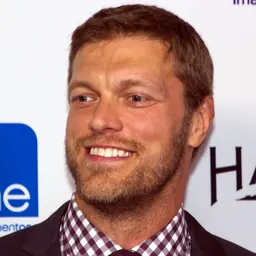
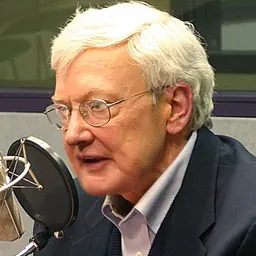




Related people
Same field, nearest in time
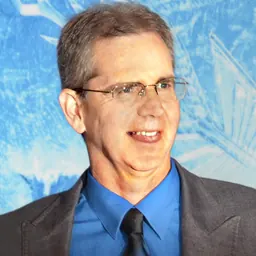
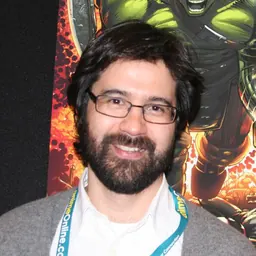

Contemporaries
People whose lives overlapped Guy Maddin's

Frequently asked questions
Who is Guy Maddin?
Canadian filmmaker (born 1956)
When was Guy Maddin born?
Guy Maddin was born on 28 February 1956 in Winnipeg.
What is Guy Maddin's occupation?
Guy Maddin is a film director, screenwriter, camera operator, actor, cinematographer and film producer.
What nationality is Guy Maddin?
Guy Maddin is Canadian.
Sources & further reading
Cite this page
APA: Biography.guide. (2026). Guy Maddin. https://biography.guide/guy-maddin/
MLA: "Guy Maddin." Biography.guide, https://biography.guide/guy-maddin/.
Chicago: "Guy Maddin." Biography.guide. https://biography.guide/guy-maddin/.
Data last updated: 2026-09-20 · Spot an error? Report a correction.
Page generated 2026-09-27 05:32 UTC