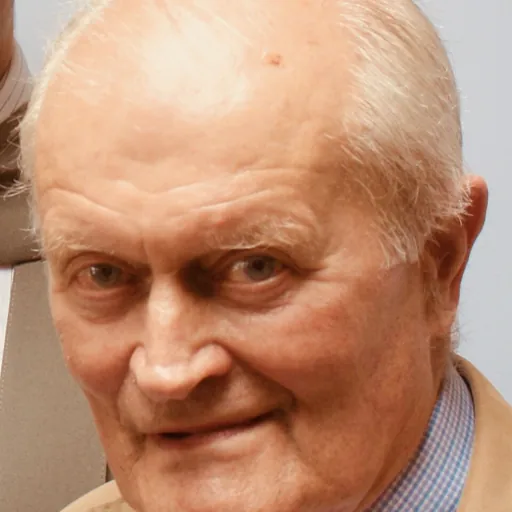
About Guy Arnold
Lived 1932 – 2020 (aged 87). Guy Arnold was a British writer.
Guy Arnold (6 May 1932 – 4 January 2020) was a British explorer, travel writer, political writer and specialist in north-south relations, who wrote mainly in the areas of African history, politics, and international affairs. He was based in Marylebone, London.
Biography
Guy Arnold was one of five children by George Arnold and Rita Shaw; he also had two half siblings (one deceased). He was an elder brother to Bruce Arnold, a novelist, non-fiction writer and journalist based in Dublin. Although born on Merseyside, he was brought up at the family home in Croydon and went to Kingham Hill School, a boarding school in Oxfordshire, thence to Chipping Norton Grammar School, before going on to St Peter's College, Oxford where he read History graduating in 1955.
Arnold was active in the Conservative Party at Oxford and in 1954 along with undergraduates Michael Heseltine, Julian Critchley and Martin Morton canvassed workers at the gates of the Vickers Shipyard in Barrow-in-Furness as part of the 1955 general election campaign. On leaving Oxford, in 1955, with three other Oxford graduates Colin Campbell, Tom Chavasse and Gordon Pickles, he undertook an exploration of the Usun Apau Plateau and the Plieran River in Sarawak, Borneo. He subsequently wrote a number of articles including "Economic Needs of Sarawak" for New Commonwealth Magazine, 'Music in Sarawak' for the Times Educational Supplement and "Prehistory of Usun Apau" for the Sarawak Museum Journal; these led to the writing of his first travel book 'Longhouse and Jungle'.
In 1958, he moved to Canada for five years and taught first at Pickering College and then at Ryerson Polytechnical Institute; during this period he was instrumental in setting up the Canadian University Service Overseas (CUSO). In 1988, his contribution to the establishment of CUSO was recognised with an award for his 25 years of service to the organisation.
In 1964, he travelled to Northern Rhodesia as an adviser to the leader of the United National Independence Party (UNIP), Kenneth Kaunda. He was regularly seen at regional UNIP offices in the yellow Packard car provided for him by Kaunda. During this period he met and stayed with Stewart Gore-Browne, later the subject of The Africa House by Christina Lamb; at the time Arnold was suffering from malaria which Gore-Brown treated with red wine. After independence in October 1964 and Kaunda's ascendancy as president, Arnold left the newly independent Zambia and drove from Lusaka to London in a newly acquired Land-rover, a journey of over 11,500 km; he was accompanied by Alan Leather who was finishing his stint with Voluntary Service Overseas (VSO). In London Arnold rented a flat in Seymour Place which was to become his home for the next 53 years, the Land Rover parked outside until parking restrictions were introduced. His flat was directly above that of the photographer Deste who became a lifelong friend and colleague until her death in 1986.
Over the course of his career, he also worked with the Overseas Development Institute, created a National Youth Service in Zambia in the period before its independence in 1964, and was Director of the Africa Bureau (a non-governmental lobby group) from 1968 to 1972, as well as working as a consultant in the field. He was the author of more than 50 books including travelogues and educational books for children.
He lectured and taught courses on international affairs for over thirty years, at the Workers’ Educational Association
While most government officials on both sides of the Atlantic have supported the Special Relationship between Britain and the United States, Arnold was a critic. In 2014, he described it as a "sickness in the body politic of Britain that needs to be flushed out." Instead he called for closer relationship with Europe and Russia so as to rid "itself of the US incubus".
Arnold died on 4 January 2020.
Don’t just read it —
keep it.
Full-length biographies made to live with: read them, listen on the way to work, watch them tonight.
- E-book
- Audio
- Video
Instant download · yours to keep · every purchase keeps this site free
Important facts
People in Guy Arnold's life
Named in this biography and alive at the same time
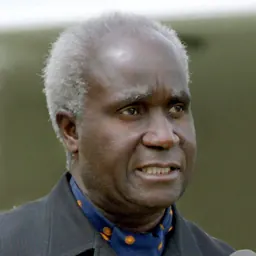
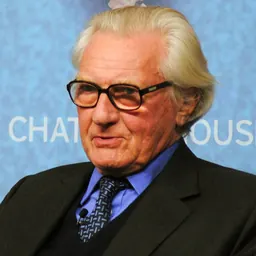

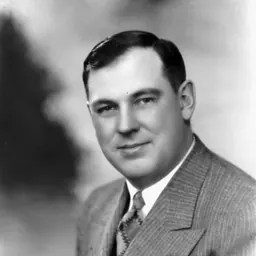




Related people
Same field, nearest in time


Contemporaries
People whose lives overlapped Guy Arnold's


Frequently asked questions
Who was Guy Arnold?
British author (1932–2020)
When was Guy Arnold born?
Guy Arnold was born on 6 May 1932 in Birkenhead.
When did Guy Arnold die?
Guy Arnold died on 4 January 2020 in Hammersmith.
What was Guy Arnold's occupation?
Guy Arnold was a writer.
What nationality was Guy Arnold?
Guy Arnold was British.
Sources & further reading
Cite this page
APA: Biography.guide. (2026). Guy Arnold. https://biography.guide/guy-arnold/
MLA: "Guy Arnold." Biography.guide, https://biography.guide/guy-arnold/.
Chicago: "Guy Arnold." Biography.guide. https://biography.guide/guy-arnold/.
Data last updated: 2026-09-22 · Spot an error? Report a correction.
Portrait: Wikimedia Commons · author & licence
Page generated 2026-09-27 05:00 UTC