
About Gustave Kahn
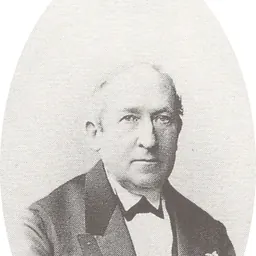
Lived 1859 – 1936 (aged 76). Gustave Kahn was a French poet, writer, literary critic and art historian.
Gustave Kahn (21 December 1859, in Metz – 5 September 1936, in Paris) was a French Symbolist poet and art critic. He was also active, via publishing and essay-writing, in defining Symbolism and distinguishing it from the Decadent Movement.
Personal life
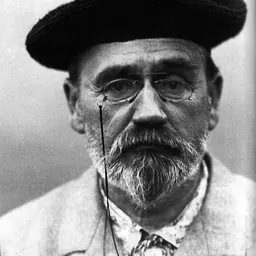
Kahn was a Jew from Lorraine. He chose sides with Émile Zola in the Dreyfus affair. His wife Elizabeth converted to Judaism as a protest against antisemitism, changing her name to Rachel.
Poetry Kahn claimed to have invented the term vers libre, or free verse. He was in any case one of the form's first European exponents. His principal publications include Les Palais nomades (1887), Domaine de fée (1895), and Le Livre d'images (1897). He also made a valuable contribution to the movement's history with his book Symbolistes et décadents (1902).
Other work In addition to his poems, Kahn was a public intellectual who wrote novels, plays, and literary criticism. He was also extremely influential as a publisher of symbolist writing. Together with Félix Fénéon and Leo d'Orfer, both critics, Kahn founded and then directed La Vogue in 1886. Through that magazine, Kahn and his partners were able to influence the careers of developing decadent writers such as Jules Laforgue, Together with Jean Moréas, he also founded and directed Le Symboliste, a short-lived journal intended as a counter-point to Anatole Bajule's Le Décadent, which they viewed as a false and exploitative publication that represented a vain, shallow mockery of symbolist thought. He played a key role in a number of other periodicals, including La Revue Indépendante, La Revue Blanche and Le Mercure de France.
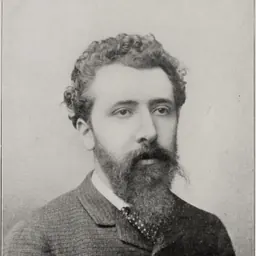
He was also an art critic and collector who stayed current with developments in painting and sculpture until his death. He wrote a widely-read obituary for neo-impressionist painter Georges Seurat, in which he suggested a symbolist approach to interpreting the artist's work.
He also played a role in a number of debates on public issues, including anarchism, feminism, socialism, and Zionism. In the 1920s he was (head)editor of Menorah, a Jewish bimonthly magazine which folded in 1933.
In 1903, American composer Charles Loeffler set four of Kahn's poems to music for piano and voice. The poems were from Les Palais Nomades: Timbres Oublies, Adieu Pour Jamais, Les Soirs d'Automne, and Les Paons.
After his death, his manuscripts were placed in the collection of the library of the Hebrew University of Jerusalem.
Quotation Les Paons
Se penchant vers les dahlias, Des paons cabraient des rosaces lunaires, L'assouplissement des branches vénère Son pâle visage aux mourants dahlias.
Elle écoute au loin les brèves musiques Nuit claire aux ramures d'accords, Et la lassitude a bercé son corps Au rythme odorant des pures musiques.
Les paons ont dressé la rampe ocellée Pour la descente de ses yeux vers le tapis De choses et de sens Qui va vers l'horizon, parure vermiculée De son corps alangui. En l'âme se tapit le flou désir molli de récits et d'encens.
Principal works
Palais nomades (1887) Les Chansons d'amant (1891) Domaine de fée (1895) Le Roi fou (1896) La Pluie et le beau temps (1896) Limbes de lumières (1897) Le Livre d'images (1897) Premiers poèmes (1897) Le Conte de l'or et du silence (1898) translated by Brian Stableford as The Tale of Gold and Silence (2011) Les Petites Ames pressées (1898) Le Cirque solaire (1898) translated into English by Sam Kunkel as The Solar Circus (First To Knock, 2023) Les Fleurs de la passion (1900) L'Adultère sentimental (1902) Symbolistes et décadents (1902) Odes de la "Raison" (1902 réédité aux Editions du Fourneau 1995) Contes hollandais (1903) La Femme dans la caricature française (1907) Contes hollandais (deuxième série) (1908) La Pépinière du Luxembourg (1923) L'Aube enamourée (1925) Mourle (1925) Silhouettes littéraires (1925) La Childebert (1926) Contes juifs (1926 réédité chez "Les Introuvables" 1977) Images bibliques (1929) Terre d'Israël (1933)
Don’t just read it —
keep it.
Full-length biographies made to live with: read them, listen on the way to work, watch them tonight.
- E-book
- Audio
- Video
Instant download · yours to keep · every purchase keeps this site free
Important facts
People in Gustave Kahn's life
Named in this biography and alive at the same time


Related people
Same field, nearest in time

Contemporaries
People whose lives overlapped Gustave Kahn's


Frequently asked questions
Who was Gustave Kahn?
French symbolist poet and art critic (1859–1936)
When was Gustave Kahn born?
Gustave Kahn was born on 21 December 1859 in Metz.
When did Gustave Kahn die?
Gustave Kahn died on 5 September 1936 in Paris.
What was Gustave Kahn's occupation?
Gustave Kahn was a poet, writer, literary critic and art historian.
What nationality was Gustave Kahn?
Gustave Kahn was French.
Sources & further reading
Cite this page
APA: Biography.guide. (2026). Gustave Kahn. https://biography.guide/gustave-kahn/
MLA: "Gustave Kahn." Biography.guide, https://biography.guide/gustave-kahn/.
Chicago: "Gustave Kahn." Biography.guide. https://biography.guide/gustave-kahn/.
Data last updated: 2026-09-20 · Spot an error? Report a correction.
Page generated 2026-09-27 05:17 UTC