
About Gustav von Wangenheim
Lived 1895 – 1975 (aged 80). Gustav von Wangenheim was a Russian and German actor, film director, screenwriter, film actor, politician and resistance fighter.
Ingo Clemens Gustav Adolf Freiherr von Wangenheim (18 February 1895 – 5 August 1975) was a German actor, screenwriter and director.
Biography Early life Wangenheim was born Ingo Clemens Gustav Adolf Freiherr von Wangenheim in Wiesbaden, Hesse, to parents Eduard Clemens Freiherr von Wangenheim and Minna Mengers. Both of his parents were performers; his father, who used the stage name Eduard von Winterstein, appeared in over 200 films between 1910 and 1960. He briefly served in the Imperial German Army during World War I but was discharged in 1915 because of an eye injury.
Career
Wangenheim made his screen debut in 1914 in Passionels Tagebuch and went on to star in many silent features. Among his works were Fritz Lang's early science fiction film, Frau im Mond (as "Windegger"), and Karl Heinz Martin's Das Haus zum Mond. In 1921, Wangenheim was cast in what would prove to be his most enduring role, that of Thomas Hutter in F. W. Murnau's Nosferatu.
A member of the Communist Party of Germany since 1921, Wangenheim founded the Communist theatre company Die Truppe '31 in 1931. Die Truppe '31 produced three plays, authored and directed by Wangenheim, before it was shut down by order of the Nazi regime in 1933.
Wangenheim fled Nazi Germany in the 1930s and found refuge in the Soviet Union. While living in exile at Moscow's Hotel Lux, he continued writing and producing films, such as Der Kampf (1936), an anti-Nazi protest film, and was the head of the German language Cabaret "Kolonne Links". In 1936, during the Stalinist purges, he denounced his colleagues Carola Neher and Anatol Becker as Trotskyites.
Becker was executed and Neher died in the Gulag system after five years in prison. Von Wangenheim's son Friedel later stated that the accusations that his father had denounced Neher and Becker were one-sided and inaccurate. Friedel claimed that his father, after being arrested by the NKVD and a lengthy interrogation, had signed a statement that implicated Carola Neher as being "anti soviet" but had explicitly rejected the accusation that Neher and her husband Anatol Becker had planned to murder Stalin.
Wangenheim was a founding member of the National Committee for a Free Germany. After World War II, he returned to East Germany, where he worked for the DEFA as screenwriter and director.
Wangenheim was married to Inge von Wangenheim from 1931 to 1954. The couple had two sons, Friedel and Edi, and twin daughters, Elisabeth and Eleonora von Wangenheim. Wangenheim died in East Berlin on 5 August 1975 and was buried in the Friedrichsfelde cemetery in Berlin.
Filmography 1916: Homunculus, 1. Teil 1916: Passionels Tagebuch 1916: Homunculus. 3. Teil: Die Liebestragödie des Homunculus - Heinrich 1916: Der Letzte eines alten Geschlechtes 1916: Das Leid der Liebe 1917: The Coquette 1918: Ferdinand Lassalle - Janko von Rakowitza 1919: Kitsch. Tragödie einer Intrigantin 1919: Der Tempel der Liebe 1919: Die Welteroberer 1920: Kohlhiesel's Daughters - Paul Seppl 1920: Romeo and Juliet in the Snow - Romeo 1920: Panic in the House of Ardon 1920: Der Tempel der Liebe 1921: The House on the Moon - Andreas, sein Sohn 1922: Nosferatu - Hutter 1922: The Fire Ship 1923: The Pilgrimage of Love - Dr. Egil Rostrup 1923: The Stone Rider - Jäger 1923: Schatten – Eine nächtliche Halluzination - Her lover 1929: Woman in the Moon - Ingenieur Hans Windegger 1931: Danton - Desmoulins (final film role) 1936: Der Kampf (director / writer) 1948: Und wieder 48 (director / writer) 1949: Hoegler's Mission (director / writer) 1953-1954: Gefährliche Fracht (director) 1955: Heimliche Ehen (director / writer) 1955-1956: Lied über dem Tal (director)
References in popular culture In the 2000 film Shadow of the Vampire, which depicted the production of Nosferatu, Eddie Izzard portrayed Wangenheim. Footage of Wangenheim's performance as Hutter appears in the Queen video for "Under Pressure."
Don’t just read it —
keep it.
Full-length biographies made to live with: read them, listen on the way to work, watch them tonight.
- E-book
- Audio
- Video
Instant download · yours to keep · every purchase keeps this site free
Important facts
Family & relationships
People in Gustav von Wangenheim's life
Named in this biography and alive at the same time

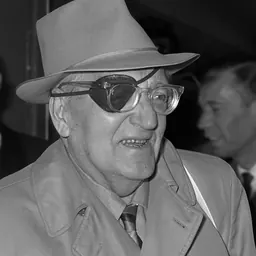


Related people
Same field, nearest in time
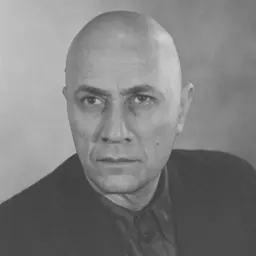

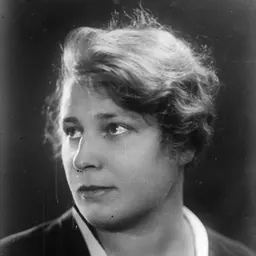
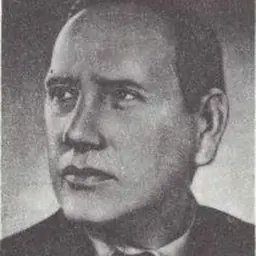


Contemporaries
People whose lives overlapped Gustav von Wangenheim's

Frequently asked questions
Who was Gustav von Wangenheim?
German actor (1895–1975)
When was Gustav von Wangenheim born?
Gustav von Wangenheim was born on 18 February 1895 in Wiesbaden.
When did Gustav von Wangenheim die?
Gustav von Wangenheim died on 5 August 1975 in East Berlin.
What was Gustav von Wangenheim's occupation?
Gustav von Wangenheim was an actor, film director, screenwriter, film actor, politician and resistance fighter.
What nationality was Gustav von Wangenheim?
Gustav von Wangenheim was Russian and German.
Sources & further reading
· Wikipedia: Gustav von Wangenheim
· DBpedia: Gustav von Wangenheim
Cite this page
APA: Biography.guide. (2026). Gustav von Wangenheim. https://biography.guide/gustav-von-wangenheim/
MLA: "Gustav von Wangenheim." Biography.guide, https://biography.guide/gustav-von-wangenheim/.
Chicago: "Gustav von Wangenheim." Biography.guide. https://biography.guide/gustav-von-wangenheim/.
Data last updated: 2026-09-20 · Spot an error? Report a correction.
Page generated 2026-09-27 05:28 UTC