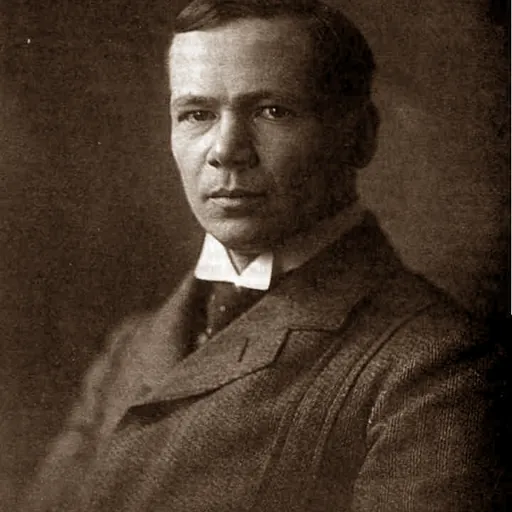
About Gustav Shpet
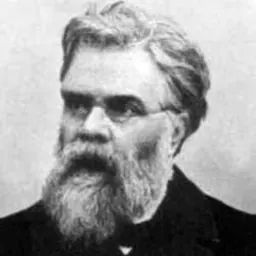
Lived 1879 – 1937 (aged 58). Gustav Shpet was a Russian translator, philosopher, psychologist and writer.
Gustav Gustavovich Shpet (; , Kiev, Russian Empire – November 16, 1937, Tomsk, Russian SFSR) was a Russian philosopher, historian of philosophy, psychologist, art theoretician, and interpreter of German and Polish descent. He knew 17 languages.
He was a student of a well-known Russian psychologist and philosopher George Chelpanov, a follower of Edmund Husserl's phenomenology, who introduced Husserlian phenomenology to Russia, modifying the phenomenology which he found in Husserl. Shpet was a Vice president of the Russian State Academy of Arts in Moscow (1923—1929). Shpet is an author of many books, including his famous A View on the History of Russian philosophy (; in 2 vols.) and The Hermeneutics and its problems .
Biography Shpet was born as the illegitimate son of an Austro-Hungarian officer and a mother of Polish-German descent of an aristocratic background.
Shpet enrolled in St. Vladimir University of Kiev in 1898, but was expelled for joining a Marxist circle. He never adopted a Marxist philosophical viewpoint, even though he sympathised with the socio-economic aims of Marxism.
As a thinker, he was thoroughly grounded in Russian religious thought of the late nineteenth and early twentieth centuries. His philosophy combined Husserl's analysis of the structure of consciousness with Platonism of Orthodoxy, the doctrine of incarnation, and veneration of matter.
In 1921 he founded the Institute of Scientific Philosophy in Moscow. From 1921 he was a full member of the Russian Academy of Art Sciences and from 1924 he was vice-president of the academy.
His espousal of Husserl's phenomenology influenced the literary scholars Mikhail Petrovsky, Grigoriy Vinokur, and Mikhail Stoliarov.
Death Shpet was a victim of the Great Purge. He was originally arrested on 14 March 1935, along with several other former colleagues from the State Art Academy. He was charged with anti-soviet activities, received a sentence of five years internal exile, and was sent to Tomsk, the first university city in Siberia. Here Shpet worked on a new Russian translation of Hegel's The Phenomenology of Spirit. However, he was arrested again on 27 October 1937 and charged with belonging to a monarchist organisation. He was executed on 16 November 1937.
He was posthumously rehabilitated in 1956.
Don’t just read it —
keep it.
Full-length biographies made to live with: read them, listen on the way to work, watch them tonight.
- E-book
- Audio
- Video
Instant download · yours to keep · every purchase keeps this site free
Important facts
People in Gustav Shpet's life
Named in this biography and alive at the same time
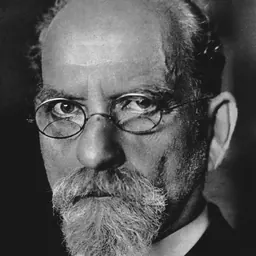
Related people
Same field, nearest in time

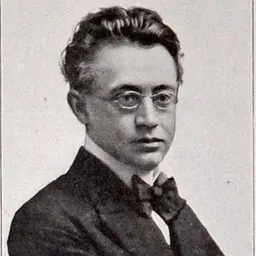



Contemporaries
People whose lives overlapped Gustav Shpet's


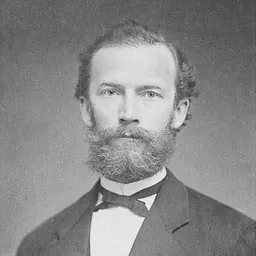
Frequently asked questions
Who was Gustav Shpet?
Russian philosopher (1879–1937)
When was Gustav Shpet born?
Gustav Shpet was born on 26 March 1879 in Kyiv.
When did Gustav Shpet die?
Gustav Shpet died on 16 November 1937 in Kolpashevo.
What was Gustav Shpet's occupation?
Gustav Shpet was a translator, philosopher, psychologist and writer.
What nationality was Gustav Shpet?
Gustav Shpet was Russian.
Sources & further reading
Cite this page
APA: Biography.guide. (2026). Gustav Shpet. https://biography.guide/gustav-shpet/
MLA: "Gustav Shpet." Biography.guide, https://biography.guide/gustav-shpet/.
Chicago: "Gustav Shpet." Biography.guide. https://biography.guide/gustav-shpet/.
Data last updated: 2026-09-20 · Spot an error? Report a correction.
Page generated 2026-09-27 05:10 UTC