
About Gustav Gurschner
Lived 1873 – 1970 (aged 96). Gustav Gurschner was an Austrian sculptor and medalist.
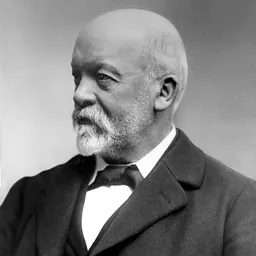
Gustav Gurschner (28 September 1873 –2 August 1970) was an Austrian sculptor whose works ranged from monuments to decorative everyday objects like lamps and ashtrays in the Art Nouveau style. He was the husband of the writer Alice Pollak.
Education and career Gurschner was born in Mühldorf, in Bavaria, the son of a surveyor. He was trained at the technical school for wood sculpture in Bolzano, then studied under August Kühne and at the Kunstgewerbeschule (School of Arts and Crafts) in Vienna. During this time, he supported himself by teaching drawing. He also sold his first commission, a bust of the actor . The bust was included at an exhibition at the Vienna Künstlerhaus in 1896; on opening day, artists stood next to their works while Kaiser Franz Joseph passed in review. Amid the other artists, the twenty-two-years-old, clean-shaven Gurschner looked so young that the Kaiser asked him why he was there instead of his father, then expressed astonishment when he was told that Gurschner was in fact the maker of the bust. The notice of the Kaiser was a signal event in Gurshner's rise as an artist.
Gurschner completed compulsory military service with the Kaiserjäger in Innsbruck from 1895 to 1896, then lived briefly in Munich.
After his marriage to Alice Pollak in 1897, the couple moved to Paris, where Gurschner studied under Ville Vallgren and was also influenced by Jean Dampt, Alexandre Charpentier, and , especially their "artistic redesign of everyday objects. That's what they wanted," Gurschner later recalled, "to elevate these things to the rank of small sculptural works of art." What fascinated him most was the artistic design of the household electric lamp, a new technology at the time.
In 1898, he exhibited three works at the Salon du Champ-de-Mars, a candlestick, a hammer, and a lamp. The Musée Galliera acquired a door knocker designed by Gurschner, now in the collection of the Petit Palais.
Later in 1898, Gurschner and Alice moved from Paris back to Vienna. Breaking away from the Secession, Gurschner became part of the Hagenbund, a group of like-minded Austrian artists. In the first Hagenbund exhibition of January, 1902, he showed not smaller, utilitarian works, but a silver statuette, Schmerz (Pain), and a ten feet tall marble sculpture, Liebe und Neid (Love and Envy), which was installed on the grounds of the Villa Vogel in Stockerau (catalog numbers 16 and 56).
Turn-of-the-century Vienna "offered ideal conditions for a strong talent, which the young artist knew how to exploit with characteristic élan. In addition to an abundance of arts and crafts objects of all kinds, a large number of figural sculptures were created in his studio, as well as portrait busts, medals, and plaques." and in 1901 the New York Times declared him a leader of the Art Nouveau movement second only to Vallgren.
As his career progressed in Austria, Gurschner excelled at sculptural portraiture, especially in bas-relief. His subjects included artists, actors, politicians, military officers, industrialists, members of the nobility, and the imperial family. and also for the Motor Yacht Club of Germany and Austria and the Imperial-Royal flying club.
Gurschner "recognized the usefulness of the new invention for the army and set about implementing...the establishment of an automobile corps." His efforts eventually "led to the founding of the K.k. Freiwillige-Automobilkorps [Imperial-Royal Volunteer Automobile Corps] and the K.k. Freiwillige-Motorfahrerkorps [Imperial-Royal Motor Driver Corps], with the latter under command of Oberleutnant [first lieutenant] Gustav Gurschner," who drove in a processsion before the Kaiser in June, 1912. During the parade, a fierce thunderstorm erupted, but the aged Kaiser, standing on a balcony in pouring rain, wearing a bicorne hat and a cloak draped over his shoulders, never budged. The image of the stalwart emperor became indelible in Gurschner's memory, and it was this pose he would depict two decades later when he was commissioned to sculpt a life-size monument of Franz Joseph in Vienna.
In June, 1914, Gurschner initiated a campaign to recruit a volunteer army to support the recently installed Albanian monarch William, Prince of Albania, whom he knew personally, against insurgent troops in Durrës. (Gurschner also designed uniforms of the Albanian militia and military decorations for the prince.) Two thousand Austrian volunteers were recruited in two days, but the effort exacerbated tensions between Austria and Italy, and Austrian authorities closed the recruiting office. In July, only 150 Austrian volunteers arrived in Albania, led by Gurschner. With the outbreak of the First World War, political chaos engulfed Albania, and Prince Wilhelm left the country in September 1914.
The military adventurer Duncan Heaton-Armstrong recalled thatGurschner himself very nearly got into trouble with the Austrian authorities for trying to enlist men for a foreign power and as far as I remember he was, or just escaped, being arrested for this offense. About the middle of the month [July, 1914] he appeared on the scene at Durazzo [Durrës], where he remained for a few weeks. He got heartily sick of the place and returned to Vienna, there to design an Albanian war medal; this however was never finished, as the Austro-Serbian war broke out and the artist had to join the army as a reserve officer.
An undated portrait in the Museum of Military History in Vienna depicts Gerschner in uniform beside an automobile and gives him the rank of Hauptmann Gerschner.
During World War I, Gurshner turned his focus to medals and badges, such as those issued to individuals and to army units, and later, monuments to the fallen.
After World War I Sculpture of Isac Leon Eskenasi in Döbling Cemetery, Vienna, 1926. The years after the war, with a defeated Austria in shambles, saw a reversal of fortune. In an interview published in 1930, Gurschner looked back to his early days: "I wanted to create in complete freedom, and I could afford to, because I was a rich man at the time. Then, of course, with the war and the post-war period, came bitter years for us artists. Well, things still haven't turned out very rosy."
An interview and article from 1966, when Gurschner was 93, included a list of his most important works, with the last work on the list dated 1931. Although the article is titled "Leben und Werk des Bildhauers Gustav Gurschner" (Life and Work of the Sculptor Gustav Gusrchner), nothing is said of his circumstances in the four decades after 1931, except for the fact that Gurscher in 1966 received the interviewer, Franz Windisch-Graetz, at a studio in Vienna's seventh district "full to bursting" with photographs, documents, memorabilia, and artworks, including a veritable "portrait gallery of Austrian and foreign personalities of the first half of our century...Something of the former vastness of old Austria and of the central importance of Vienna at that time can still be felt in this studio," wrote Windisch-Graetz.
Gurschner's wife, Alice, who was Jewish and a Catholic convert, continued to publish works until at least 1938, the date of her novel Drei Häuser: Roman aus Alt-Österreich. How her Jewish origin may have impacted their lives under the Nazis has not yet been documented, but it is reported that she was taken away by the SS only to be brought home by Gurschner under unknown circumstances. She died March 26, 1944, in Vienna. Gurschner survived her by more than twenty-six years, dying August 2, 1970.
Personal life Gurschner married the writer Alice Pollak (1869-1944) on May 5, 1897. Alice came from an upper-class Jewish family, and her marriage to the Catholic Gurschner was not welcomed by her parents. After her father died in 1905, Alice converted to Catholicism. Over a fifty-year career she wrote novels, poetry, and works for the stage, as well as reviews and articles for newspapers and journals, from 1890 using the pseudonym Paul Althof.
The Gurschners had three children. Their son Harald (born in Vienna October 6, 1898 - died January 16, 1964) founded a film production company with Olaf Fjord in 1920 and briefly worked as a director; later he followed his father's passion for motorsports and devoted himself to motorcycling. Their daughter Eva Martina married the artist (1900-1986). Gurschner's second son was named Gerhart-Dietrich.
In a 1904 interview, Alice looked back on their time in Paris, essentially an extended honeymoon."That was a wonderful time, unforgettable. I married very young and we were both drawn to art. We lived in a hotel in Paris, ate badly and lived without comforts, breathing la vie Bohème. That's what we wanted. Artists' cafes and ateliers were our places of residence and the whole of Montmartre surrounded us. We had money and didn't have to go hungry, [but until] the fifteenth of each month we were naked, without a sous, and those were always cheerful times, when we were as destitute as the others. Only then did the real Verlaine mood come, and we were full-blooded comrades of the Bohemians."
Alice expressed unconventional views on sexual jealousy. "The most ridiculous women are those who demand purity from men... I grant the man all his rights, he doesn't have to be pure, he doesn't have to be faithful, to put it more commonly. It's a matter of temperament. A clever woman should never be jealous when another woman captivates her husband's senses for a short while. With such views, a lot of misfortune would be eliminated from the world."
In Museums and public spaces Marble relief of mother and infant at the gravesite of Gurschner's mother, Aloisia (d. 1921), Moltën, Austria. In the United States, Gurschner's work can be found in the Virginia Museum of Fine Arts, Wolfsonian-FIU, the American Numismatic Society collection of medals, the Cooper Hewitt, Smithsonian Design Museum, and the Corning Museum of Glass; in Paris, at the Petit Palais; in Vienna, at the Vienna Museum, at the Museum of Applied Art (MAK) and at the Museum of Military History, which also holds a portrait of Gurschner in uniform, painted by . in Vienna, two bronze medallions dated 1926 on the Karczag family monument in Hietzing Cemetery, a life-size sculpture of Isac Leon Eskenasi in Döbling Cemetery (1926), and the bronze Monument to the Fallen of the Dragoon Regiment Prince of Windisch-Graetz No. 14 at the Augustinian Church (1931); in Salzburg, commemorative plaques for fallen officers of the Austro-Hungarian artillery (1924) and the fallen of the engineering academies (1927) in the Kollegienkirche;
The first exhibit dedicated to Gurschner in nearly a century was held in Vienna at the gallery of the antiques dealer Nikolaus Kolhammer in November 2024.
Gallery: electric lamps, c. 1900-1915
Gallery: decorative household objects, c. 1900-1915
Don’t just read it —
keep it.
Full-length biographies made to live with: read them, listen on the way to work, watch them tonight.
- E-book
- Audio
- Video
Instant download · yours to keep · every purchase keeps this site free
Important facts
People in Gustav Gurschner's life
Named in this biography and alive at the same time






Related people
Same field, nearest in time


Contemporaries
People whose lives overlapped Gustav Gurschner's


Frequently asked questions
Who was Gustav Gurschner?
Austrian sculptor (1873–1970)
When was Gustav Gurschner born?
Gustav Gurschner was born on 28 September 1873 in Mühldorf am Inn.
When did Gustav Gurschner die?
Gustav Gurschner died on 2 August 1970 in Vienna.
What was Gustav Gurschner's occupation?
Gustav Gurschner was a sculptor and medalist.
What nationality was Gustav Gurschner?
Gustav Gurschner was Austrian.
Sources & further reading
Cite this page
APA: Biography.guide. (2026). Gustav Gurschner. https://biography.guide/gustav-gurschner/
MLA: "Gustav Gurschner." Biography.guide, https://biography.guide/gustav-gurschner/.
Chicago: "Gustav Gurschner." Biography.guide. https://biography.guide/gustav-gurschner/.
Data last updated: 2026-09-20 · Spot an error? Report a correction.
Page generated 2026-09-27 05:32 UTC