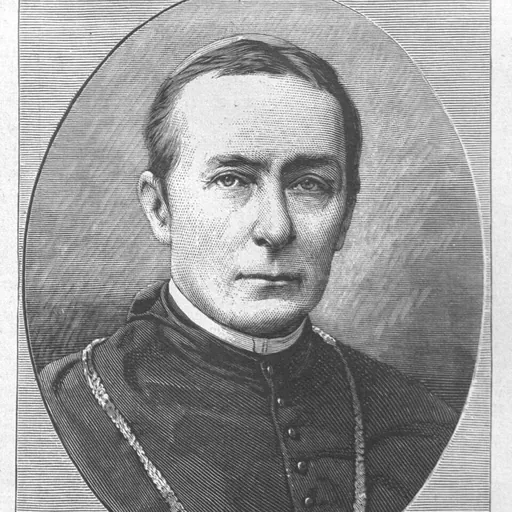
Gustav Adolf, Cardinal Prince of Hohenlohe-Schillingfürst
German prince and Catholic cardinal
About Gustav Adolf, Cardinal Prince of Hohenlohe-Schillingfürst
Lived 1823 – 1896 (aged 73). Gustav Adolf, Cardinal Prince of Hohenlohe-Schillingfürst was a German catholic priest and catholic bishop.
Gustav Adolf, Cardinal Prince of Hohenlohe-Schillingfürst, (26 February 1823 – 30 October 1896) was a member of the Hohenlohe family of Germany, claiming descent from Eberhard, one of the early dukes of Franconia. He became a cardinal of the Catholic Church.
Biography Hohenlohe was born in Rotenburg an der Fulda, in the Electorate of Hesse, on 26 February 1823, the son of its ruler, Franz Joseph, 1st Prince of Hohenlohe-Schillingsfürst, and Princess Caroline Friederike Constanze of Hohenlohe-Langenburg. His father was a Catholic, while his mother was a Lutheran. In the standard compromise of the era, he and his brothers were raised in the faith of their father, while his sisters were raised in that of their mother. His brothers were: Victor Herzog von Ratibor (1818-1893), officer in the Prussian army, liberal politician in the Prussian- and in the German Parliament. Chlodwig zu Hohenlohe-Schillingsfürst (1819-1901), liberal politician, Prime Minister of Bavaria, Chancellor of the German Empire.
Around 1850 Hohenlohe acquired the Villa d'Este in Tivoli and restored the dilapidated villa and the ruined and overgrown gardens. The Villa attracted artists. His portrait was apparently painted by the Swiss-born American artist Adolfo Müller-Ury (1862-1947) during the two years he spent studying in Italy 1882-1884, and was probably signed "Ad. Muller". Its present whereabouts is unknown.
In 1858, his cousin, the widowed Princess Katharina of Hohenlohe-Waldenburg-Schillingsfürst had entered the Convent of Sant'Ambrogio della Massima as a novice. After objecting to what she considered inappropriate practices, she became very ill. Convinced she was being poisoned, she managed to get word to the Cardinal, who immediately removed her from the convent and brought her the Villa d'Este to recover. There she was introduced to the Benedictine monk Maurus Wolter. The princess confided in the monk, who instructed her to report it to the Holy Office. This set in motion an investigation, during which a number of irregularities at the convent came to light.
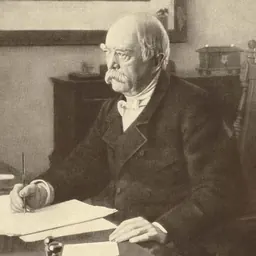
After Rome was taken by the Italian army in September 1870, Hohenlohe returned to Germany. In 1872, during the Kulturkampf, Otto von Bismarck, Chancellor of the German Empire, appointed Hohenlohe as Ambassador to the Holy See, but his appointment was rejected by Pope Pius IX, possibly as a result of the open opposition he and his brothers had shown to the ultramontane position of that pope. Hohenlohe was considered a liberal, and had been critical of the infallibility dogma.
He returned to Rome in 1876 and subsequently gained the favor of Pope Leo XIII, and went on to spend the rest of his ecclesiastical career in Italy. In July 1878 he became the archpriest of the Basilica of Santa Maria Maggiore. In May 1879 he was named the Cardinal-Bishop of Albano, which office he resigned in December 1883. A year later he was given the title of Cardinal-Priest of the Church of San Callisto, until 1895, when his title was transferred to that of San Lorenzo in Lucina.
The American sculptor and Rome resident Moses Jacob Ezekiel, a friend, created a bust of Hohenlohe.
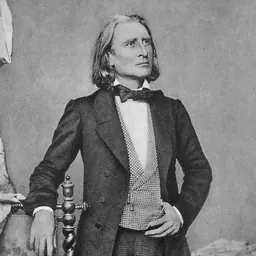
Hohenlohe and Liszt In October 1861 Hohenlohe was instrumental in the prevention of the marriage of Franz Liszt with Princess Carolyne zu Sayn-Wittgenstein in the San Carlo al Corso in Rome. Thus he averted disinheritance of his brother Konstantin, husband of Carolyne’s daughter Marie. Nevertheless, he became friendly with Liszt: in April 1865 he conveyed him the tonsure, in July the Minor Orders. Besides he granted Liszt hospitality in his apartments in the Vatican, from April 1865 until June 1866 (his creation as a cardinal).
Ancestry
Don’t just read it —
keep it.
Full-length biographies made to live with: read them, listen on the way to work, watch them tonight.
- E-book
- Audio
- Video
Instant download · yours to keep · every purchase keeps this site free
Important facts
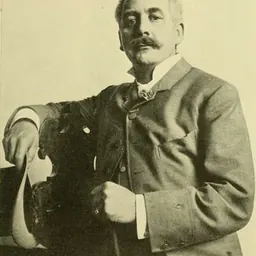
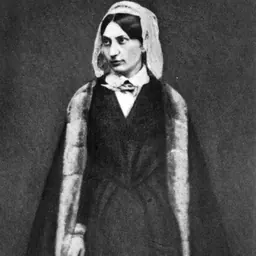
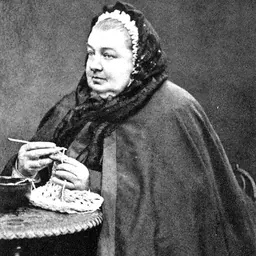
People in Gustav Adolf, Cardinal Prince of Hohenlohe-Schillingfürst's life
Named in this biography and alive at the same time


Related people
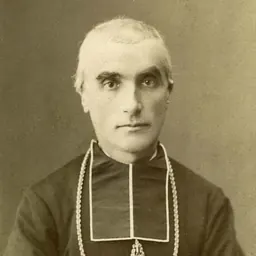
Same field, nearest in time


Contemporaries
People whose lives overlapped Gustav Adolf, Cardinal Prince of Hohenlohe-Schillingfürst's




Frequently asked questions
Who was Gustav Adolf, Cardinal Prince of Hohenlohe-Schillingfürst?
German prince and Catholic cardinal (1823–1896)
When was Gustav Adolf, Cardinal Prince of Hohenlohe-Schillingfürst born?
Gustav Adolf, Cardinal Prince of Hohenlohe-Schillingfürst was born on 26 February 1823 in Rotenburg an der Fulda.
When did Gustav Adolf, Cardinal Prince of Hohenlohe-Schillingfürst die?
Gustav Adolf, Cardinal Prince of Hohenlohe-Schillingfürst died on 30 October 1896 in Rome.
What was Gustav Adolf, Cardinal Prince of Hohenlohe-Schillingfürst's occupation?
Gustav Adolf, Cardinal Prince of Hohenlohe-Schillingfürst was a catholic priest and catholic bishop.
What nationality was Gustav Adolf, Cardinal Prince of Hohenlohe-Schillingfürst?
Gustav Adolf, Cardinal Prince of Hohenlohe-Schillingfürst was German.
Sources & further reading
· Wikipedia: Gustav Adolf, Cardinal Prince of Hohenlohe-Schillingfürst
· DBpedia: Gustav Adolf, Cardinal Prince of Hohenlohe-Schillingsfürst
Cite this page
APA: Biography.guide. (2026). Gustav Adolf, Cardinal Prince of Hohenlohe-Schillingfürst. https://biography.guide/gustav-adolf-cardinal-prince-of-hohenlohe-schillingfurst/
MLA: "Gustav Adolf, Cardinal Prince of Hohenlohe-Schillingfürst." Biography.guide, https://biography.guide/gustav-adolf-cardinal-prince-of-hohenlohe-schillingfurst/.
Chicago: "Gustav Adolf, Cardinal Prince of Hohenlohe-Schillingfürst." Biography.guide. https://biography.guide/gustav-adolf-cardinal-prince-of-hohenlohe-schillingfurst/.
Data last updated: 2026-09-21 · Spot an error? Report a correction.
Portrait: Wikimedia Commons · author & licence
Page generated 2026-09-27 04:59 UTC