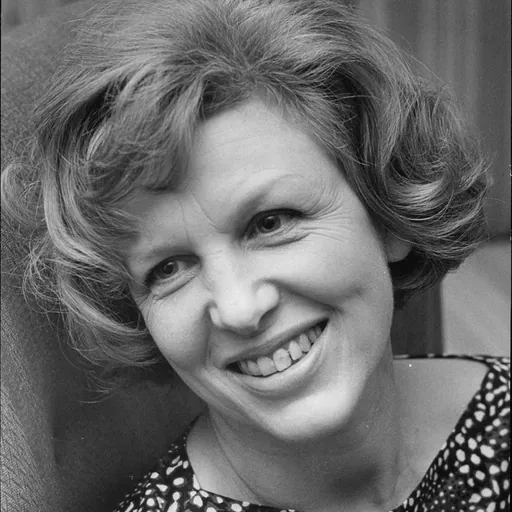
About Gun Bergman
Lived 1916 – 1971 (aged 54). Gun Bergman was a Swedish translator, journalist, linguist, writer and philosopher.
Gun Bergman (28 October 1916 – 1 July 1971) was a Swedish translator, linguist, and journalist. Known for her translations from Slavic languages to Swedish, her greatest feat was her translation of Ivo Andrić's novel The Bridge on the Drina in 1960. She was married to Swedish film director Ingmar Bergman from 1951 to 1959.
Life Gun Bergman was born Gunvor Marianne Hagberg in Linköping, Sweden, on 28 October 1916. She was the daughter of Robert Hagberg, a restaurateur, and his wife Ebba (née Westerberg). After graduating from the Linkoping High School, she moved to Stockholm, where she worked for the Bonnier publishing house, and also worked as a dancer at private theatres. In 1941, Bergman married Hugo Grut, an engineer. They had two sons.
During the 1940s, Bergman began working as a journalist for the Scandinavian newspaper Expressen. In August 1949, she met the film director Ingmar Bergman, and they traveled to Paris in September of the same year. Gun and Hugo Grut divorced in 1950, and she married Ingmar Bergman in 1951. The same year their son Ingmar Bergman Jr. was born. According to Ingmar Bergman's autobiography Laterna magica, Gun Bergman served as a model for many female characters of his films. Examples include: Karen Lobelius in Secrets of Women (1952), Marijana Egerman in A Lesson in Love (1954), and Desiree Armfeldt in Smiles of a Summer Night (1955). The couple divorced in 1959.
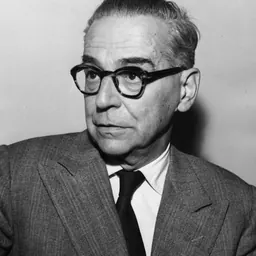
Bergman's breakthrough work is her translation of Andrić's historical novel The Bridge on the Drina. Published by Bonnier AB in 1960, it became her first major published work and she achieved her greatest fame with it. The following year, Andrić was awarded the Nobel Prize in Literature. He later thanked Bergman in a letter for her nuanced translations of his works, which he felt contributed to the success of his books in Sweden. He wrote, "[...] there is only one publisher in Sweden, and that is Bonniers, and only one translator, and that is you". Following the success of The Bridge on the Drina in Sweden, Bergman was awarded the (Swedish Academy's Translator's Prize) in 1962. In 1964, she earned her PhD with a dissertation on Russian manuscripts.
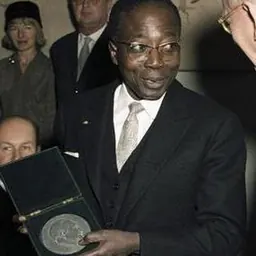
In the latter part of her life, Bergman translated poetry by South Slav and French-language African poets. Among these were Léopold Sédar Senghor's Elegier (1969), Elisaveta Bagryana's Livet jag ville göra till dikt (1970), Vasko Popa's Den ena benknotan till den andra (1972), and Aimé Césaire's De underbara vapnen (1975).
Bergman died in a car accident at the age of 54, on 1 July 1971.
Don’t just read it —
keep it.
Full-length biographies made to live with: read them, listen on the way to work, watch them tonight.
- E-book
- Audio
- Video
Instant download · yours to keep · every purchase keeps this site free
Important facts
Family & relationships
People in Gun Bergman's life
Named in this biography and alive at the same time



Related people
Same field, nearest in time





Contemporaries
People whose lives overlapped Gun Bergman's


Frequently asked questions
Who was Gun Bergman?
Swedish translator and journalist
When was Gun Bergman born?
Gun Bergman was born on 28 October 1916 in Linköping.
When did Gun Bergman die?
Gun Bergman died on 1 July 1971 in Hedvig Eleonora parish.
What was Gun Bergman's occupation?
Gun Bergman was a translator, journalist, linguist, writer and philosopher.
What nationality was Gun Bergman?
Gun Bergman was Swedish.
Sources & further reading
Cite this page
APA: Biography.guide. (2026). Gun Bergman. https://biography.guide/gun-bergman/
MLA: "Gun Bergman." Biography.guide, https://biography.guide/gun-bergman/.
Chicago: "Gun Bergman." Biography.guide. https://biography.guide/gun-bergman/.
Data last updated: 2026-09-22 · Spot an error? Report a correction.
Page generated 2026-09-27 05:09 UTC