
About Guillermo Ceniceros
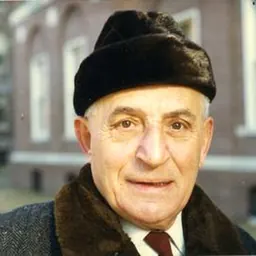
Born 1939. Guillermo Ceniceros is a Mexican painter and artist.
Guillermo Ceniceros (born May 7, 1939) is a Mexican painter and muralist, best known for his mural work in Mexico City, as well as his figurative easel work. He began his mural painting career as an assistant to mural painters such as Federico Cantú, Luis Covarrubias and then David Alfaro Siqueiros who was a mentor and a key influence. Ceniceros is the most notable of Siqueiros' assistants. While he has experimented with abstract expression, his easel work mostly classifies as figurativism and is influenced by the geometrical construct of Mexican muralism. He has had over 300 individual and collective exhibitions in Mexico and the International stage. His work has been recognized by the Mexican Ministry of Culture and several of its institutions. He has painted over 20 large scale Mural Paintings with some of the most notable being the large scale work for the Legislative Palace of San Lazaro (Mexico's Legislative Building) as well as his murals in the Metro Subway System. He is a member of the Salón de la Plástica Mexicana. In 1995, the State of Durango, Ceniceros' native state, opened to the public the Guillermo Ceniceros Art Museum within the oversight of the Ministry of Culture. Ceniceros has been reviewed by notable critics such as Berta Taracena, Raquel Tibol, Alaide Foppa, Graciela Kartofel, José Angel Leyva and Eduardo Blackaller among others. There are several publications about his work including a vast review of his art life endeavors developed by the Ministries of Culture of Durango and Nuevo León. He is married to the artist Esther González and lives in his studio house in the Colonia Roma of Mexico City.
Life
Ceniceros was born in a small village called El Salto, located in the municipality of Pueblo Nuevo in the Mexican state of Durango. His father was a woodworker who made toys and furniture in his workshop. His father's shop would become an influence in Ceniceros' life long interest in developing his own innovative working tools. When he was twelve the family moved to Monterrey to seek better economic opportunities. There he attended school and when he was fourteen he entered the Fabricación de Máquinas, S.A. (FAMA), a school/business, where he studied industrial drawing. He considers this early training important as it taught him the importance of geometry, use of space and materials. While at FAMA he met painters Gerardo Cantú and Ignacio Ortiz, and collaborated with them on sketches for publications of Alfonso Reyes, Pedro Garfias and other notable writers. At the Taller he met fellow Mexican artist Esther González, whom he married and with whom he has two children.
In 1962 he moved to Mexico City with the goal of working in the Taller of the Maestro David Alfaro Siqueiros. However, much of his early experience with the art form was as an assistant to established artists. Federico Cantú hired him as an assistant with the 600m2 mural work at the Sierra de los Altares, a relief work made with natural stone. This led to work two years later with Luis Covarrubias to paint ethnographic murals at the Museo Nacional de Antropología. During this project he was able to meet Rufino Tamayo, José Chávez Morado, Jorge González Camarena and Raúl Anguiano .
He has created over twenty large scale murals in public places. The Centro de Arte Moderno, Guadalajara (1980), the Mexican Mission to the United Nations (1984), Metro Tacubaya (1986), The Ancient Mexicans, a mural for the Mexican Pavilion at the International Exhibition in Vancouver, Canada. (1986), Metro Copilco (1988), Maderos Theater UANL (1990), the Palacio de Justicia in Monterrey (1991), Banco Nacional de Comercio Exterior, Monterrey (1994), the Chemistry department at UANL (1998), Santa Engracia Hospital in Monterrey (1999) and the Theatre of the Sindicato Nacional de Trabajadores Telefónicos in Mexico City (2001), Metáforos Lúdicas in the city of Durango (2008) and La Historia del Pueblo Mexicano a través de su Vida Constitucional at the Palacio Legislativo to commemorate the Bicentennial of Independence and Centennial of the Mexican Revolution (2012) . He also painted a mural for the cultural center of his hometown of El Salto.
Ceniceros had his first exhibition of artwork in 1956 at the Galería de Arte, A.C. in 1956. In 2009, for his seventieth birthday, the states of Durango and Nuevo León sponsored the production of his biography, called Guillermo Ceniceros: setenta años, published by La Cabra Ediciones. He is also a member of the Salón de la Plástica Mexicana.
Artistry Two major influences in his work are the training he received in industrial drawing in Monterrey, and his experience as an assistant to Siqueiros. Both helped him to form a sense of geometry, composition, a definition of form and with Siqueiros, a commitment to retaining aspects of figurativism from Mexican muralism.
Two elements that frequently appear in his work are landscapes and the female figure, with figures often created using geometric patterns. He experimented with abstract art, but always went back to introducing human figures in his work. However this introduced the idea of fusing elements of Mexican nationalist art with abstract work. These depictions are what gave his work the most notice, with critics such as Raquel Tibol particularly impressed with his female nudes, which are generally have an introspective quality but not sad or melancholy.
His work is marked by subtlety. Raquel Tibol describes his work as neither aggressive or harsh, rather as having a voice which is enveloping and gentle. The figures and landscapes generally interact to give the works an element of mystery and Expressionism. The backgrounds tend to have geometric relationships, visual proportions, and unique textures.
He is interested more in formal possibilities than in techniques. He believes that the ability to draw is the basis of art. One example of this is a series of “anamorphic” drawings with the aid of a “form detector,” a cylindrical mirror which was invented over 400 years ago that forces the artist to draw lines that acquire representative sense only when they are reflected in the mirror. He has created and invented many of the tools he works with.
Don’t just read it —
keep it.
Full-length biographies made to live with: read them, listen on the way to work, watch them tonight.
- E-book
- Audio
- Video
Instant download · yours to keep · every purchase keeps this site free
Important facts
People in Guillermo Ceniceros's life
Named in this biography and alive at the same time







Related people
Same field, nearest in time



Contemporaries
People whose lives overlapped Guillermo Ceniceros's




Frequently asked questions
Who is Guillermo Ceniceros?
Mexican painter
When was Guillermo Ceniceros born?
Guillermo Ceniceros was born on 7 May 1939.
What is Guillermo Ceniceros's occupation?
Guillermo Ceniceros is a painter and artist.
What nationality is Guillermo Ceniceros?
Guillermo Ceniceros is Mexican.
Sources & further reading
· Wikipedia: Guillermo Ceniceros
· DBpedia: Guillermo Ceniceros
Cite this page
APA: Biography.guide. (2026). Guillermo Ceniceros. https://biography.guide/guillermo-ceniceros/
MLA: "Guillermo Ceniceros." Biography.guide, https://biography.guide/guillermo-ceniceros/.
Chicago: "Guillermo Ceniceros." Biography.guide. https://biography.guide/guillermo-ceniceros/.
Data last updated: 2026-09-26 · Spot an error? Report a correction.
Page generated 2026-09-27 05:15 UTC