
About Guillem Ramos-Poquí
Born 1944. Guillem Ramos-Poquí is a Spanish artist.
Guillem Ramos-Poquí (born in 1944 at Barcelona) is a painter who was a major figure of Arte Povera and Conceptual art in Catalonia during the 1960s. He has lived in London since 1968.
Studies and early career Guillem Ramos-Poquí grew up in Barcelona where he studied painting at the city's School of Fine Art. During the 60s he was a major figure in the Catalan Conceptual art and Arte Povera avant-garde. After being awarded several art fellowships that took him to Paris and New York, he settled in London in 1968 where he studied at the Slade and the Royal College of Art. In 1995 he received his Ph.D. in Fine Art Painting from the University of Barcelona for his art work and thesis entitled The Conceptual Dimension in Art: Theory as an Inherent Component of the Practice of Painting, written in Catalan. He was Head of Fine Art at Kensington and Chelsea College (1990–2004) and Lecturer in Advanced Painting at Morley College (2004–2012). He has exhibited extensively in London and abroad.
Post-Pop Art and Minimalism In 1965 Ramos-Poquí was awarded a fellowship from the French Government to work in Paris and was given a studio at the Cité internationale des arts in Paris where he held an exhibition of collages featuring photo cut-outs, graffiti and letter/number transfers. Although these 1965 collages have a post-Pop Art feel, their employment of a personal code and incorporation of mechanical, automatic and lyrical formal elements defy categorisation. His 1967 work, exhibited in the Gallery of the Institute of North American Studies in Barcelona, consisted of a series of minimalist 'signs' made with industrial spray paint. Ramos-Poquí was granted the American Elias Ahuja Art Specialist Fellowship to New York, where he had a studio from 1967 to 1968. and the art critic :ca:Pilar Parcerisas i Colomer. Other assemblages are more explicitly linked to a spirit of revolt. In September 1968 he staged an exhibition and installation of his Arte Povera 'found objects' displayed in boxes and Conceptual Art pieces, consisting of 'photographs of ideas', at the Arts Lab in Drury Lane, London. Because of these works he is considered, according to Catalan Art Critic and Historian :ca:Alexandre Cirici i Pellicer, the forerunner of Arte Povera and Conceptual Art in Catalonia.
Geometric colour field paintings
His colour field paintings show the influence of Rothko and North-American Post-painterly abstraction, especially Barnett Newman, Kenneth Noland and Frank Stella. He reached a post-Bauhaus geometric synthesis rooted in theories concerning visual perception, demonstrating an indebtedness to the geometry and colour of Johannes Itten, Rudolf Arnheim, and Josef Albers. In Paris he became acquainted with a Bauhaus pupil of Paul Klee, Mordecai Ardon, while in Chicago he met György Kepes who, together with Moholy-Nagy, founded the New Bauhaus (today the IIT Institute of Design in Illinois). Further encounters with Ola Okuniewska (Ola Wolpe) and Clement Greenberg also impacted his work. His passion for geometry continued throughout his career, right up until the present day. During the mid-70s he started teaching in London. His extensive knowledge of the techniques of painting led to him giving a series of demonstrations at the National Gallery and at several art colleges. In London he founded the Essendine Art Centre, where he taught advanced printmaking, life drawing and techniques of painting to young art college graduates. One of the specialized courses focused on 'The Technique of Icon Painting.' The success of the course led to the commission of a book on this subject, published by Search Press Ltd. It has been translated into seven languages.
Paintings, Digital Art and Assemblage (art)
Ramos-Poquí refers to his intimate works of the 1980s as ‘symbolic paintings' which were followed during the 90s by a series driven by urban inspiration known as ‘Satirical and Metaphysical Urban paintings’, executed while he was developing digital photomontages. Having already produced lithographs and etchings, it was during this period that he explored the possibilities of this new digital medium. His digital photomontages were exhibited in London. They were praised by art critics including :es: José Corredor-Matheos and reviewed in many London papers. In 2001 he was commissioned to design the book covers for the Open University course 'Exploring Psychology.' His assemblages, of a satirical nature, were exhibited both in London and Belfast.
Painting-collages
His 2014 painting-collages were exhibited at the Royal Artistic Circle of Barcelona alongside some examples of his works from the 60s which he had exhibited in Paris in 1965 at the Cité internationale des arts. The art critic :ca:Pilar Parcerisas i Colomer reviewed the show for El Temps and noted the works' unique approach to technique which incorporated egg tempera, sand, acrylic and objects from a mirror shard to a clock face. She also pointed out his references to works by the Old Masters, including Dürer's Melancholia.
Selected exhibitions
1965–1970 (Collage, Mixed media, Arte Povera, Conceptual Art and Installations
1965: Paris: Cité internationale des arts, Paris (one-man show) 1965: Barcelona: Lleonart Gallery, Barcelona (one-man show) 1966: Paris: Galerie des Beaux Arts 1967: Barcelona: Institute of North American Studies, Barcelona 1967: Ibiza (Spain) Ivan Spencer Gallery 1967: New York: One Eleven Gallery 1968: New York: The Art of the East Village 1968: London: The Arts Lab, Drury Lane (one-man show) 1968: Cuenca: (Spain) Casa de la Cultura (Museum of Spanish Abstract Art) 1970: Essex: (England) Wansfell College Gardens, Epping, (one-man show)
1971–1973: Geometric abstraction: Color Field paintings
1971: Barcelona: Aquitania Gallery, Barcelona (one-man show) 1971: London: Spanish Institute (one-man) 1972: Barcelona & Madrid: Institute of North American Studies (one-man show) 1973: London: Institute of Contemporary Art (I.C.A.)
1981–1996: Paintings 1981: London: Camden Arts Centre 1982: Paris: Grand Palais 1982: Paris: Galerie des Beaux Arts 1984: London: Chenil Gallery (two one-man shows) 1985: London: Royal Horticultural Halls 1987: London: Blenheim Gallery (one-man show) 1987: Oxford: Oxford Central Library 1989: London: Englands & Co. Art Gallery 1989: London: Milne Moller Gallery. 1989: London: Tabernacle Gallery (Tabernacle, Notting Hill) 1991: London: Sweetwaters Art Gallery (one-man show) 1992: London: Tricycle Art Gallery (one-man show) 1994: London: Queen Elizabeth Hall, South Bank 1994: Barcelona: Salón del Tinell. 1996: London: The Mall Galleries (Federation of British Artists 1996: London: Eurofair'96, Royal Horticultural Halls (one-man show)
1997–2004: Digital Art (Photomontages), Assemblages 1997: Brighton: University of Brighton Art Gallery 1997, 1998, 1999, 2000, 2001, 2002: London: Colville Place Gallery 1999: Barcelona: Caligrama Art Gallery (April – May) 2003, 2004: London: Deluxe Gallery, 2–4 Hoxton Square, London 2004: Belfast: Catalyst Arts Gallery Set-Oct (one-man show) Northern Ireland
2007–2014: Painting, Painting-collages, Mixed-media Collages 2007, 2008: London: Bernard Chauchet Gallery, London SW10. (June and December collectives). 2008: London: Royal Academy Summer Exhibition 2008: Santander: Sala Nao 2008: London: Royal Overseas League Club (Open Door Exhibition) Piccadilly 2010: London: Morley Gallery 2011: Barcelona: Casa Elizalde Centro Cultural 2013: London: Tabernacle Gallery 2014: Barcelona: Reial Cercle Artistic de Barcelona
Don’t just read it —
keep it.
Full-length biographies made to live with: read them, listen on the way to work, watch them tonight.
- E-book
- Audio
- Video
Instant download · yours to keep · every purchase keeps this site free
Important facts
People in Guillem Ramos-Poquí's life
Named in this biography and alive at the same time

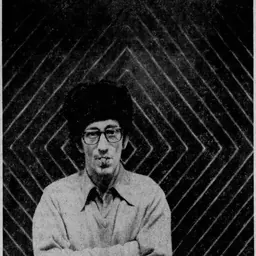

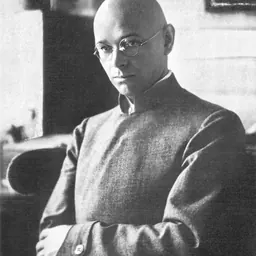




Related people
Same field, nearest in time
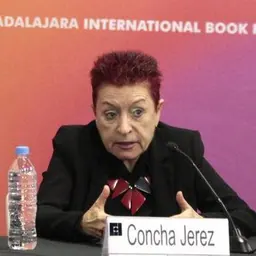
Contemporaries
People whose lives overlapped Guillem Ramos-Poquí's



Frequently asked questions
Who is Guillem Ramos-Poquí?
Spanish artist
When was Guillem Ramos-Poquí born?
Guillem Ramos-Poquí was born in 1944 in Barcelona.
What is Guillem Ramos-Poquí's occupation?
Guillem Ramos-Poquí is an artist.
What nationality is Guillem Ramos-Poquí?
Guillem Ramos-Poquí is Spanish.
Sources & further reading
· Wikipedia: Guillem Ramos-Poquí
· DBpedia: Guillem Ramos-Poquí
Cite this page
APA: Biography.guide. (2026). Guillem Ramos-Poquí. https://biography.guide/guillem-ramos-poqui/
MLA: "Guillem Ramos-Poquí." Biography.guide, https://biography.guide/guillem-ramos-poqui/.
Chicago: "Guillem Ramos-Poquí." Biography.guide. https://biography.guide/guillem-ramos-poqui/.
Data last updated: 2026-09-22 · Spot an error? Report a correction.
Page generated 2026-09-27 05:34 UTC