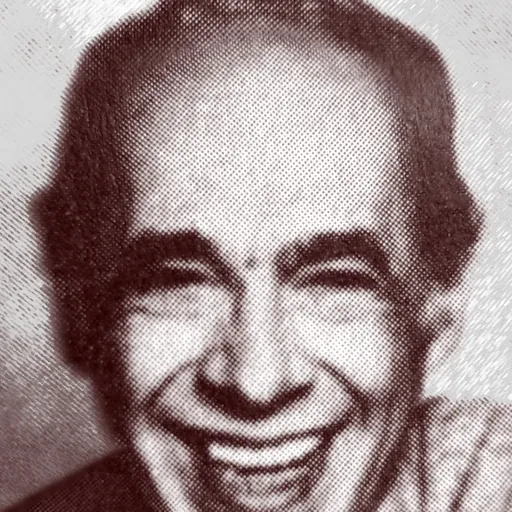
Guglielmo Achille Cavellini
Italian artist and art collector
About Guglielmo Achille Cavellini
Lived 1914 – 1990 (aged 76). Guglielmo Achille Cavellini was an Italian art collector, painter, photographer, performance artist, collagist and video artist.
Guglielmo Achille Cavellini (11 September 1914 – 20 November 1990), also known as GAC, was an Italian artist and art collector. After his initial activity as a painter, in the 1940s and 1950s, he became one of the major collectors of contemporary Italian abstract art, developing a deep relationship of patronage and friendship with the artists. This experience has its pinnacle in the exhibition Modern painters of the Cavellini collection at the National Gallery of Modern Art in Rome in 1957. In the 1960s Cavellini resumed his activity as an artist, with an ample production spanning from Neo-Dada to performance art to mail art, of which he became one of the prime exponents with the Exhibitions at Home and the Round Trip works. In 1971 he invented autostoricizzazione (self-historicization), upon which he acted to create a deliberate popular history surrounding his existence. He also authored the books Abstract Art, Man painter (1960), Diary of Guglielmo Achille Cavellini (1975), Encounters/Clashes in the Jungle of Art (1977) and Life of a Genius (1989).
Biography Guglielmo Achille Cavellini was born in Brescia on 11 September 1914. His parents were from Tuscany, coming from two small villages over Pontremoli, in the Lunigiana. Then they moved to Brescia, where they opened a store called Bazar 33. In 1938 in Cortina d'Ampezzo he befriended the painter Domenico Mucci, who gave him painting lessons. In the same period he visited the Feroldi collection, which included The Disquieting Muses by Giorgio de Chirico, the Lying Nude by Amedeo Modigliani, and works by Giorgio Morandi, Henri Rousseau, André Derain, Alfred Sisley and Paul Cézanne. At the Procuratie, in front of the Tempest by Giorgione, he met artist Emilio Vedova. Vedova proposed to organize an exhibition in Cavellini's house, with the help of painter Giuseppe Santomaso and art critics Giuseppe Marchiori and Marco Valsecchi. In June 1947 Cavellini met them in Paris with his wife, and there he visited the main museums of the city (the Louvre, the Petit Palais, the Jeu de Paume), the art galleries and the studios of artists Gino Severini, Óscar Domínguez, Édouard Pignon and Henry Adam. Because of his sudden popularity, Cavellini's father and brother, who was president of the chamber of commerce of the province of Brescia, asked him to avoid contact with artists because they were afraid they might be communists. There he met the artists of the Group of Eight (Afro Basaldella, Antonio Corpora, Giulio Turcato, Alberto Burri, Corrado Cagli, Giuseppe Capogrossi, Pietro Consagra, Nino Franchina, Leoncillo Leonardi and Mimmo Rotella) and acquired many of their works, among them Sacco e nero 3 by Burri.
At the following Rome Quadriennale Cavellini bought numerous works by abstract artists like Franchina, Consagra, Corpora and Capogrossi. Meanwhile, the family store enjoyed great success and expanded, changing its name from Bazar 33 to Grandi Magazzini 33. On 4 February 1946 Cavellini's son Piero was born. In 1950 his brother moved and he was left the entire family villa, which was restructured by architect Mario Baciocchi. He started to receive the interest of art critics and museum managers, meeting Lionello Venturi, Giulio Carlo Argan, the director of the Louvre, Georges Salles, and museologist Georges Henri Rivière. The magazine XX Siecle, edited by Gualtieri di San Lazzaro, published a long article about Cavellini written by professor Argan. With the help of San Lazzaro he bought a painting by Alberto Magnelli and 16 drawings by Jean Fautrier. In 1955 Cavellini's gallery was visited by German art historian Werner Haftmann and by the founder of documenta Arnold Bode, who asked him to contribute to the exhibition. In January 1956 he went back to Paris where he met San Lazzaro and bought a painting by Serge Poliakoff. In 1957 Palma Bucarelli asked Cavellini to exhibit at the National Gallery of Modern Art in Rome, which she managed. The exhibition, titled Modern Painters of the Cavellini Collection, consisted of 180 works and was inaugurated on 24 May 1957 at the presence of Italian Minister of Education Pietro Campilli. At the start of 1958 the exhibition moved to La Chaux-de-Fonds in Switzerland, then to Kunsthalle in Basel and finally to Germany at the Staatliche Kunsthalle in Baden-Baden and at the Landolins museum in Esslingen am Neckar.
Abstract Art and Man Painter On 2 June 1958 Cavellini published his first book Arte astratta (Abstract Art), printed by Giampiero Giani and presented at the Venice Biennale. The book participated in the Viareggio Prize, reaching the final selection. Abstract Art was positively reviewed by Elda Fezzi, Guido Ballo, Giorgio Kaisserlian, Duilio Morosini, Angelo Dragone and Rosanna Apicella. In the same period he visited the exhibitions by Yves Klein at the Apollinaire Gallery in Milan, those by Arman and Shusaku Arakawa at the Arturo Schwarz Gallery in Milan, the group exhibitions by Luciano Pistoi and Michel Tapié in Turin and the ones set up by Attilio Codognato in Venice.
On 31 May 1960, Cavellini published his second book Uomo pittore (Man Painter), which included his diary and his correspondence with Renato Birolli, who had died on 3 May 1959. On 16 and 23 April 1961 he published on L'Europeo his report of the two meetings. In Paris he also met Pierre Alechinsky, Philip Martin and Hisao Domoto. In 1960 the Venice Biennale focused on arte informale, awarding Jean Fautrier and Hans Hartung. He experimented with materials such as imprints of leaves, enamel, blotting paper, collages, toilet paper, razor blades. He also composed mosaics of painted wood, which he transformed in enormous stamps. Cavellini was asked to contribute with some works from his collection, and he deposited 70.
In this period Cavellini commissioned the first portraits of himself to authors Renato Birolli, Wolf Vostell, Mario Ceroli, Claudio Costa and Mimmo Rotella. Even American artist Andy Warhol went to Cavellini's house and made a portrait of him. James Collins made a video-portrait. They were followed by the French Bernar Venet and Ben Vautier, by the visual poets Emilio Villa, Ugo Carrega and Ketty La Rocca, and then by Claudio Parmiggiani, Aldo Spinelli, Michele Zaza, Fernando De Filippi, Adriano Altamira, Carlo Pittore and E.F. Higgins III. In 1966 Cavellini made his first trip to the United States, in the Greenwich Village neighbourhood of New York City, he made a performance by attaching hundreds of pins to his suit. However, the exhibitions were not successful. He made 16 Manifesti (Posters) for the exhibition that he imagined would take place in 2014 in the most important museums of the world to celebrate the centennial of his birth. In the same year he met Rina Majoli, director of the Cenobio-Visualità Gallery, who decided to exhibit the Posters. Then Cavellini wrote an encyclopedia article dedicated to himself, telling his story until the year 2014. He also wrote it on a white linen suit, which he often wore. He printed a catalogue of the letters and mailed it to museum and gallery directors, art critics and the most famous artists. In January 1974 he exhibited the 25 Books at the Cenobio-Visualità Gallery in Milan. Then he created the 25 Visits by famous historical figures, in which he was photographed wearing the suit with his story and a wooden helmet showing the name of the person. Through Corrado Cagli he met art critic Mario Verdone, who warned him that many Italian artists were criticizing his supposed arrogance. The young Marina Abramović shows interest in Cavellini's work, and Dutch journalist Ger Van Dyck published an interview of Cavellini together with those of Joseph Beuys, Jacobo Borges and Andy Warhol. The interview was made on 22 May 1975 and it was shown at the international videotape congress organized by the CAYC of Buenos Aires at Palazzo dei Diamanti in Ferrara by Argentine architect Jorge Glusberg. The work represented France at Europalia, an exhibition organized by the Royal Museum of Fine Arts of Belgium. In September 1975 he exhibited his works twice in Brescia, first at the Banco Gallery and then at the Nuovi Strumenti Gallery managed by his son Piero. At the end of the year he wrote his story on a rag of cloth in eight languages. Ken Damy made a videotape in which his students got enveloped in the rag and took it around the streets of Brescia. At the beginning of 1976 art critic Hans Mayer set up an exhibition about the artist in Düsseldorf, which was then replicated in Paris, Brussels and Basel. On 9 April 1976 he traveled to Belgrade, Serbia to participate in the inauguration of an exhibition at the Students' Cultural Center.
In 1976 Cavellini managed to obtain a letter of invitation to the Venice Biennale and wrote his name in place of that of the artist, then mailed a letter to the president of the Biennale Commission Carlo Ripa di Meana declining the invitation because he disagreed with the way the event had been organized. The two letters were published on the April 1976 issue of Flash Art. Camillo Capolongo invited him to participate in an exhibition in Naples, Nola and Pomigliano, which was then replicated in Milan at the Castello Sforzesco. Then he sent him a blank book, and Cavellini replied by filling it with his stamps. The Łódź Museum in Poland was the first to acquire one of his works. Disappointed, the artist prepared the stamp Nemo propheta in patria. Not receiving any reply, he decided to publish the list himself. In February 1977 Franco Farina, director of Palazzo dei Diamanti in Ferrara, invited Cavellini to the inauguration of a space dedicated to the production of videotapes, performances and theatre. Here he met Eberto Carboni, Judith Hoffberg, Gippo Toninelli and Willi Bongard. American magazines File and Art Rite published articles and photographs of him. He received requests for stickers from many foreign artists, including the Americans Buster Cleveland and Anna Banana, who put a photograph on him on her magazine Vile. Canadian artist Vincent Trasov visited Cavellini's home and shot a 19-minute video in which Cavellini made art performances with Colosio and Luchetti. The video was shown on Canadian television on 1 March 1978 and in the United States in September of the same year. He also interviewed him on his television program TG L'una, and during the program Cavellini showed Battaglia his works and wrote on the bodies of Colosio and Luchetti. Marco Nozza published on Il Giorno the article "Cavellini teases people", confusing the two "living works" with Cavellini's children Mariella and Pietro. However, Sandra Orienti praised his book on Il Popolo, Luigi Serravalli wrote about it on Adige and Luciano Spiazzi did the same on Bresciaoggi.
In 1977 Italian journalist Toti Carpentieri wrote about Cavellini in a newspaper published in Lecce, then interviewed him for the national television network RAI, asking him for a forecast on the following year's developments in art. Then he created a series of black-and-white stamps in which he wore his written clothes, on nine subjects chosen from photographs by Ken Damy. On 15 October 1978 French artist Jean Dubuffet wrote a letter to him.
In 1979 Cavellini was again photographed by Ken Damy, first with Carnival masks and then fully covered with his stickers. Banana visited his house in Brescia with her husband Bill Gaglione. In 1978 Tiziano Marcheselli published an article on the Gazzetta di Parma in which he presented an iniziative for the beatification of Cavellini by the Center for Cavellinian Studies. Jolena Baldini wrote about Cavellini's artworks and performances on Paese Sera, noting the contrast between the artist's irony and the drama of the present times (anni di piombo, kidnapping of Aldo Moro). Cavellini mailed his book Incontri/scontri nella giungla nell'arte to numerous artists and art critics, receiving positive feedback exclusively from outside of Italy.
In 1979 the Chamber of commerce of Carrara featured an exhibition with 123 works made by Cavellini in the previous 15 years. In the autumn of 1979 Cavellini mailed to 5,000 friends a form to request Cavellini's participation to the Venice Biennale of the following year. Ne invia 3000 alla Biennale ma non-riceve risposta. On 17 October 1979 Cavellini made performance in the Duomo square in Brescia with the Gruppo Alternativo from Salerno, headed by Beppe Rosamilia. They put Cavellini's posters on the pavement, set fire on them and covered them with salt, then they collected the ashes and lit candles in the Nuovi Strumenti Gallery, as an "artisti funeral". Then he made a new postcard with a photomontage showing Benito Mussolini, Adolf Hitler, Joseph Stalin, Vladimir Lenin, Mao Zedong, Karl Marx, Fidel Castro, Che Guevara, Francisco Franco and other historical figures, and a plea to avoid a nuclear war that could destroy his important artworks. In Pescara Cavellini made a new writing performance on some panels and on the body of Gianni Romeo. Umberto Eco, Flavio Caroli, Eugenio Battisti, Lucia Marcucci, Claudio Costa, Maurizio Calvesi and Michael Pergolani were also present.
The United States and Japan From 6 April to 30 May 1980 Ukiah, California hosted the Inter Dada 80 festival. Hoffberg published a picture of Cavellini on the cover of her magazine Umbrella. On 28 April the artist took a flight from Linate to San Francisco with photographer Ken Damy. Upon arrival he was interviewed by Video Free America and Target Video. In the Target interview Cavellini said he was not a dadaist and distanced himself from Fluxus. Then he visited the Orange County Museum of Art, the Museum of Contemporary Art San Diego, the University of San Diego and Disneyland. Local artist made a performance called Eating Cavellini, in which they swallowed fragments of Cavellini's posters. On 10 May there was a new parade in his honor. Then the artist moved to Budapest, Hungary, where György Galántai had organized and exhibition of his works.
Vittore Baroni published an issue of his magazine Arte postale! solely about Cavellini. German magazines Art and Frankfurter Idee, the American Boulevards and Slick and the Swiss DU published articles about him. Canadian magazine Fuse criticized him with an article by Ken Friedman, member of Fluxus. Cavellini made a new Exhibition at Home titled Cavellini in California and Budapest. On 24 March 1981 Cavellini's wife Lisetta died. The artist made some new Relics using some of his wife's personal belongings: belts, umbrellas, bags, gloves, hats... In the summer of 1981 Cavellini traveled to Paris and visited the Jeu de Paume and the Beaubourg. Tommaso Trini published an article about Cavellini on the Panorama magazine. In October 1981 he was invited to exhibit his work at the São Paulo Art Biennial. In 1982 he participated in Artexpo in Brescia with a hundred works. On 2 October 1982 he went to New York City, where the following day he met Ray Johnson, the father of mail art. On 8 October 1982 the Store Upstairs gallery inaugurated an exhibition of his works. In September 1983 he partecipad again in Arte Expo with works from the Cavellinian Museum.
In 1978 Cavellini named Fausto Paci, former mayor of Porto San Giorgio, as his ambassador. In the summer of 1984 Belgian artist Guy Bleus, director of the Administration Center in Wellen, organized a festival in his honor in Brussels, close to the European Elections. There he was proclaimed President of the United States of Europe. The Modern Realism gallery in Dallas organized an exhibition of his works, and in Italy Enzo Rossi Roiss made one at the Centro Nucleo Arte in Bologna. For the third edition of Artexpo he created a new and bigger crucifix, inspired by a work by Cimabue. Cavellini was again asked by artist organizer Ginny Lloyd to participate, (in 1981 she had visited him at his home in Brescia) so he traveled to the United States and made a performance writing on the body of fellow artist Eva Lake. In October 1984 Cavellini exhibited in Milan at the Ken Damy Photogallery a series of 20 self-portraits, and in the following spring there was a new exhibition in Turin at the Hovara Arte Gallery. Cavellini's last trip was to Japan: on 3 December 1985 artist Shozo Shimamoto visited him in Brescia and told him that he would organize exhibitions in Kyoto in July 1986, in Osaka in October, and then in Tokyo in January 1987. On 7 October 1986 Cavellini landed in Osaka and in the following days he made numerous performances, among them the writing on the naked head of Shimamoto in the Shitennō-ji temple. In July Rai Uno aired a documentary about him, directed by Mario Carbone. In 1989 Cavellini published his autobiography Life of a Genius. There were numerous retrospectives in Italy and elsewhere, for instance in 2008 at the Florence Lynch Gallery di New York, in 2013 in the Santa Giulia Museum in Brescia as part of Novecento mai visto, curated by Elena Lucchesi Ragni, Paolo Bolpagni, Enrico De Pascale and Maurizio Mondini, then again in New York at the Lynch Tham gallery. In 2008 Monia Marchionni published the book The self-historicization of Guglielmo Achille Cavellini, analyzing Cavellini's art and history. In 2014, for the centennial of Cavellini's birth, there were exhibitions of Cavellini's artworks at the Italian Institute of Culture in San Francisco and at the Ludwig Museum in Budapest. On 11 September 2014 the Spazio Contemporanea in Brescia hosted the official celebrations for the centennial. that culminated in an event at New York's Museum of Modern Art, fulfilling Cavellini's 1970s prophecy via poster. At various venues around Manhattan including the MoMA Library, Richard L. Feigen & Co., Lynch Tham, and the Whitebox Art Center, Bloch hosted exhibitions, mail art shows, performances, spoken word events and music including a 55-foot long wall covered with artworks from the mail art network and a 14 by 14-foot drawing of Cavellini by Bloch at Whitebox Art Center on the Lower East Side. Bloch had met Cavellini in New York in 1982 and in California at both the Interdada 80 and Interdada 84 celebrations.
Authored works
Exhibitions at home
Solo exhibitions
1965, Galleria Apollinaire, Milan, Italy 1970, Galleria Toninelli, Milan, Italy 1971, Galleria Il Salotto, Como, Italy 1971, Galleria Toninelli, Rome, Italy 1971, Galleria Flori, Florence, Italy 1971, Galleria Triade, Turin, Italy 1972, Galleria La Lanterna, Trieste, Italy 1972, Galleria Cenobio-Visualità, Milan, Italy 1972, Aktions Galerie, Bern, Switzerland 1972, KataKombe Galerie, Basel, Switzerland 1972, Galerie Impact, Lausanne, Switzerland 1973, Galleria Cenobio-Visualità, Milan, Italy 1973, Galleria La Bertesca, Genova, Italy 1973, Palazzo dei Diamanti, Ferrara, Italy 1974, Agora Studio, Maastricht, Netherlands 1974, Visual Art Center, Naples, Italy 1975, Galleria Banco, Brescia, Italy 1975, Galleria Nuovi Strumenti, Brescia, Italy 1975, Galeria Współczesna, Warsaw, Poland 1975, Galeria Sztuki Współczesnej, Kraków, Poland 1976, Galeria Sztukildk, Lublin, Poland 1976, Studentski Kulturni Centra, Belgrade, Serbia 1976, Studio De Ambrogi, Milan, Italy 1976, Salon Empik Koszalin, Koszalin, Poland 1976, Galeria Nova, Zagabria, Croatia 1976, Galeria Pryzmat, Kraków, Poland 1977, Galleria La Nuova Città, Brescia, Italy 1977, Parachute Center, Calgary, Alberta, Canada 1977, Western Front, Vancouver, British Columbia, Canada 1977, Galeria Łódź, Łódź, Poland 1977, Galerie S.T. Petri, Lund, Sweden 1978, Center Spinnerel, Nussbaumen, Switzerland 1979, Galleria Unde?, Turin, Italy 1979, Camera di Commercio, Carrara, Italy 1979, Galeria Jatki, Wroclaw, Poland 1981, Galleria Cinquetti, Verona, Italy
1983, Ingeborg Hiel, Graz, Austria 1983, Gallery 360°, Tokyo, Japan 1984, Modern Realism Presents, Dallas, United States 1984, Nucleo Arte, Bologna, Italy 1985, Ken Damy Photogallery, Milan, Italy 1985, Galerie Prutt, Minden, Germany 1986, Galleria Hovara Arte, Turin, Italy 1986, Magazzini Kintetsu, Osaka, Japan 1986, Gallery 360°, Tokyo, Japan 1987, Metropolitan Museum, Tokyo, Japan 1988, Galerie M, Wilhelmshaven, Germany 1990, Galleria Piero Cavellini, Brescia, Italy 1990, Artestudio, Pontenossa, Italy 1991, Galerie Air de Paris, Nice, France 1991, Sala Estense, Carpi, Italy 1991, Ken Damy Museum, Brescia, Italy 1992, Espace, Turin, Italy 1992, Ken Damy Museum, Brescia, Italy 1993, Mudima Foundation, Milan, Italy 1993, Musei Civici, Rimini, Italy 1993, Ken Damy Museum, Brescia, Italy 1993, Carmine Church, Brescia, Italy 1993, Andy Warhol Museum, Medzilaborce, Slovakia 1993, Saletta Grifl, Cairo Montenotte, Italy 1994, Slovenska Vytarna Unia, Bratislava, Slovakia 1994, Ken Damy Museum, Brescia, Italy 1994, Palazzo Civico, Sirmione, Italy 1995, Sala Laurana, Pesaro, Italy 1995, Ken Damy Museum, Brescia, Italy 1995, Stamp Art Gallery, San Francisco, United States 1996, Cavellini Archive, Brescia, Italy 1996, Ken Damy Museum, Brescia, Italy 1997, Sarenco Club Art Gallery, Verona, Italy 1997, Passage Ierimonti, Milan, Italy 1997, Ken Damy Museum, Brescia, Italy 1998, Wella Italia, Castiglione delle Stiviere, Italy
1998, Di là dal fiume tra gli alberi, Concesio, Italy 1998, Ken Damy Museum, Brescia, Italy 1998, Expo Arte, Montichiari, Italy 1998, Teatro Nuovo Giovanni da Udine, Udine, Italy 1999, Sala delle Colonne, Botticino, Italy 1999, Galleria Spaziotemporaneo, Milan, Italy 1999, Palazzo dei Congressi, Cavalese, Italy 1999, Ken Damy Museum, Brescia, Italy 1999, Galleria Peccolo, Livorno, Italy 2000, Comune of Cormons, Italy 2000, Comune of Volta Mantovana, Italy 2000, Castle of Rivara, Italy 2000, Elementary School of Calcinatello, Italy 2000, Ken Damy Museum, Brescia, Italy 2000, Cavellini Archive, Brescia, Italy 2001, Villa Glisenti e Villa Carcina, Brescia, Italy 2001, Italian Institute of Culture, Praga, Czech Republic 2002, Galleria Fabbrica Eos, Milan, Italy 2002, Ken Damy Museum, Brescia, Italy 2003, Ken Damy Museum, Brescia, Italy 2004, Palazzo Comunale, Volta Mantovana, Italy 2004, Ken Damy Museum, Brescia, Italy 2005, Remo Bianco Museum, Monticelli Brusati, Italy 2005, Ken Damy Museum, Brescia, Italy 2006, Galleria Orler, Cortina d'Ampezzo, Italy 2006, Ken Damy Museum, Brescia, Italy 2007, Ken Damy Museum, Brescia, Italy 2007, Show Room Artetivù, Marcon, Italy 2008, Ar. Ri. Vi, Rome, Italy 2008, Florence Lynch Gallery, New York, United States 2014, Ruffilli Library, Roma, Italy 2014, Italian Institute of Culture, San Francisco, United States 2014, Ludwig Museum, Budapest, Hungary 2014, Mart, Rovereto, Italy
Don’t just read it —
keep it.
Full-length biographies made to live with: read them, listen on the way to work, watch them tonight.
- E-book
- Audio
- Video
Instant download · yours to keep · every purchase keeps this site free
Important facts
People in Guglielmo Achille Cavellini's life
Named in this biography and alive at the same time



Related people
Same field, nearest in time



Contemporaries
People whose lives overlapped Guglielmo Achille Cavellini's



Frequently asked questions
Who was Guglielmo Achille Cavellini?
Italian artist and art collector (1914-1990)
When was Guglielmo Achille Cavellini born?
Guglielmo Achille Cavellini was born on 11 September 1914 in Brescia.
When did Guglielmo Achille Cavellini die?
Guglielmo Achille Cavellini died on 20 November 1990 in Brescia.
What was Guglielmo Achille Cavellini's occupation?
Guglielmo Achille Cavellini was an art collector, painter, photographer, performance artist, collagist and video artist.
What nationality was Guglielmo Achille Cavellini?
Guglielmo Achille Cavellini was Italian.
Sources & further reading
· Wikipedia: Guglielmo Achille Cavellini
· DBpedia: Guglielmo Achille Cavellini
Cite this page
APA: Biography.guide. (2026). Guglielmo Achille Cavellini. https://biography.guide/guglielmo-achille-cavellini/
MLA: "Guglielmo Achille Cavellini." Biography.guide, https://biography.guide/guglielmo-achille-cavellini/.
Chicago: "Guglielmo Achille Cavellini." Biography.guide. https://biography.guide/guglielmo-achille-cavellini/.
Data last updated: 2026-09-20 · Spot an error? Report a correction.
Page generated 2026-09-27 05:10 UTC