
About Grete von Urbanitzky
Lived 1891 – 1974 (aged 83). Grete von Urbanitzky was an Austrian writer, translator, journalist and screenwriter.
Grete von Urbanitzky (9 July 1891 – 4 November 1974) was an Austrian-born novelist, journalist and translator. A prolific writer of "entertainment novels", a label that has contributed to her neglect by scholars of "serious" literature, she explored the position of women, especially artists, in society and the public sphere. Prominent themes included female homosexuality set against the sexual ethics of mainstream, middle-class society.
Life Background and education Grete von Urbanitzky was born in Linz (a regional capital between Salzburg and Vienna), the first of five daughters. Her parents, from further east in Austria-Hungary (father: Transylvania; mother: Cisalpine Banat), spoke German. Her father's birthplace, Sibiu, and her mother's, Arad, became part of Romania under the 1920 Treaty of Trianon.
Marriages and partnership In Vienna, Grete von Urbanitzky married twice (first Ludwig Woluszuk, then Peter Johann Franz Passini). Both marriages ended quickly in divorce, the first at her father's insistence over debts. More significant was her informal literary partnership and lasting friendship with her second husband's younger sister, Maria "Mia" Passini. They lived together from 1934 and remained close until Mia married an Englishman in 1945.
Pre-war publications Urbanitzky's first publication, Sehnsucht (Yearning, 1911) compiled youthful writings exploring a romanticised view of the artist, a recurring theme in her work.
Red Vienna After the headline grabbing aggression of her three novels between 1920 and 1922, such populist-nationalist outpourings were less openly to the fore in her published work. In 1923 she teamed up with other younger leading lights of the Vienna literary establishment, including the writers Arthur Schnitzler, Raoul Auernheimer and Siegfried Trebitsch, along with the publisher Ernst Peter Tal, to set up the Austrian section of the recently established PEN International authors' association. She herself accepted appointment as "General Secretary" of the Austria branch. There was no express distancing from the populist-nationalism and antisemitism of her previous novels, however. The novel "Mirjams Sohn" (1926) is often portrayed as philosemitic, in that it takes a theme from Jewish history as its starting point. The book is, in reality, sufficiently nuanced to provide for a range of conflicting interpretations. It deals with the appearance of a "leader" figure in the Amsterdam ghetto during the seventeenth century, but it nevertheless employs an anti-messianic plot structure - the murder of a messiah figure by Jews - and includes glimpses of antisemitic and indeed misogynistic ideologies.
Urbanitzky was most productive in the 1920s, when many of her 32 (by 1943) novels were published in often rapid succession, with high print-runs. She combined her writing with a job as press officer for the Vienna Volksoper, at the same time running her own literary agency. Between 1925 and 1928 she worked as a contributing editor with the liberal-left daily newspaper, Der Tag. She was also working for the aggressively anti-Marxist Neues Wiener Journal. Her private circle reflected a growing political ambivalence. She was in regular contact with high-profile members of the populist-nationalist faction, such as Arthur Trebitsch and Robert Hohlbaum, but her friends also included liberal authors - both Jewish and non-Jewish - such as Richard Specht, Herwarth Walden, Nelly Sachs, Gertrud Isolani and Felix Salten.
As the 1920s drew to a close Austria was badly impacted by the backwash from the Wall Street Crash. A return to widespread acute economic hardship was accompanied by a retreat from moderation on the political front. With politics in both Austria and Germany ever more polarised, Grete von Urbanitzky managed to sustain a strange level of political ambivalence in her novels. In 1931 and 1933 "Eine Frau erlebt die Welt" ("A Woman experiences the World") and "Karin und die Welt der Männer" ("Karin and the World of Men") were both highly successful in commercial terms. In stark contrast to the novels she was producing ten years earlier, neither can be unambiguously defined politically. Certainly both of them include clearly National Socialist position statements and both are sometimes seen as "confessional books", but they both entirely lack the strident racism that was characteristic of Austrian (and German) National Socialism at the time, and when it comes to plot development it is striking that, notably in the second of the two, fascist ideology is uncompromisingly subverted.
National Socialism Although Austria was only integrated into Germany in 1938, the country underwent savage political ructions of its own several years earlier, and acquired its own National Socialist post-democratic one-party dictatorship in 1933. If her novels were politically ambivalent, when it came to her own life choices and events, von Urbanitzky evidently retained her "nationalist" beliefs. During 1933 she attended a PEN International congress at Dubrovnik when a motion to condemn Nazi book burnings was discussed. The German delegation walked out in protest during the discussion. Grete von Urbanitzky, who was attending as a representative (and the General Secretary) of the Austrian section, promptly left the conference hall in sympathy with the German group. When she returned to Vienna the Austrian section of the PEN International association broke apart, and von Urbanitzky faced widespread media criticism for the position she had taken in Dubrovnik. She also faced personal risks in Vienna on account of her open commitment to the German National Socialists. Fearing arrest if she remained any longer in Austria, in 1933 she relocated to Berlin. Once in Berlin she published a series of newspaper articles and gave a number of radio interviews, in which she called for a boycott of Austrian-Jewish authors and of other "liberal" Austrian authors. This seems to have contributed to extending significantly the German government's schedule of authors whose works were banned from publication in Germany, which traditionally had been an important market for Austrian authors. ("...Gefährdung der öffenlichen Sicherheit oder Ordnung".) along with a number of resolutely non-political "entertainment novels" that she managed to have published by Zsolnay Verlag in Vienna.
Output (selection)
Her translation work into German drew on English, French and Italian authors. It included several works of Claude Anet.
Don’t just read it —
keep it.
Full-length biographies made to live with: read them, listen on the way to work, watch them tonight.
- E-book
- Audio
- Video
Instant download · yours to keep · every purchase keeps this site free
Important facts
People in Grete von Urbanitzky's life
Named in this biography and alive at the same time
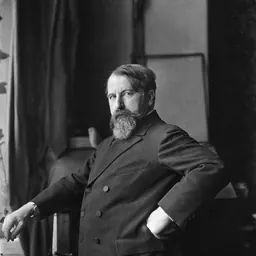



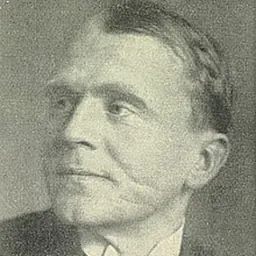
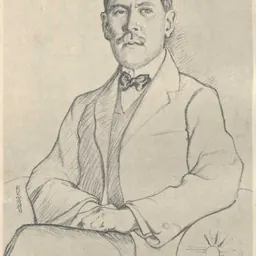

Related people
Same field, nearest in time



Contemporaries
People whose lives overlapped Grete von Urbanitzky's




Frequently asked questions
Who was Grete von Urbanitzky?
Austrian writer and translator (1891–1974)
When was Grete von Urbanitzky born?
Grete von Urbanitzky was born on 9 July 1891 in Linz.
When did Grete von Urbanitzky die?
Grete von Urbanitzky died on 4 November 1974 in Geneva.
What was Grete von Urbanitzky's occupation?
Grete von Urbanitzky was a writer, translator, journalist and screenwriter.
What nationality was Grete von Urbanitzky?
Grete von Urbanitzky was Austrian.
Sources & further reading
· Wikipedia: Grete von Urbanitzky
· DBpedia: Grete von Urbanitzky
Cite this page
APA: Biography.guide. (2026). Grete von Urbanitzky. https://biography.guide/grete-von-urbanitzky/
MLA: "Grete von Urbanitzky." Biography.guide, https://biography.guide/grete-von-urbanitzky/.
Chicago: "Grete von Urbanitzky." Biography.guide. https://biography.guide/grete-von-urbanitzky/.
Data last updated: 2026-09-22 · Spot an error? Report a correction.
Page generated 2026-09-27 05:28 UTC