
Gregory Berns
American Neuroeconomist, neuroscientist, psychiatrist, psychologist and writer
About Gregory Berns
Born 1965. Gregory Berns is an American psychiatrist, neuroscientist, psychologist and neuroeconomics.
Gregory Scott Berns (born June 1964) is an American neuroeconomist, neuroscientist, professor of psychiatry, and psychologist. He lives with his family in Atlanta, Georgia, US. How Dogs Love Us: A Neuroscientist and His Adopted Dog Decode the Canine Brain; and has made numerous media appearances. In 1990 he went on to study for a Ph.D. in Biomechanical engineering, and then for an M.D. Medicine in 1994, both at the University of California. He argues instead that true satisfaction comes from novel experiences which are undergone in the process of achieving an aim, rather than the achievement itself, and this involves an active striving rather than a "passive feeling of happiness."
Berns argues that iconoclasts manage to break through three major 'mental roadblocks' which he enumerates as (a) perception (often having insights triggered through visual imagery); (b) the human fear response (fear of failure, of the unknown, and of ridicule A later study replicated the procedure and results in a larger sample of dogs, and further supported the reliability of the technique.
Reception
Books
Satisfaction
Berns' book Satisfaction was reviewed by Jonathan Beard in the December 2005 edition of the Scientific American Mind magazine.
Writing in CNN Money's Fortune magazine, John Simons sums up the main thrust of Satisfaction by quoting Berns: "The sense of satisfaction after you've successfully handled unexpected tasks or sought out unfamiliar, physically and emotionally demanding activities is your brain's signal that you're doing what nature designed you to do." Though the reviewer found that Berns can be "somewhat professorial, Satisfaction is no plodding textbook". He noted that "nothing escapes the author's investigative eye" and concluded that "Berns's gumshoe approach to scientific theory offers its own proof that a fresh take on the familiar can be most gratifying".
Iconoclast
Writing in the Winter 2009 edition of Stanford Social Innovation Review and reviewing Iconoclast, Robert J. Sternberg points to the three major mental roadblocks that people need to overcome if they wish to be iconoclasts. "First, see things differently from other people—see what others do not see. Second, conquer your fear of failure, of the unknown, and of ridicule. Third, be socially intelligent: Figure out how to interest people in your ideas and how to sell those ideas to opinion leaders." Sternburg also points out that iconoclasts' brains are wired differently. For example, the amygdala, situated within the medial temporal lobes of the brain, of the iconoclast tends to reduce their emotional reactions and fear response.
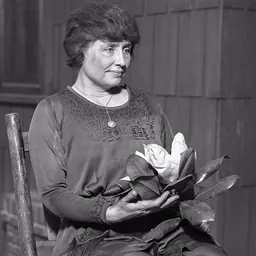
Sternberg is of the opinion that Berns gives insufficient credit to the role played by intelligence; analytical thinking; and several aspects of creative thinking, particularly conformity arising from family and cultural background. Sternberg also feels that the author gives undue emphasis to the faculty of sight in the innovative iconoclastic process. The reviewer objects to Berns' contention that "imagination comes from the visual system", pointing out that blind people can be creative (e.g. the author and political activist Helen Keller) and that other senses may be used creatively (e.g. the composer Mozart).
Overall, however, Sternberg concludes that Iconoclast is "a technically sound and inspiring book". The reviewer writes that Iconoclast "not only analyzes the nature of iconoclasm in fascinating detail, but also serves as a guide for people who feel trapped by conventional thinking and want to escape. The keys out of their prisons are in this book. It is up to these readers to use them to escape and open new doors."
Academic honours and awards Berns has won numerous academic awards during his career:
Princeton University Department of Physics: Allen G. Shenstone Prize for Outstanding Work in Experimental Physics, 1986 University of California, Davis: University of California Regents' Fellowship, 1989–90 American Society of Biomechanics: Postdoctoral Young Scientist Award, 1991 Western Psychiatric Institute and Clinic, Pittsburgh, PA: Thomas Detre Prize for Outstanding Medical Student Paper in General Psychiatry, 1993 American Psychiatric Association: APA/Lilly Resident Research Award, 1995–96 National Institute of Mental Health: NIMH Outstanding Resident Award, 1996 Society of Biological Psychiatry: SOBP/Lilly Fellowship Award, 1997 Organon: Excellence in Psychiatry Residency Award, 1998 Anxiety Disorders Association of America: Senior Travel Award, 1999 American Psychiatric Association: APA/SmithKline Beecham Young Faculty Award, 1999 Emory University School of Medicine: Dean's Clinical Investigator Award, 2001–2004 World Economic Forum: Forum Fellow, 2004, 2009
Works published
Books
Research articles Berns' and the work of his colleagues has been featured in many academic and specialist journals:
Pagnoni G, Zink CF, Montague PR, Berns GS: Activity in human ventral striatum locked to errors of reward prediction. Nat. Neurosci., 5:97-98, 2002. PDF. Dhamala M, Pagnoni G, Wiesenfeld K, Berns GS: Measurements of brain activity complexity for varying mental loads. Phys. Rev. E., 65:041917(7), 2002. Rilling JK, Gutman DA, Zeh TR, Pagnoni G, Berns GS, Kilts CD: A neural basis for social cooperation. Neuron, 35:395-405, 2002. PDF.
McClure SM, Berns GS, Montague PR: Temporal prediction errors in a passive learning task activate human striatum. Neuron 38: 339–346, 2003. PDF.
Zink CF, Pagnoni G, Martin ME, Dhamala M, Berns GS: Human striatal response to salient non-rewarding stimuli. J. Neurosci. 23:8092-8097, 2003. PDF. Accompanying editorial. Zink CF, Pagnoni G, Martin-Skurski ME, Chappelow JC, Berns GS: Human striatal response to monetary reward depends on saliency. Neuron 42:509-517, 2004. PDF. Capuron L, Pagnoni G, Demetrashvili M, Woolwine BJ, Nemeroff CB, Berns GS, Miller AH: Anterior cingulate activation and error processing during interferon-alpha treatment. Biol. Psychiatry 58:190-196, 2005. PDF. Berns GS, Chappelow JC, Zink CF, Pagnoni G, Martin-Skurski ME, Richards R: Neurobiological correlates of social conformity and independence during mental rotation. Biol. Psychiatry 58:245-253, 2005. PDF. Zink CF, Pagnoni G, Chappelow JC, Martin-Skurski ME, Berns GS: Human striatal activation reflects degree of stimulus saliency. Neuroimage 29:977-983, 2006. PDF. Berns GS, Chappelow J, Cekic M, Zink CF, Pagnoni G, Martin-Skurski ME: Neurobiologic substrates of dread. Science, 312:754-758, 2006. PDF. Supporting Materials. Capuron L, Pagnoni G, Demetrashvili MF, Lawson DH, Fornwalt FB, Woolwine B, Berns GS, Nemeroff CB, Miller AH: Basal ganglia hypermetabolism and symptoms of fatigue during interferon-alpha therapy. Neuropsychopharmacology 32:2394-2392, 2007. Berns GS, Capra CM, Moore S, Noussair C: A shocking experiment: new evidence on probability weighting and common ratio violations. Judgment & Decision Making 2:234-242, 2007. PDF. Chandrasekhar PVS, Capra CM, Moore S, Noussair C, Berns GS: Neurobiological regret and rejoice functions for aversive outcomes. Neuroimage 39:1472-1484 (epub Nov 2007). PDF. Berns GS, Capra CM, Chappelow J, Moore S, Noussair C: Nonlinear neurobiological probability weighting functions for aversive outcomes. Neuroimage 39:2047-2057, 2008 (epub Nov 2007). PDF.
Lectures
Interviews, appearances and media coverage
Don’t just read it —
keep it.
Full-length biographies made to live with: read them, listen on the way to work, watch them tonight.
- E-book
- Audio
- Video
Instant download · yours to keep · every purchase keeps this site free
Important facts
People in Gregory Berns's life
Named in this biography and alive at the same time



Related people
Same field, nearest in time




Contemporaries
People whose lives overlapped Gregory Berns's


Frequently asked questions
Who is Gregory Berns?
American Neuroeconomist, neuroscientist, psychiatrist, psychologist and writer
When was Gregory Berns born?
Gregory Berns was born in 1965.
What is Gregory Berns's occupation?
Gregory Berns is a psychiatrist, neuroscientist, psychologist and neuroeconomics.
What nationality is Gregory Berns?
Gregory Berns is American.
Sources & further reading
Cite this page
APA: Biography.guide. (2026). Gregory Berns. https://biography.guide/gregory-berns/
MLA: "Gregory Berns." Biography.guide, https://biography.guide/gregory-berns/.
Chicago: "Gregory Berns." Biography.guide. https://biography.guide/gregory-berns/.
Data last updated: 2026-09-20 · Spot an error? Report a correction.
Page generated 2026-09-27 04:58 UTC