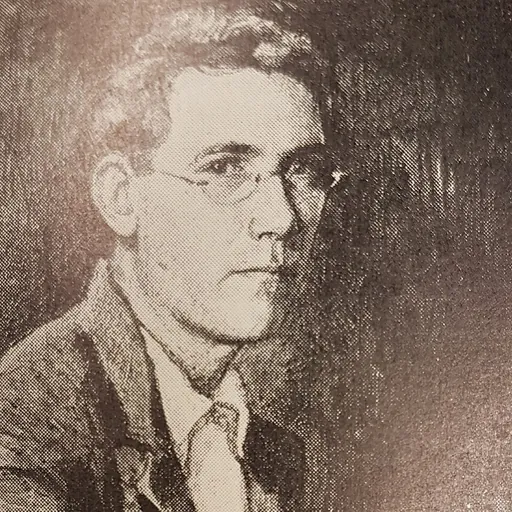
About Gregori Aminoff
Lived 1883 – 1947 (aged 64). Gregori Aminoff was a Swedish academic and painter.
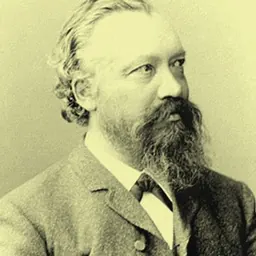
Gregori Aminoff (8 February 1883 – 11 February 1947) was a Swedish mineralogist, artist, and a member of the Aminoff family. During his career, Aminoff introduced X-ray diffraction and electron diffraction to the Swedish scientific community and was a pioneer in crystallography in Sweden.
Education and career Aminoff was born in Stockholm and studied mineralogy at Stockholm University and took exams at Uppsala University, where he received a bachelor's degree in 1905. He switched to art after graduation and studied art first at the Konstnärsförbundets skola in Stockholm until its closure in 1908 and later in Italy with Henri Matisse. He exhibited with De Unga in Stockholm in 1909, 1910 and 1911, was represented at the Autumn Salon (Salon d'Automne) in Paris in 1909, and in 1912 together with Arvid Nilsson (1881–1971) had the solo exhibition Salon Joel in Stockholm. He also participated in exhibitions at the Konstnärsförbundet (English: Artists' Association) and at the Royal Swedish Academy of Fine Arts' spring exhibitions. Aminoff liked to paint naked bodies in landscapes but also urban motifs, portraits and landscapes. He is represented with works at, among others, the National Museum in Stockholm.
Aminoff supported himself through his art practices mostly through taking temporary jobs. In 1914, Aminoff stopped painting and resumed his studies of mineralogy and crystallography, which he had previously put aside. Through the great support from his first wife, Aminoff received a licentiate at Stockholm University in 1916. He later received his PhD in 1918 from Stockholm University and became a docent in mineralogy and crystallography. In the same year, Aminoff introduced X-ray crystallography in Sweden. In 1923, he became a professor at the Mineralogical Department of the Swedish Museum of Natural History. The diffraction techniques he brought to Sweden later attracted the interests from people such as Gösta Phragmén and Arne Westgren, whom Aminoff mentored. Aminoff was elected in 1933 as a member of the Royal Swedish Academy of Sciences. He was awarded the Björkén Prize in 1935 along with Arne Westgren. Aminoff married in 1908 a fellow student from Stockholm University, Ingrid Setterlund, daughter of head teacher Carl Setterlund. They had four daughters, Brita, Eva, Malin and Ulla. Aminoff was remarried to Birgit Broomé (1892–1950), daughter of Emilia Broomé and Erik Ludvig Broomé, in 1929. Aminoff published several papers in crystallography together with his second wife Broomé (later Broomé-Aminoff). Aminoff died of a heart disease in 1947. The Aminoffs were buried at the Norra burial place (Norra begravningsplatsen) outside Stockholm.
Don’t just read it —
keep it.
Full-length biographies made to live with: read them, listen on the way to work, watch them tonight.
- E-book
- Audio
- Video
Instant download · yours to keep · every purchase keeps this site free
Important facts
People in Gregori Aminoff's life
Named in this biography and alive at the same time
Related people
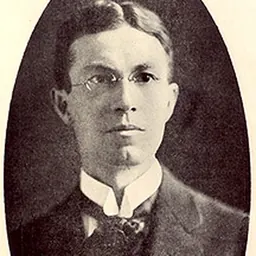
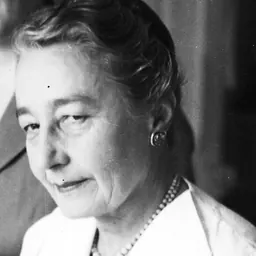
Same field, nearest in time


Contemporaries
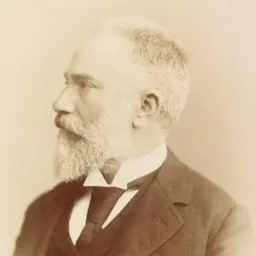
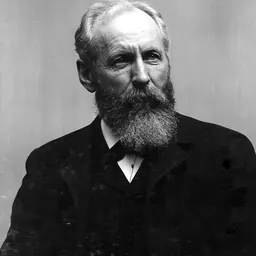
People whose lives overlapped Gregori Aminoff's


Frequently asked questions
Who was Gregori Aminoff?
Swedish painter and mineralogist and expert on Långban mineralogy (1883-1947)
When was Gregori Aminoff born?
Gregori Aminoff was born on 8 February 1883 in Stockholm.
When did Gregori Aminoff die?
Gregori Aminoff died on 11 February 1947 in Kungsholm parish.
What was Gregori Aminoff's occupation?
Gregori Aminoff was an academic and painter.
What nationality was Gregori Aminoff?
Gregori Aminoff was Swedish.
Sources & further reading
Cite this page
APA: Biography.guide. (2026). Gregori Aminoff. https://biography.guide/gregori-aminoff/
MLA: "Gregori Aminoff." Biography.guide, https://biography.guide/gregori-aminoff/.
Chicago: "Gregori Aminoff." Biography.guide. https://biography.guide/gregori-aminoff/.
Data last updated: 2026-09-20 · Spot an error? Report a correction.
Page generated 2026-09-27 05:10 UTC