
About Gregor Werner
Lived 1693 – 1766 (aged 73). Gregor Werner was a German composer.
Gregor Joseph Werner (28 January 1693 – 3 March 1766 ) was an Austrian composer of the Baroque period, best known as the predecessor of Joseph Haydn as the Kapellmeister of the Hungarian Esterházy family. Few of Werner's works survive to the present day, and he is mostly remembered for his troubled relationship with Haydn.
Career Werner was born in Ybbs an der Donau. at the court; previously, there had been seven years of relative inactivity following the death of Prince Joseph in 1721; his widow Maria Octavia, serving as co-regent for her young son Paul Anton, had instituted economies in the musical establishment. Robbins Landon and Jones suggest that Werner was hired at the then 17-year-old prince's instigation. Jones discerns a bifurcated style, with most of the work taking the form of severe, "weighty" contrapuntal pieces, but a minority (written for lighter occasions such as Advent and the Nativity) that "employ a distinctly homespun idiom, invoking elements of Austrian and indeed Eastern European folk music". which appeared in Augsburg in 1748. and the Esterházy organist Johann Novotný (1718–1765), father of Franz Nikolaus Novotny (1743–1773). Autograph scores and parts by Gregor Joseph Werner have found their way into the collection of the Országos Széchényi Könyvtár, Budapest, as well as the public archives in Győr, Hungary.
Relations with Haydn Werner's period of semi-retirement began in 1761 when the Esterházy family hired the 29-year-old composer Joseph Haydn as their Vice-Kapellmeister. The contract by which Haydn was hired shows the family's loyalty to their elderly musical servant by retaining him, at least on a titular basis, in the top post of Kapellmeister. However, after this time Werner's musical duties were limited to church music, and Haydn, 39 years younger than Werner, had the primary duties, with full control over the secular musical events of the household, including the orchestra.
This was a time of changes probably unwelcome to Werner. His longtime patron Paul Anton died in March 1762, succeeded by his younger brother Nikolaus Esterházy. Nikolaus was also a very musical prince, but his interests (Jones) "lay with Haydn and the development of instrumental music".
While it is natural to detect bitterness and envy in Werner's letter, Jones points out that the criticisms might well have been legitimate, and that the letter produced a useful bureaucratic response. Haydn was spread thin between serving the Prince's interests in secular music (mostly in his palace in Vienna) and in covering for the now-frail Werner the church music at the family seat in Eisenstadt. Prince Nikolaus arranged for his administrator Rahier to deal with the situation. Rahier (with whom Haydn had a difficult relationship) issued an official document, which reprimanded Haydn. However, it also provided a helpful clarification of Haydn's responsibilities and designated a subordinate (Joseph Dietzl) to take on the task of keeping track of the music and instruments in Eisenstadt.
The reprimand also led Haydn to begin to keep a draft catalog of all his works (the "Entwurf-Katalog"). In response to a particular detail of the reprimand, Haydn began writing a great number of works in the Prince's favorite genre at the time, the baryton trio.
Reception Werner today is an almost-forgotten composer. The Penguin Guide to Recorded Classical Music (2009) reviews no recording of any works by him; few recordings are commercially available. The reference sources listed below tend to emphasize Werner's troubled relationship with Haydn over his own career.
The choreographer Twyla Tharp used a prelude and fugue by Werner for her 1976 dance Give and Take.
Haydn himself clearly held Werner in high esteem, whatever their personal difficulties may have been. In his own old age (1804) Haydn published "six introductions and fugues for string quartet, taken from Werner’s oratorios". The title page read that the works were "edited by his successor J. Haydn out of particular esteem towards the famous master".
Selected recordings Oratorio Debora – Banditelli, dir. Pal Nemeth. Quintana 1994. Gregor Werner: Pro Adventu – Ars Antiqua Austria, dir. . Challenge Classics CC72513, 2012. Includes his 6 fugues in Quartets (as arranged by Haydn), and selected vocal works for Advent. Die Jahreszeiten (= Neuer und sehr curios-Musicalischer Instrumental-Calender) Concilium musicum Wien, dir. Paul Angerer. Christophorus Records CHE 0164-2, 2011.
Don’t just read it —
keep it.
Full-length biographies made to live with: read them, listen on the way to work, watch them tonight.
- E-book
- Audio
- Video
Instant download · yours to keep · every purchase keeps this site free
Important facts
People in Gregor Werner's life
Named in this biography and alive at the same time
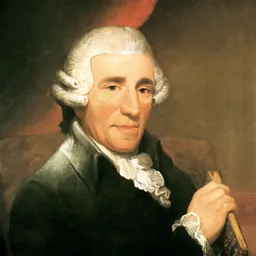

Related people
Same field, nearest in time

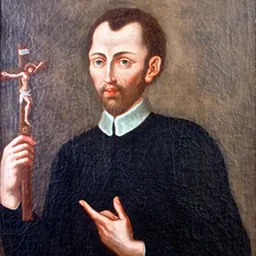
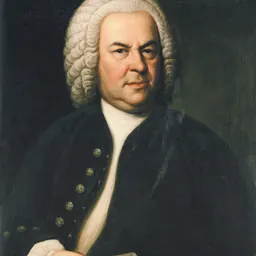

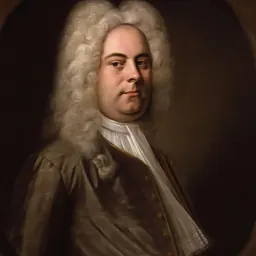
Contemporaries
People whose lives overlapped Gregor Werner's




Frequently asked questions
Who was Gregor Werner?
Austrian composer
When was Gregor Werner born?
Gregor Werner was born on 28 January 1693 in Ybbs an der Donau.
When did Gregor Werner die?
Gregor Werner died on 3 March 1766 in Eisenstadt.
What was Gregor Werner's occupation?
Gregor Werner was a composer.
What nationality was Gregor Werner?
Gregor Werner was German.
Sources & further reading
Cite this page
APA: Biography.guide. (2026). Gregor Werner. https://biography.guide/gregor-werner/
MLA: "Gregor Werner." Biography.guide, https://biography.guide/gregor-werner/.
Chicago: "Gregor Werner." Biography.guide. https://biography.guide/gregor-werner/.
Data last updated: 2026-09-20 · Spot an error? Report a correction.
Page generated 2026-09-27 05:22 UTC