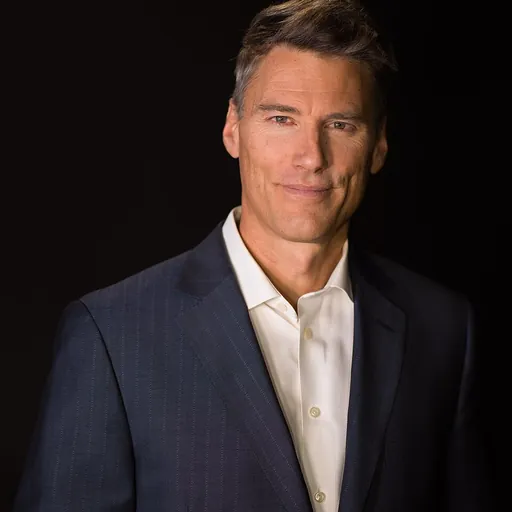
About Gregor Robertson
Born 1965. Gregor Robertson is a Canadian entrepreneur, politician and farmer.
Gregor Angus Bethune Robertson (born September 18, 1964) is a Canadian businessman and politician, who has served as the Minister of Housing and Infrastructure since 2025. He served as the 39th mayor of Vancouver, British Columbia, from 2008 to 2018. As the longest consecutive serving mayor in Vancouver's history, Robertson and his team led the creation and implementation of the Greenest City 2020 Action Plan and spearheaded the city's first comprehensive Economic Action Strategy.
Robertson was elected to the position of mayor of Vancouver as part of the Vision Vancouver slate. Prior to that, he served as a Member of the Legislative Assembly for Vancouver-Fairview, as a member of the New Democratic Party of British Columbia, from 2005 until his resignation in 2008 to run for the mayoral position. On January 10, 2018, Robertson announced that he would not seek re-election after three terms in office.
On April 28, 2025, Robertson was elected Member of Parliament in Vancouver Fraserview—South Burnaby as the Liberal candidate for the 2025 Canadian federal election. After his parents divorced, Robertson grew up partly in Portola Valley, near San Francisco with his mother, and later with his father in North Vancouver. graduating from the latter with a BA in English and Biology in 1986. After graduating, he intended to become a physician, but the University of British Columbia School of Medicine rejected his application. Robertson then completed Emergency Medical Technician (EMT/paramedic) training, but turned his career focus towards healthy food and nutrition. He was also a Tides Canada (public foundation) director from 2002 until 2004, when he entered politics with the provincial New Democratic Party.
He was elected to the BC Legislative Assembly in the 2005 election as a member of the British Columbia New Democratic Party having defeated the trade union leader Judy Darcy in a high-profile battle for the party's nomination. He then beat British Columbia Liberal Party's Virginia Greene in the general election. During his time as the MLA for Vancouver-Fairview, Robertson served as the Opposition Critic for Advanced Education, Small Business Critic and as the co-chair of the Caucus Climate Change Taskforce.
As of 2025, Robertson is a special envoy in the Coalition for High Ambition Multilevel Partnerships (CHAMP),
Mayoral campaign and elections
In February 2008, Robertson announced that he would run for Mayor of Vancouver. In June 2008, Robertson secured the Vision Vancouver party's nomination as its mayoral candidate, defeating Raymond Louie and Allan De Genova. Robertson soon announced his resignation from the Legislative Assembly effective July 15, 2008. His main rival was Peter Ladner of the Non-Partisan Association.
He was elected by a solid margin in the 2008 municipal election. Seven of the ten seats on Vancouver City Council also went to Robertson's Vision Vancouver party. "It was a hard-fought campaign," he told supporters gathered at the Fairmont Hotel Vancouver, "but there is far more that unites us than divides us."
Robertson secured a landslide victory in the 2011 municipal election. He defeated Suzanne Anton of NPA by a margin of 18,853 votes, while Vision Vancouver won seven of the ten seats on the Vancouver City Council.
In January 2018, Robertson announced that he would not seek re-election in the fall election. His mayorship ended on 5 November 2018.
Mayoral term (2008–2018) Economic growth In 2011, Robertson created the city's first Economic Action Strategy which led to creation of jobs in sectors such as green energy and digital media. During his mayoral tenure, Vancouver became the fastest-growing metropolitan economy in the country, according to the Conference Board of Canada. Vancouver's unemployment was down in six of the last seven years of his term; the unemployment rate of 4.5% in 2018 was one of the lowest in the country.
Action on homelessness
On December 9, 2008, he announced low-barrier HEAT shelters to assist Vancouver's homeless citizens during an extremely cold winter, which were filled to capacity. On September 15, 2009, Vancouver city staff issued a report warning Robertson and the City Council that they should no longer expect the HEAT shelters to be funded after the 2009–2010 fiscal year. In 2011, by the end of his first mayoral term, more than 90 per cent of the homeless people in Vancouver were reportedly sleeping in shelters or other temporary spaces.
In 2014, he oversaw the creation of Vancouver Affordable Housing Agency, which was established to create housing units primarily for low to moderate-income households. A neighbourhood plan aimed to shape development of the Downtown Eastside was also approved. The plan was aimed to protect low-income residents of the area who were struggling to afford rent amidst a rise in cost of living.
In September 2017, the Government of British Columbia announced a funding commitment of $66 million towards Robertson's plan to build 600 units of temporary modular housing in Vancouver. In partnership with the BC Government, temporary modular homes were built within 18 months on empty or underutilized City-owned land, providing immediate relief to 600 people living without a home, as well as access to 24/7 supports, including life skills training and health services. Robertson attributed this increase to a lack of support from provincial and federal governments. In addition, numbers released by B.C. Housing Ministry pointed to an influx of homeless people coming to British Columbia from other provinces. A 2016 study by Simon Fraser University found that 52% of the homeless people surveyed in Downtown Eastside had migrated there from outside Vancouver, up from 17% a decade ago.
The 12th annual Homeless Count in Vancouver held in 2018 saw a 2% increase in homeless residents since the 2017 count, compared with a 16% increase between 2016 and 2017. Of those counted in 2018, 659 were living on the street and 1,522 were living in shelters, compared to 537 street homeless and 1,601 sheltered in 2017. In April 2009, Robertson and the Greenest City Action Team released a report outlining quick-start recommendations to move aggressively on its green plan. The report focused on three key areas: jobs and the economy, greener communities, and protecting human health. In 2013, Vancouver was named as the Global Earth Hour Capital by the World Wildlife Fund in recognition of the city's "actions on climate change and dedication to create a sustainable, vibrant urban environment." In 2016, Vancouver was recognized as the third greenest city in the world according to the Global Green Economy Index, behind only Copenhagen and Stockholm, and was also the top-ranked North American city in the Arcadis Sustainable City Index.
As part of GCAP, Vancouver also focused on waste management by turning organic waste into compost material which was then sold to gardeners. The city captured methane at landfills to heat greenhouses. Vancouver also became the first city in North America to heat homes using thermal energy extracted from sewage and wastewater, which reportedly reduced greenhouse gas emissions by 65% in the False Creek neighbourhood. Another focus area of the GCAP was reducing emissions from buildings, a major source of greenhouse gases in Vancouver. In 2016, the city introduced the Zero Emissions Building Plan with the aim to make all new constructions zero emissions buildings by 2030, while reducing emissions from existing buildings through the transition from fossil fuels to renewable sources and the implementation of improved building envelopes.
Transportation and livability
Cycling Robertson and his team led the charge on cycling infrastructure, transforming Vancouver into one of the world's most liveable cities.
Cycling had been growing in popularity in Vancouver, and the desire of its citizens to cycle for at least some of their trips had been growing for decades; however little was done by previous administrations. In July 2009, the Burrard Bridge bicycle lane trial was initiated to determine whether creating a new protected bike lane was a viable solution to increase the safety and comfort of people cycling and walking while still maintaining an effective flow of traffic. During his mayorship, the city's flagship project was the Seaside Greenway, running from downtown Vancouver to Jericho Beach. This active transportation corridor was created by repurposing one lane of automobile traffic from the Burrard Bridge as well as blocking through vehicular traffic from the prestigious Point Grey Road.
Over the course of his tenure as mayor, protected bike lanes were established and the Central Valley Greenway bike corridor was opened from Vancouver to New Westminster through Burnaby. In 2015, the city achieved its goal of having 50% of all trips made by sustainable modes—walking, cycling, or transit—five years ahead of the original 2020 target, aided by a network of bike lanes created between 2009 and 2014. Between 2006 and 2016, the city reported an 85% increase in bicycle ridership, a 32% rise in transit commuters, and a 26% growth in the number of people walking to work.
The improved cycling infrastructure, coupled with the launch of Mobi bike share service in 2016, led to record bicycle ridership in 2018, with Vancouver being dubbed as a "North American cycling leader".
SkyTrain Robertson was a strong supporter of Cambie Street merchants and spoke regularly about hardships from the Canada Line construction. He called the handling of the rail line construction an "injustice". In 2009, a Cambie Street merchant was awarded $600,000 in a lawsuit for damages caused by Canada Line construction, with Robertson providing testimony; but this decision was overturned by the B.C. Court of Appeal in 2012. On the Canada Line opening day of August 17, 2009, Robertson said Greater Vancouver needed more rapid transit but the Canada Line was a "great start" and that he was a "Johnny-come-lately" to the project.
In 2016, Robertson helped secure funding for the Broadway subway extension of the Millennium Line, when he was also chair of the Mayors’ Council on Regional Transportation.
Bylaw changes
In preparation for the 2010 Winter Olympics in July 2009, the Vancouver Council approved several temporary bylaw changes—including security checkpoints, closed-circuit cameras, prohibition of "disturbance or nuisance interfering with the enjoyment of entertainment on city land by other persons", and prohibition of commercial flyers at celebration sites—which were controversial for some civil liberties advocates who argued that they "make it more difficult to exercise [the] fundamental constitutional rights to free speech, peaceful assembly and free expression." As part of the changes city manager Penny Ballem, an unelected official, was given special powers that were referred to by Coalition of Progressive Electors councillor Ellen Woodsworth as "wide open carte blanche." Robertson defended council's position, explaining the temporary bylaw changes were necessary given what Vancouver was required to implement as the host city. According to Robertson, "It is our ultimate obligation to ensure the safety and security of people who are in our city and this, I think, addresses a lot of the concerns proactively on that level while respecting the Charter of Rights and Freedoms. This is a temporary set of changes we're putting it in place for a special event."
Robertson also implemented a bylaw in April 2014 that prevented homeowners from cutting trees down on their own private property. The bylaw was proposed due to the rapid reduction in tree cover in the City of Vancouver.
Vancouver charter amendment On January 12, 2009, Robertson requested an amendment to the Vancouver Charter to allow the city to borrow $458 million to fund the completion of the 2010 Olympic Village in False Creek without seeking approval from taxpayers in an election-day plebiscite. Robertson said this was due to extraordinary circumstances.
Vancouver Stanley Cup riot On June 15, 2011, the 2011 Vancouver Stanley Cup riot occurred after a Vancouver Canucks loss in game seven of the Stanley Cup Final. Robertson attributed the situation to "a small group of troublemakers". Bob Whitelaw, author of a report into the 1994 Vancouver Stanley Cup riot, indicated that authorities had made several mistakes in the planning for the crowd—among them allowing parked cars near the screens and leaving newspaper boxes nearby which could be used as projectiles. It was later claimed by Vancouver Police Chief Jim Chu that Bob Whitelaw was not a contributor to the final report, and that all recommendations of the final report had been followed. Robertson admitted to not having read the 1994 report. Suzanne Anton dubbed the riot as "Robertson's Riot", a moniker which was picked up by some media outlets.
Indigenous rights In 2014, Vancouver declared itself to be the first "City of Reconciliation", summarizing the principles to reconcile with Musqueam, Squamish and Tsleil-Waututh indigenous communities. Robertson acknowledged that the city was on the unceded homelands of the First Nations. Robertson and Vancouver City Council established regular meetings with Musqueam, Squamish and Tsleil-Waututh councils to implement reconciliation actions jointly.
Robertson and the city council strongly opposed the Trans Mountain pipeline and took legal action with the three nations in fighting against its development, travelling to Ottawa with the BC First Nations Chiefs to petition Federal leaders.
In 2017, the city council permanently raised the flags of the three host nations in the council chambers for the first time in the city's history. They also donated a burial site back to the Musqueam community and protected the site from commercial development as part of their ongoing commitments as a "City of Reconciliation".
During the 2013 Walk of Reconciliation, over 70,000 people marched with Robertson, City Council, and thousands of city leaders/organizations in heavy rain in support of indigenous rights, while the Truth and Reconciliation Commission of Canada was hosted by the city.
Other investments Between 2009 and 2011, the city exceeded its target of 300 childcare spaces by 153. And during his 2011 mayoral campaign, Robertson set a larger goal of setting up 500 affordable childcare spaces over the course of his second term. The budget surplus of $5 million in 2012 was partially invested into development of childcare spaces, the largest increase in childcare investment in Vancouver's history. In 2014, the city announced that 599 spaces had been built or committed to since 2012, with a total investment of $62 million going into the plan. By 2018, 1,064 additional childcare spaces had been committed in line with the 2015–2018 Capital Plan to create 1,000 new childcare spaces.
Robertson advocated for drug decriminalization during the opioid crisis. The city invested in overdose prevention sites, facilitating supervised injection and clean exchange of needles, which resulted in a decrease in overdose deaths.
Post-mayoral career Global Covenant of Mayors In 2019, Robertson was appointed as the global ambassador of Global Covenant of Mayors for Climate & Energy, the largest city alliance for climate leadership with over 13,000 cities worldwide tackling the climate crisis and energy challenges.
Coalition for High Ambition Multilevel Partnerships In 2024, the Global Covenant of Mayors, with support from Bloomberg Philanthropies, appointed Robertson as a special envoy in the Coalition for High Ambition Multilevel Partnerships (CHAMP).
Federal politics 2025 federal election On March 23, 2025, Robertson announced his candidacy as the Liberal Party candidate for the newly established Vancouver Fraserview—South Burnaby riding in the 2025 federal election. On April 28, 2025, Robertson won the seat with 52.3% of the vote, defeating Conservative candidate Avi Nayyar. The Liberal Party recorded its best performance in the province in decades.
Carney government On May 13, 2025, he was appointed by Prime Minister Mark Carney as the Minister of Housing and Infrastructure and also Minister responsible for Pacific Economic Development Canada. Robertson thus became one of the few Canadian politicians to have served at all three levels of government.
In September 2025, Build Canada Homes (BCH), a new federal housing agency overseen by Robertson, was launched with $13 billion in funding towards affordable housing programs focused on public lands and modular construction. By June 2026, BCH reported commitments for more than 11,000 new homes, and signed agreements with British Columbia, Quebec, New Brunswick, Nova Scotia, Nunavut, Yukon, and the City of Ottawa to build affordable homes. BCH is part of the federal government's strategy to accelerate housing construction and build 500,000 homes annually. In October 2025, Robertson stated this goal is ambitious and could take a decade to achieve. Robertson does not believe housing prices need to decrease and sees supply as the main issue.
In November 2025, Robertson announced the Build Communities Strong Fund (BCSF) to support housing-enabling infrastructure, including transit, roads, hospitals, colleges, and community facilities. BCSF was launched in April 2026 with $51 billion earmarked over 10 years, followed by $3 billion annually thereafter. In June 2026, the federal government announced a partnership between BCSF and Canada Public Transit Fund (CPTF) to invest $10 billion in community infrastructure in Quebec over 10 years.
In March 2026, a partnership between Canada and Ontario to remove HST and reduce development charges was announced. At that time, Robertson stated, “Our government’s key investments in infrastructure and housing will help remove barriers to homebuilding and home ownership.”
In June 2026, a joint federal-provincial plan, funded through BCH, was announced to acquire and convert more than 2,200 unsold, vacant condominium units in British Columbia into affordable rent-to-own homes. Robertson defended the plan against criticism that it amounted to a developer bailout, arguing that the units would be purchased below market value and would help families get into homes more quickly.
Family and personal life Robertson was married to Amy Oswald, whom he met at Colorado College, and they have three children. On July 5, 2014, the Robertsons announced their separation in a joint statement.
In 2020, Robertson married Eileen Park Robertson, a journalist, filmmaker, communications professional and climate and racial justice advocate. When news of their interracial marriage was published in Vogue magazine, Eileen, a Korean-American, was targeted with racist and misogynist hate. She spoke out about her personal experiences with racism while working in media and government.
Robertson is a tuba player; he and his former MLA colleague Nicholas Simons performed on country-punk musician Slim Milkie's 2010 album Silverado.
He is a distant relative of Norman Bethune. His grandmother was a first cousin of the Canadian doctor, a hero of the mainland Second Sino-Japanese War.
Electoral record
Federal elections
Provincial elections
Municipal elections
2014 election for mayor
2011 election for mayor
2008 election for mayor
Don’t just read it —
keep it.
Full-length biographies made to live with: read them, listen on the way to work, watch them tonight.
- E-book
- Audio
- Video
Instant download · yours to keep · every purchase keeps this site free
Important facts
People in Gregor Robertson's life
Named in this biography and alive at the same time


Related people
Same field, nearest in time


Contemporaries
People whose lives overlapped Gregor Robertson's


Frequently asked questions
Who is Gregor Robertson?
Canadian politician
When was Gregor Robertson born?
Gregor Robertson was born on 18 September 1965 in North Vancouver.
What is Gregor Robertson's occupation?
Gregor Robertson is an entrepreneur, politician and farmer.
What nationality is Gregor Robertson?
Gregor Robertson is Canadian.
Sources & further reading
· DBpedia: Gregor Robertson (politician)
Cite this page
APA: Biography.guide. (2026). Gregor Robertson. https://biography.guide/gregor-robertson-entrepreneur/
MLA: "Gregor Robertson." Biography.guide, https://biography.guide/gregor-robertson-entrepreneur/.
Chicago: "Gregor Robertson." Biography.guide. https://biography.guide/gregor-robertson-entrepreneur/.
Data last updated: 2026-09-22 · Spot an error? Report a correction.
Portrait: Wikimedia Commons · author & licence
Page generated 2026-09-27 05:02 UTC