
About Grégoire Michonze
Lived 1902 – 1982 (aged 80). Grégoire Michonze was a French painter.
Grégoire Michonze (; 1902–1982) (variant name Grégoire Michonznic, Grogórij Mišónznik) was a Russian-French painter, born in 1902 in Kishinev (Bessarabia), Russian Empire (now Republic of Moldova).
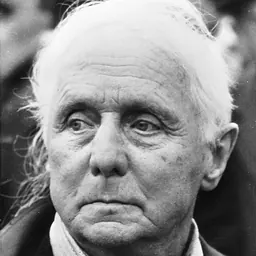
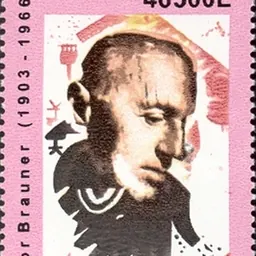
From 1919–1922, Michonze studied at a local art academy where, painting Russian icons, he learned to master the technique of painting with egg tempera. He continued his studies at the Academy of Painting in Bucharest and befriended the artist Victor Brauner. In 1922, after Bessarabia had become part of Romania, Michonze moved to Paris and met Max Ernst who later introduced him to the Surrealists, notably André Breton, Paul Éluard, Yves Tanguy and André Masson. He furthered his art studies by taking classes at the École des Beaux-Arts. During this period, Michonze met and developed a strong friendship with the Jewish École de Paris artist Chaïm Soutine. Between the period 1934–1936, Michonze exhibited at the Salon des Surindépendants. He described his work at these exhibitions as "Surreal naturalism". Michonze fought in the war and, after 1943, settled into a studio on Paris's Rue de Seine. He took up French citizenship in 1947, and in 1949, the French Fund for Modern Art acquired his now seminal canvas La moisson (The Harvest).
From 1954–1977, Michonze continued and perfected his life's work. He had extended stays in the United States where he spent time with his close friend, the American author Henry Miller. Michonze also travelled frequently to Israel where he exhibited, visited with his mother, and re-acquainted himself with his Jewish roots. He died of a heart attack in his studio at rue de Seine in Paris on December 29, 1982.
Michonze is primarily known as a landscape and figurative artist. A marked majority of his paintings include depictions of groups of people—families, villagers, peasants, children—and most works evince an allegory or narrative of some kind. Each work is imbued with mystery, a sort of hidden dialogue that enhances the appeal of the work and piques the viewer's curiosity. In a 1959 letter to the British art critic Peter Stone, Michonze wrote of his work: "My subjects have no subject. They exist only for a poetic end. If the poetry is there, the canvas is complete. No histories. Only pure poetry, preferably untitled."
Selected exhibitions 1997: Galerie Francis Barlier, Paris 1985: Musée d'art moderne, Troyes (major retrospective) 1974: Givon Gallery, Tel-Aviv 1947: Mayor Gallery, London 1946: Arcade Gallery, London 1934: Salon des Surindépendants, Paris
Selected collections Musée d'art moderne, Troyes
Don’t just read it —
keep it.
Full-length biographies made to live with: read them, listen on the way to work, watch them tonight.
- E-book
- Audio
- Video
Instant download · yours to keep · every purchase keeps this site free
Important facts
People in Grégoire Michonze's life
Named in this biography and alive at the same time




Related people
Same field, nearest in time
Contemporaries
People whose lives overlapped Grégoire Michonze's



Frequently asked questions
Who was Grégoire Michonze?
French painter (1902-1982)
When was Grégoire Michonze born?
Grégoire Michonze was born on 22 March 1902 in Chișinău.
When did Grégoire Michonze die?
Grégoire Michonze died on 29 December 1982 in 6th arrondissement of Paris.
What was Grégoire Michonze's occupation?
Grégoire Michonze was a painter.
What nationality was Grégoire Michonze?
Grégoire Michonze was French.
Sources & further reading
· Wikipedia: Grégoire Michonze
Cite this page
APA: Biography.guide. (2026). Grégoire Michonze. https://biography.guide/gregoire-michonze/
MLA: "Grégoire Michonze." Biography.guide, https://biography.guide/gregoire-michonze/.
Chicago: "Grégoire Michonze." Biography.guide. https://biography.guide/gregoire-michonze/.
Data last updated: 2026-09-20 · Spot an error? Report a correction.
Page generated 2026-09-27 05:15 UTC