
Grand Duke Nicholas Nikolaevich of Russia
Russian grand duke (1831-1891); third son and sixth child of Nicholas I of Russia and Charlotte of Prussia
About Grand Duke Nicholas Nikolaevich of Russia
Lived 1831 – 1891 (aged 59). Grand Duke Nicholas Nikolaevich of Russia was a Russian military personnel, general field marshal and aristocrat.
Grand Duke Nicholas Nikolaevich of Russia (; 8 August 1831 – 25 April 1891) was the third son and sixth child of Tsar Nicholas I of Russia and Alexandra Feodorovna. He may also be referred to as Nicholas Nikolaevich the Elder to tell him apart from his son, Grand Duke Nicholas Nikolaevich of Russia (1856–1929). Trained for the military, as a Field Marshal he commanded the Russian army of the Danube in the Russo-Turkish War, 1877–1878.
Military career Grand Duke Nicholas Nikolaevich was born on 8 August 1831 at Tsarskoye Selo in St. Petersburg.
His father arranged for Nicholas Nikolaevich a career in the army. On the day he was born, he was appointed honorary colonel in the Life Guard Lancers and enlisted into the Life Guard Sappers battalion. A soldier most of his life, he first saw active service in the Crimea War, when he was in his early twenties, taking part in the battle of Inkerman (1854). Grand Duke Nicholas Nicolaievich showed a special interest in military engineering. In 1856, he was appointed as general Inspector of engineers and in 1864, he became commander of the Imperial Guard. In 1873, he accompanied his brother, Alexander II, to Berlin at the meeting of the three emperors: Russia, Germany and Austria.
The epitome of his career was the Russo-Turkish War, 1877–1878, when Nicholas Nicolaievich was appointed Commander-in-Chief of the Russian armies of the Danube, although his reputation as a strategist was very low. The Grand Duke had no particular distinction in early successes in the conflict and these were followed by terrible reverses of the armies under his orders. After the expulsion of the Russian troops from Rumelia and unsuccessful attacks at Plevna, Nicholas Nicolaievich was removed from actual command , although in theory he remained in his post. The victory of his subordinates allowed him to participate in the success at Adrianople and the Treaty of San Stefano, but after the war ended, he was criticized for not seizing Constantinople when his headquarters were already established in Adrianople. The Grand Duke also suffered the acute embarrassment of being charged with financial irregularities, of receiving bribes and embezzling money from the government.
His brother, Alexander II, promoted Nicholas Nicolaievich's career and named him Commander of the St Petersburg military region. Eventually he received the ranks of Field Marshal-General, Inspector General of Cavalry and Inspector General of the Russian engineering forces. Nicholas Nicholaievich was an influential military figure; he also served on the State Council.
A Russian Grand Duke Nicholas “loved all women except for his wife” as a contemporary wrote. He enjoyed army life, hunting and was a well-known gourmet. He was also an expert on cattle, purebred dogs, horse breeding, fishing and hunting. In his residence in St Petersburg, the Nikolayevsky Palace, built between 1853 and 1861, horses were a favorite topic of conversation. The Grand Duke Nicholas Nicolaievich took great interest in managing his estates, but he failed to inspire affection, even in those closest to him. In 1882, Nicholas Nicolaievich was put under supervision due to the squandering of his fortune; he lived as a private gentleman in a modest house.
Grand Duke Nicholas Nicolaievich, unable to get a divorce, hoped to survive his wife and then marry his mistress, but it was Catherine Chislova who died unexpectedly in Crimea while Grand Duchess Alexandra Petrovna would survive him by nine years. Shortly after his mistress' death, Nicholas went mad; he had oral cancer that spread to his brain. Suffering from delusion, he was convinced that all women were in love with him. During one ballet performance, the Grand Duke even attacked a young male dancer that he took to be a woman. In 1890, Nicholas Nicolaievich was declared insane and kept locked indoors in Crimea. He died in Alupka, Crimea on 25 April 1891. The Grand Duke's reputation at the imperial court was low and his death was not deeply felt. He had squandered all his tremendous wealth and his palace was immediately sold to cancel his massive debts.
Honours Russian Knight of St. Andrew, 8 August 1831 Knight of St. Alexander Nevsky, 8 August 1831 Knight of the White Eagle, 8 August 1831 Knight of St. Anna, 1st Class, 8 August 1831 Knight of St. George, 4th Class, 24 October 1854; 2nd Class, 15 July 1877; 1st Class, 28 November 1877 Knight of St. Vladimir, 1st Class, 1 January 1863 Knight of St. Stanislaus, 1st Class, 1865
Foreign Knight of the House Order of Fidelity, 29 May 1852 Grand Cross of the Zähringer Lion, 29 May 1852 Knight of St. Hubert, 19 March 1852 Grand Cordon of the Order of Leopold Knight of the Elephant, 1 September 1868 Ernestine duchies: Grand Cross of the Saxe-Ernestine House Order, 1874 French Empire: Grand Cross of the Legion of Honour, May 1860 Kingdom of Greece: Grand Cross of the Redeemer, 1867 Grand Cross of the Ludwig Order, 7 June 1852 Knight of the Annunciation, 14 August 1876 Holy See: Grand Cross of the Holy Sepulchre of Jerusalem, 28 October 1872 Mecklenburg: Grand Cross of the Wendish Crown, with Crown in Ore, 30 August 1869 Military Merit Cross, 2nd Class, June 1877; 1st Class, November 1877 (Schwerin) Grand Cross of the Order of Prince Danilo I, 28 December 1868 Grand Cross of the Netherlands Lion, 30 August 1849 Grand Cross of the Order of Duke Peter Friedrich Ludwig, with Golden Crown, 26 July 1853 Order of Osmanieh, 1st Class in Diamonds, 26 November 1872 Kingdom of Prussia: Knight of the Black Eagle, 14 June 1838; with Collar, 1861 Pour le Mérite (military), 8 December 1871; with Oak Leaves, 1877 Grand Commander's Cross of the Royal House Order of Hohenzollern, 25 September 1872 Senator Grand Cross of the Constantinian Order of St. George, 1852 Persian Empire: Order of the August Portrait, in Diamonds, 20 May 1873 Order of the Star of Romania, Grand Cross, September 1877 Order of the White Falcon, Grand Cross, 19 June 1852 Knight of the Rue Crown, 27 February 1852 Order of the Cross of Takovo, Grand Cross, 7 March 1878 Sweden-Norway: Knight of the Seraphim, 19 July 1875 Grand Cross of St. Ferdinand and Merit, 2 May 1852 Grand Cross of the Württemberg Crown, 1867 Grand Cross of the Military Merit Order, 10 September 1878
Ancestry
Don’t just read it —
keep it.
Full-length biographies made to live with: read them, listen on the way to work, watch them tonight.
- E-book
- Audio
- Video
Instant download · yours to keep · every purchase keeps this site free
Important facts
People in Grand Duke Nicholas Nikolaevich of Russia's life
Named in this biography and alive at the same time

Related people
Same field, nearest in time

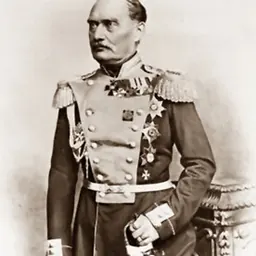
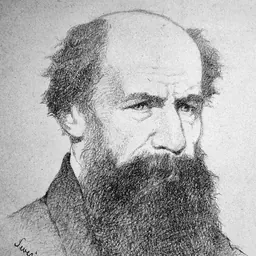

Contemporaries
People whose lives overlapped Grand Duke Nicholas Nikolaevich of Russia's


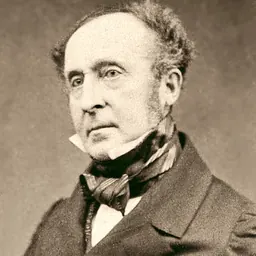
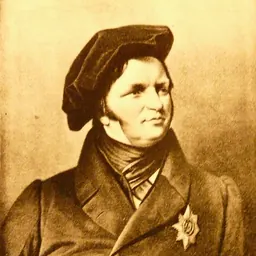

Frequently asked questions
Who was Grand Duke Nicholas Nikolaevich of Russia?
Russian grand duke (1831-1891); third son and sixth child of Nicholas I of Russia and Charlotte of Prussia
When was Grand Duke Nicholas Nikolaevich of Russia born?
Grand Duke Nicholas Nikolaevich of Russia was born on 8 August 1831 in Tsarskoye Selo.
When did Grand Duke Nicholas Nikolaevich of Russia die?
Grand Duke Nicholas Nikolaevich of Russia died on 25 April 1891 in Alupka.
What was Grand Duke Nicholas Nikolaevich of Russia's occupation?
Grand Duke Nicholas Nikolaevich of Russia was a military personnel, general field marshal and aristocrat.
What nationality was Grand Duke Nicholas Nikolaevich of Russia?
Grand Duke Nicholas Nikolaevich of Russia was Russian.
Sources & further reading
· Wikipedia: Grand Duke Nicholas Nikolaevich of Russia
· DBpedia: Grand Duke Nicholas Nikolaevich of Russia (born 1831)
Cite this page
APA: Biography.guide. (2026). Grand Duke Nicholas Nikolaevich of Russia. https://biography.guide/grand-duke-nicholas-nikolaevich-of-russia-military-personnel/
MLA: "Grand Duke Nicholas Nikolaevich of Russia." Biography.guide, https://biography.guide/grand-duke-nicholas-nikolaevich-of-russia-military-personnel/.
Chicago: "Grand Duke Nicholas Nikolaevich of Russia." Biography.guide. https://biography.guide/grand-duke-nicholas-nikolaevich-of-russia-military-personnel/.
Data last updated: 2026-09-20 · Spot an error? Report a correction.
Page generated 2026-09-27 05:25 UTC