
Graham Gore
English officer of the Royal Navy and polar explorer
About Graham Gore
Lived 1807 – 1847 (aged 39–40). Graham Gore was a British naval officer and draftsperson.
Graham Gore (c. 1809 – between 28 May 1847 and 25 April 1848) was an English officer of the Royal Navy and polar explorer who participated in two expeditions to the Arctic and a survey of the coastline of Australia aboard HMS Beagle. In 1845 he served under Sir John Franklin as First Lieutenant (the third most senior rank) on the during the Franklin expedition to discover the Northwest Passage, which ended with the loss of all 129 officers and crew.
Early life Graham Gore was born in Plymouth in Devon in about 1809, the second eldest of six children of Sarah Gilmour (1777–1857) and John Gore (1774–1853). His was a family of distinguished naval officers, particularly in the field of exploration. His father was a Royal Navy Officer who reached the rank of captain on 19 July 1821, retiring in that rank on 1 October 1846, later promoted to Retired Rear Admiral on 8 March 1852. He moved to Australia with his family in 1834 as one of the first free settlers; by that time, Graham Gore was already at sea in the naval service. Graham Gore's paternal grandfather was the British-American naval officer Captain John Gore who circumnavigated the globe four times with the Royal Navy in the 18th century and accompanied Captain James Cook in his discoveries in the Pacific Ocean.
Gore's family moved to Barnstaple in Devon from where his father, anxious for his son to serve in the Royal Navy, wrote a letter to the Admiralty "to enter my son Graham Gore, age 11 years, educated by myself and Mr. Bridge, Schoolmaster of Barnstaple." While there were concerns that the boy was too young permission was granted for him to join his father and older brother John Gore (1807–1830) as a volunteer on board Dotterel. Graham Gore joined the ship on 27 April 1820 with the rank of Midshipman, serving on board for a year with his father, brother and Francis Crozier until Crozier was appointed to HMS Fury. The three Gores remained aboard the ship until she paid off on 20 July 1821 when it would appear that Graham Gore returned to the family home for the following year where he presumably continued his education under the guidance of his father.
Graham Gore was an accomplished artist and a keen shot and huntsman, both skills he was to put to good use during his naval career.
Naval career
In 1822 with his older brother he entered the Royal Naval College in Portsmouth. He after served on HMS Albion under Captain John Acworth Ommanney. Gore saw action in October 1827 on board Albion when she was part of a combined British-French-Russian fleet under the command of Admiral Edward Codrington at the Battle of Navarino, where a Turkish-Egyptian fleet was obliterated, securing Greek independence. This was to prove to be the last ever sea battle between Nelson-era wooden sailing ships.
Having passed his examination in 1829, during 1836 to 1837 Gore served as Mate on HMS Terror under the command of Captain Sir George Back during the exploration of the Arctic at Hudson Bay for which he received his first award of the Arctic Medal. The expedition aimed to enter Repulse Bay where it would send out landing parties to ascertain whether the Boothia Peninsula was an island or a peninsula. Terror was trapped by ice near Southampton Island, and did not reach Repulse Bay. At one point, the ice forced her up the face of a cliff. In the spring of 1837 an encounter with an iceberg further damaged the ship. She nearly sank on her return journey across the Atlantic, Such was the damage that the Terror had to be kept intact by passing chains around the hull.
Lieutenant Gore served on the Modeste in November 1837 and the Volage in January 1838, on the latter ship seeing action during the Aden Expedition in 1839; he was in action against the Bogue Forts and the Capture of Chusan in 1840 during the First Opium War. In 1840 Gore joined HMS Beagle during its survey of Australia – shown here in an 1841 watercolour by Captain Owen Stanley of Beagles sister ship HMS Britomart. In October 1840, Gore was ordered to HMS Herald at the East India Station. Travelling to Sydney in Australia to join his ship Gore could not find the Herald so instead joined the crew of HMS Beagle, then under the command of Captain John Lort Stokes. This was the same Beagle on which Charles Darwin had made his famous researches. While in Australia Gore had the opportunity to visit his parents, sisters and brother at Lake Bathurst.
At the Whalefish Islands in Disko Bay, on the west coast of Greenland, 10 oxen carried on Baretto Junior were slaughtered for fresh meat which was transferred to Erebus and Terror. Crew members then wrote their last letters home, which recorded that Franklin had banned swearing and drunkenness. Gore sent Lady Jane Franklin a watercolour and pen sketch of the Erebus being towed into Disko Bay by the tug Blazer on 31 May 1845. Five men were discharged due to sickness and sent home on Rattler and Barretto Junior, reducing the final crew to 129 men. in Baffin Bay, The expedition was never seen again by Europeans.
Only limited information is available for subsequent events, pieced together over the next 150 years by other expeditions, explorers, scientists and interviews with Inuit. Franklin's men spent the winter of 1845–46 on Beechey Island, where three crew members died and were buried. After travelling down Peel Sound through the summer of 1846, Terror and Erebus became trapped in ice off King William Island in September 1846 and are thought never to have sailed again. Gore was promoted to commander on 9 November 1846.
In May 1847, Franklin sent Lieutenant Gore, First Mate Charles Frederick Des Voeux and six sailors on a landing party to explore the west side of King William Island. They were instructed to leave prewritten notes in cairns and then return to the ships after they had completed their exploration. The party of eight men left the ships on 24 May and after trekking for four days reached their first objective, Sir James Ross' Cairn at Victory Point. Here they left their first note (the Victory Point Note) before continuing south. This note provides the only first-hand information on the expedition's progress. The next day the men reached their second objective at Gore Point, but as there was no cairn at this location they built one and left another note inside before exploring further south following which they returned to the ships. These two notes would be found in their cairns in 1859 by William Hobson.
From archeological finds, it is believed that all of the remaining crew died on the subsequent 400 km long march
Before the official proclamation of the deaths of Franklin's men in 1854, Gore was promoted to captain in absentia by the Admiralty.
The Victory Point Note
The Victory Point Note was found 11 years later in May 1859 by William Hobson (Lieutenant on the McClintock Arctic expedition) placed in a cairn on the northwestern coast of King William Island. It contains the only surviving information we have concerning the fate of Gore and the rest of the crew and consists of two parts written on a pre-printed Admiralty form. The first part was written after the first overwintering in 1847, while the second part was added one year later. From the second part it can be inferred that the document was first deposited in a different cairn previously erected by James Clark Ross in 1830 during John Ross' Second Arctic Expedition – at a location Ross named Victory Point. The document is therefore referred to as the Victory Point Note.
The first message is written within the body of the form and dates from 28 May 1847.
The second and final part is written largely on the margins of the form due to lack of remaining space on the document. It was presumably added on 25 April 1848 when the note in its protective metal cylinder was retrieved from its cairn before being replaced.
In 1859, Hobson found the second note deposited by Gore and his team in the cairn a few miles southwest at Gore Point using the same Admiralty form and containing an almost identical duplicate of the first message from 1847. This document did not contain the second message added by Fitzjames and Crozier in 1848 found on the Victory Point Note after the abandonment of the ships and subsequent recovery of the document from the Victory Point cairn.
Graham Gore Peninsula in Nunavut in Canada is named for him.
Gore is among the lost named on the Franklin monument erected in Waterloo Place in London in 1866. Inscribed 'To the great arctic navigator and his brave companions who sacrificed their lives in completing the discovery of the North West Passage. A.D. 1847 – 8', Gore's name can be found on the 'Erebus' plinth.
Gore appears as a character in the 2007 novel The Terror by Dan Simmons, a fictionalized account of Franklin's lost expedition, as well as the 2018 television adaptation, where he is played by Tom Weston-Jones. Episode 2 in the series is titled 'Gore'.
Gore appears as one of the main characters in the 2024 science fiction novel The Ministry of Time by Kaliane Bradley.
Don’t just read it —
keep it.
Full-length biographies made to live with: read them, listen on the way to work, watch them tonight.
- E-book
- Audio
- Video
Instant download · yours to keep · every purchase keeps this site free
Important facts
People in Graham Gore's life
Named in this biography and alive at the same time
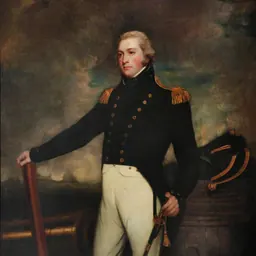



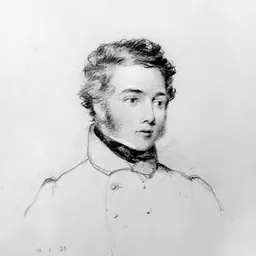


Related people
Same field, nearest in time
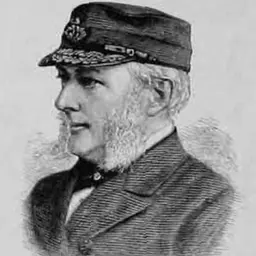
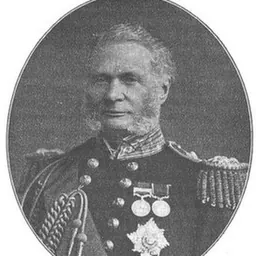

Contemporaries
People whose lives overlapped Graham Gore's





Frequently asked questions
Who was Graham Gore?
English officer of the Royal Navy and polar explorer
When was Graham Gore born?
Graham Gore was born in 1807 in Lake Bathurst.
When did Graham Gore die?
Graham Gore died in 1847 in Arctic.
What was Graham Gore's occupation?
Graham Gore was a naval officer and draftsperson.
What nationality was Graham Gore?
Graham Gore was British.
Sources & further reading
Cite this page
APA: Biography.guide. (2026). Graham Gore. https://biography.guide/graham-gore/
MLA: "Graham Gore." Biography.guide, https://biography.guide/graham-gore/.
Chicago: "Graham Gore." Biography.guide. https://biography.guide/graham-gore/.
Data last updated: 2026-09-20 · Spot an error? Report a correction.
Page generated 2026-09-27 05:30 UTC