
About Grace A. Mapps
Lived 1835 – 1891 (aged 55–56). Grace A. Mapps was an educator.
Grace A. Mapps ( – June 11, 1897) was an American educator, administrator and poet, who may have been the first African-American woman to graduate with a four-year college degree. Mapps graduated from New-York Central College at McGrawville in 1852, but the type of degree she received (if any) is not recorded. As such, Mary Jane Patterson is widely regarded as the first African-American woman to graduate with a four-year bachelor's degree. Her parents became Quakers in 1799, and were respected within the Society of Friends, welcoming visitors to their home including noted anti-slavery editor Charles Osborn, and British minister Thomas Shillitoe. though many black Americans were not received warmly as members of the Society of Friends. Grace Mapps and Sarah Mapps Douglass were described as having taken up "the challenge to be seen as equals within the Religious Society of Friends." In this recollection, the Mapps family are referred to as "the only colored members" at the annual meeting, and African-American Quakers are noted as a rarity. As such, Mary Jane Patterson, who graduated from Oberlin College in 1862, is widely thought to be the first black woman in the United States to earn a bachelor's degree. Unclear documentation of degree types at the time, especially for women and African Americans in higher education, has complicated the claims made for various black women as being "first" to earn a bachelor's degree. She became the "Principal Teacher of the Female Department" at the institute, the first woman to head the department. Writing in 1936, Quaker historian Henry J. Cadbury described Mapps as:a highly educated woman, perhaps the first colored woman to graduate from a bona fide college, which she did from McGrawville, New York, in 1852. Like her step-mother [Anna Douglass Mapps], she became a teacher. In 1853 she was principal of the Girls' Department of the Friends' high school, "The Institute for Coloured Youth," where she remained until 1864, when she resigned to take care of her mother, who lived in Burlington, New Jersey. She died in 1891. She is said to have been able to teach Greek. Contributions from her pen were published in the Anglo-African Magazine for 1859. One admiring student of Mapps was Frances Rollin Whipper, who described Mapps and her cousin – fellow teacher Sarah Mapps Douglass – as "pioneers of high culture". The two are also described by Eric Gardner as having been instrumental in helping to "make the institute into the flowering center of Philadelphia's free black community" and in encouraging "parents to become more active in their children's education".
After Mapps' departure from the Institute for Colored Youth, she was replaced by Fanny Jackson Coppin.
Poetry Mapps' successor at the institute, Fanny Jackson Coppin, described Mapps in her reminiscences as being "a frequent contributor to several periodicals prior to the Civil War", and as having "a literary rating of the highest order". Mapps was clearly a respected poet, although her work - published largely in African-American periodicals, has not been collected. One poem which appeared in the magazine mentioned by Cadbury was "Lines", published in The Anglo-African in 1859. The poem takes up the subjects of death and immortality, and uses an eight-line stanza form. Jessie Carney Smith describes it as reflective "of the somber subject", and adhering to "traditional notions of Christian piety".
Death and legacy Grace A. Mapps died aged 62 on June 11, 1897, in Burlington, New Jersey. She was buried at Lebanon Cemetery. Jessie Carney Smith has written that:As the first black woman to earn a college degree, a respected teacher and a leader in education, and a poet who contributed to the leading African American journals of her day, Grace A. Mapps won the regard and admiration of her peers. She was indeed a notable figure whose contributions to African American culture merit further study and recognition.
Don’t just read it —
keep it.
Full-length biographies made to live with: read them, listen on the way to work, watch them tonight.
- E-book
- Audio
- Video
Instant download · yours to keep · every purchase keeps this site free
Important facts
People in Grace A. Mapps's life
Named in this biography and alive at the same time
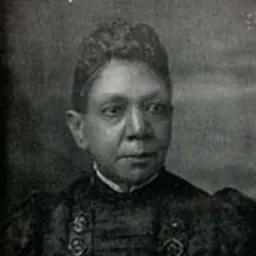



Related people
Same field, nearest in time



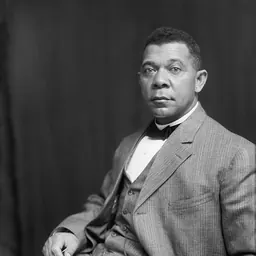
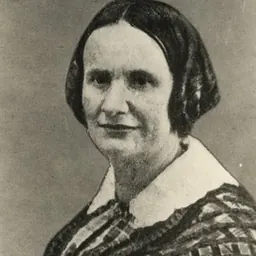
Contemporaries
People whose lives overlapped Grace A. Mapps's





Frequently asked questions
Who was Grace A. Mapps?
educator, administrator, poet
When was Grace A. Mapps born?
Grace A. Mapps was born in 1835 in Little Egg Harbor Township, New Jersey.
When did Grace A. Mapps die?
Grace A. Mapps died in 1891 in Burlington, New Jersey.
What was Grace A. Mapps's occupation?
Grace A. Mapps was an educator.
Sources & further reading
Cite this page
APA: Biography.guide. (2026). Grace A. Mapps. https://biography.guide/grace-a-mapps/
MLA: "Grace A. Mapps." Biography.guide, https://biography.guide/grace-a-mapps/.
Chicago: "Grace A. Mapps." Biography.guide. https://biography.guide/grace-a-mapps/.
Data last updated: 2026-09-22 · Spot an error? Report a correction.
Page generated 2026-09-27 05:12 UTC