
Gouverneur Kemble Warren
General in the Union Army during the American Civil War
About Gouverneur Kemble Warren
Lived 1830 – 1882 (aged 52). Gouverneur Kemble Warren was an American military officer, civil engineer, engineer, writer, botanist and cartographer.
Major General Gouverneur Kemble Warren. From the Liljenquist Family Collection of Civil War Photographs, Prints and Photographs Division, Library of Congress
Gouverneur Kemble Warren (January 8, 1830 – August 8, 1882) was an American civil engineer and United States Army general during the American Civil War. He is best remembered for arranging the last-minute defense of Little Round Top during the Battle of Gettysburg and is often referred to as the "Hero of Little Round Top". His subsequent service as a corps commander and his remaining military career were ruined during the Battle of Five Forks, when he was relieved of command of the V Corps by Philip Sheridan, who claimed that Warren had moved too slowly. A post-war court of inquiry found that Sheridan's relief of Warren was unjustified.
Early life Warren was born in Cold Spring, New York, and named for Gouverneur Kemble, a prominent local Congressman, diplomat, industrialist, and owner of the West Point Foundry. His sister, Emily Warren Roebling, would later play a significant role in building the Brooklyn Bridge. He entered the United States Military Academy across the Hudson River from his hometown at age 16 and graduated second in his class of 44 cadets in 1850. He was commissioned a brevet second lieutenant in the Corps of Topographical Engineers.
In the Antebellum South, he worked on the Mississippi River, participating in the Pacific Railroad Surveys of possible transcontinental railroad routes, and, in 1857, mapping the Western United States, extensively exploring the vast Nebraska Territory, including Nebraska, North Dakota, South Dakota, part of Montana, and part of Wyoming. He served as the engineer on William S. Harney's Battle of Ash Hollow in the Nebraska Territory in 1855, where he saw his first combat.
One region he surveyed was the Minnesota River Valley, a valley much larger than expected from the low-flow Minnesota River. In some places, the valley is 5 miles (8 km) wide and 250 feet (80 m) deep. Warren first explained the region's hydrology in 1868, attributing the gorge to a massive river that drained Lake Agassiz between 11,700 and 9,400 years ago. The great river was named Glacial River Warren in his honor after his death.
American Civil War At the start of the war, Warren was a first lieutenant and mathematics instructor at the United States Military Academy. He helped raise a local regiment for service in the U.S. Army and was appointed lieutenant colonel of the 5th New York Infantry Regiment on May 14, 1861. Warren and his regiment saw their first combat at the Battle of Big Bethel in Virginia on June 10, arguably the first major land engagement of the war.
In the 1862 Peninsula Campaign, Warren commanded his regiment at the Siege of Yorktown and also assisted the chief topographical engineer of the Army of the Potomac, Brig. Gen. Andrew A. Humphreys, by leading reconnaissance missions and drawing detailed maps of appropriate routes for the army in its advance up the Virginia Peninsula. He commanded a small brigade (3rd Brigade, 2nd Division, V Corps) during the Seven Days Battles consisting of his own 5th New York along with the 10th New York. At Gaines Mill, he was bruised in the knee by a shell fragment but remained on the field. He continued to lead the brigade at the Second Battle of Bull Run, suffering heavy casualties in a heroic stand against an overwhelming enemy assault, and at Antietam, where the V Corps was in reserve and saw no combat. Grant later wrote in his Personal Memoirs,
At the Battle of Five Forks on April 1, 1865, Sheridan judged that the V Corps had moved too slowly into the attack and criticized Warren fiercely for not being at the front of his columns. Warren had been held up, searching for Samuel W. Crawford's division, which had gone astray in the woods. But overall, he had handled his corps efficiently, and their attack had carried the day at Five Forks, arguably the pivotal battle of the final days. He even led the final charge, which broke the Confederate lines. Nevertheless, Sheridan relieved Warren of command on the spot. Warren asked Sheridan for reconsideration, who retorted, "Reconsider? Hell, I'll never reconsider. Obey the order!" Meade told Warren that he had contemplated his relief for some time, but he relented and later recommended Grant reinstate him as the V Corps commander to ease tensions in the Army. He was assigned to the defenses of Petersburg and then briefly to command of the Department of Mississippi. Unfortunately for Warren, these results were not published until after his death.
In 1867, he was elected as a member of the American Philosophical Society.
Warren's last assignment in the Army was as district engineer for Newport, Rhode Island, where he died of complications from diabetes on August 8, 1882. He was buried in the Island Cemetery in Newport in civilian clothes and without military honors at his request. His last words were, "The flag! The flag!"
Legacy A bronze statue of Warren stands on Little Round Top in Gettysburg National Military Park. It was created by Karl Gerhardt (1853–1940) and dedicated in 1888. Another bronze statue, by Henry Baerer (1837–1908), was erected in the Grand Army Plaza, Brooklyn, New York. It depicts Warren standing in uniform, with field binoculars on a granite pedestal made of stone quarried at Little Round Top.
The G. K. Warren Prize is awarded approximately every four years by the United States National Academy of Sciences. It is funded by a gift from his daughter, Miss Emily B. Warren, in memory of her father.
Mount Warren in California is named in his honor.
Warren Peak in the Bear Lodge Mountains of Wyoming is named in his honor.
Don’t just read it —
keep it.
Full-length biographies made to live with: read them, listen on the way to work, watch them tonight.
- E-book
- Audio
- Video
Instant download · yours to keep · every purchase keeps this site free
Important facts
People in Gouverneur Kemble Warren's life
Named in this biography and alive at the same time

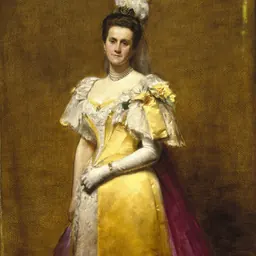


Related people
Same field, nearest in time


Contemporaries
People whose lives overlapped Gouverneur Kemble Warren's




Frequently asked questions
Who was Gouverneur Kemble Warren?
general in the Union Army during the American Civil War
When was Gouverneur Kemble Warren born?
Gouverneur Kemble Warren was born on 8 January 1830 in Cold Spring.
When did Gouverneur Kemble Warren die?
Gouverneur Kemble Warren died on 8 August 1882 in Newport.
What was Gouverneur Kemble Warren's occupation?
Gouverneur Kemble Warren was a military officer, civil engineer, engineer, writer, botanist and cartographer.
What nationality was Gouverneur Kemble Warren?
Gouverneur Kemble Warren was American.
Sources & further reading
· Wikipedia: Gouverneur Kemble Warren
· DBpedia: Gouverneur K. Warren
Cite this page
APA: Biography.guide. (2026). Gouverneur Kemble Warren. https://biography.guide/gouverneur-kemble-warren/
MLA: "Gouverneur Kemble Warren." Biography.guide, https://biography.guide/gouverneur-kemble-warren/.
Chicago: "Gouverneur Kemble Warren." Biography.guide. https://biography.guide/gouverneur-kemble-warren/.
Data last updated: 2026-09-20 · Spot an error? Report a correction.
Page generated 2026-09-27 05:33 UTC