
About Gottlob Ernst Schulze
Lived 1761 – 1833 (aged 71). Gottlob Ernst Schulze was a philosopher and university teacher.
Gottlob Ernst Schulze (; 23 August 1761 – 14 January 1833) was a German philosopher. He was the grandfather of the pioneering biochemist Ernst Schulze.
Biography Schulze was born in Heldrungen in the Electorate of Saxony (modern-day Thuringia, Germany). He was a professor at Wittenberg, Helmstedt, and Göttingen. His most influential book was Aenesidemus (1792), a skeptical polemic against Immanuel Kant's Critique of Pure Reason and Karl Leonhard Reinhold's Elementary Philosophy.
In Göttingen, he advised his student Arthur Schopenhauer to concentrate on the philosophies of Plato and Kant. This advice had a strong influence on Schopenhauer's philosophy. In the winter semester of 1810 and 1811, Schopenhauer studied both psychology and metaphysics under Schulze.
Schulze died in Göttingen on January 14, 1833.
Quotes "As determined by the Critique of Pure Reason, the function of the principle of causality thus undercuts all philosophizing about the where or how of the origin of our cognitions. All assertions on the matter, and every conclusion drawn from them, become empty subtleties, for once we accept that determination of the principle as our rule of thought, we could never ask, "Does anything actually exist which is the ground and cause of our representations?". We can only ask, "How must the understanding join these representations together, in keeping with the pre-determined functions of its activity, in order to gather them as one experience?"
Works Grundriß der philosophischen Wissenschaften (Wittenberg and Zerbst, Vol. 1 1788, Vol. 2 1790). Aenesidemus oder über die Fundamente der von dem Herrn Professor Reinhold in Jena gelieferten Elementar-Philosophie. Nebst einer Vertheidigung des Skepticismus gegen die Anmassungen der Vernunftkritik (1792). Kritik der theoretischen Philosophie (two volumes, Hamburg, 1801). Grundsätze der allgemeinen Logik (Helmstedt, 1802). Encyclopädie der philosophischen Wissenschaften zum Gebrauche für seine Vorlesungen (Göttingen, 1814). Psychische Anthropologie (two volumes, Göttingen, 1816). Philosophische Tugendlehre (Göttingen, 1817). Über die menschliche Erkenntnis (Göttingen, 1832).
Don’t just read it —
keep it.
Full-length biographies made to live with: read them, listen on the way to work, watch them tonight.
- E-book
- Audio
- Video
Instant download · yours to keep · every purchase keeps this site free
Important facts
People in Gottlob Ernst Schulze's life
Named in this biography and alive at the same time
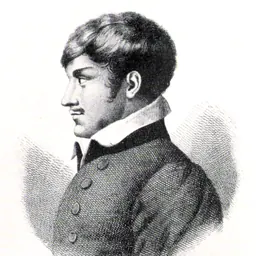
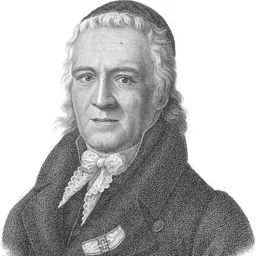

Related people
Same field, nearest in time
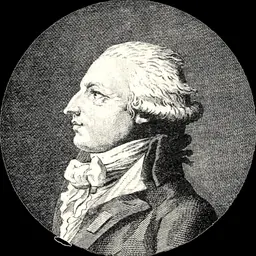


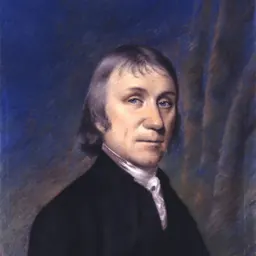

Contemporaries
People whose lives overlapped Gottlob Ernst Schulze's




Frequently asked questions
Who was Gottlob Ernst Schulze?
German philosopher (1761-1833)
When was Gottlob Ernst Schulze born?
Gottlob Ernst Schulze was born on 23 August 1761 in Heldrungen.
When did Gottlob Ernst Schulze die?
Gottlob Ernst Schulze died on 14 January 1833 in Göttingen.
What was Gottlob Ernst Schulze's occupation?
Gottlob Ernst Schulze was a philosopher and university teacher.
What nationality was Gottlob Ernst Schulze?
Gottlob Ernst Schulze's recorded nationality: Duchy of Saxe-Weimar-Eisenach.
Sources & further reading
· Wikipedia: Gottlob Ernst Schulze
· DBpedia: Gottlob Ernst Schulze
Cite this page
APA: Biography.guide. (2026). Gottlob Ernst Schulze. https://biography.guide/gottlob-ernst-schulze/
MLA: "Gottlob Ernst Schulze." Biography.guide, https://biography.guide/gottlob-ernst-schulze/.
Chicago: "Gottlob Ernst Schulze." Biography.guide. https://biography.guide/gottlob-ernst-schulze/.
Data last updated: 2026-09-20 · Spot an error? Report a correction.
Page generated 2026-09-27 05:28 UTC