
About Gotthilf Heinrich von Schubert
Lived 1780 – 1860 (aged 80). Gotthilf Heinrich von Schubert was a physician, naturalist, botanist, philosopher, university teacher and writer.
Gotthilf Heinrich von Schubert (26 April 1780, in Hohenstein-Ernstthal – 30 June 1860, in Laufzorn, a village in Oberhaching) was a German physician, naturalist and psychologist. From 1819 he worked as a professor of natural history at the University of Erlangen. He wrote several illustrated textbooks on natural history and also on religious topics.
Life and work The son of Christian Gottlob Schubert (1732-1805), a pastor and Magdalene Werner (1741–1811), he was born in a family of priests. He went to school in Hohenstein, Lichtenstein, Greiz and in Weimar where he met Johann Gottfried Herder (1744–1803), father of his school friend Emil Herder (1783–1855). This made him choose studies in theology at Leipzig (1799) and Jena (1801), but turned to medicine. He studied under Johann Wilhelm Ritter and Friedrich Wilhelm Joseph Schelling (1775–1854) and also interacted with Friedrich August Köthe (1781–1850), Friedrich Gottlob Wetzel (1779–1819). He wrote his doctoral dissertation on galvanic therapy for congenital deafness in 1803. He planned to travel to Africa but after meeting a friend of his sister Henriette Martin from Bärenwalde, he married her and established himself as a doctor in Altenburg, Saxe-Gotha-Altenburg. He soon gave up his practice however and devoted himself to research in Dresden (from 1806). Here he met Adam Müller and Heinrich von Kleist. In 1809, by way of mediation from Friedrich Wilhelm Joseph Schelling, he received the post of rector at a secondary school in Nuremberg. He then turned to Pietist studies and began to study mystic texts along with Franz von Baader. ), forestry, mineralogy, and geognosy. In 1827 he moved for the last time, to Munich, where he was appointed professor of natural history. In Munich the highly popular and friendly Schubert found an embittered opponent in Lorenz Oken.
Religiously-grounded theory Schubert aimed to create a religiously-grounded interpretation of the cosmos. Contemporaries that included Johann Wolfgang von Goethe, Jean Paul, Justinus Kerner, and Heinrich von Kleist were favorable to his work. His masterpiece, Symbolism of Dreams (1814) was one of the most famous books of its time, exercising influence over E. T. A. Hoffmann, and later on, Sigmund Freud and C. G. Jung.
Don’t just read it —
keep it.
Full-length biographies made to live with: read them, listen on the way to work, watch them tonight.
- E-book
- Audio
- Video
Instant download · yours to keep · every purchase keeps this site free
Important facts
People in Gotthilf Heinrich von Schubert's life
Named in this biography and alive at the same time

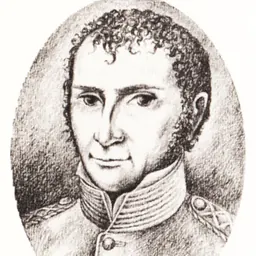


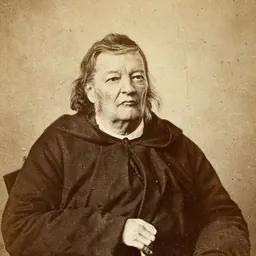

Related people
Same field, nearest in time


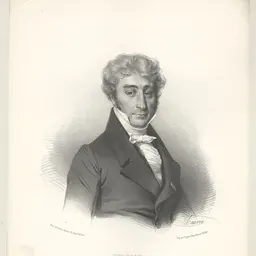


Contemporaries
People whose lives overlapped Gotthilf Heinrich von Schubert's




Frequently asked questions
Who was Gotthilf Heinrich von Schubert?
German scientist (1780–1860)
When was Gotthilf Heinrich von Schubert born?
Gotthilf Heinrich von Schubert was born on 26 April 1780 in Hohenstein-Ernstthal.
When did Gotthilf Heinrich von Schubert die?
Gotthilf Heinrich von Schubert died on 30 June 1860 in Laufzorn.
What was Gotthilf Heinrich von Schubert's occupation?
Gotthilf Heinrich von Schubert was a physician, naturalist, botanist, philosopher, university teacher and writer.
What nationality was Gotthilf Heinrich von Schubert?
Gotthilf Heinrich von Schubert's recorded nationality: Kingdom of Saxony.
Sources & further reading
· Wikipedia: Gotthilf Heinrich von Schubert
· DBpedia: Gotthilf Heinrich von Schubert
Cite this page
APA: Biography.guide. (2026). Gotthilf Heinrich von Schubert. https://biography.guide/gotthilf-heinrich-von-schubert/
MLA: "Gotthilf Heinrich von Schubert." Biography.guide, https://biography.guide/gotthilf-heinrich-von-schubert/.
Chicago: "Gotthilf Heinrich von Schubert." Biography.guide. https://biography.guide/gotthilf-heinrich-von-schubert/.
Data last updated: 2026-09-20 · Spot an error? Report a correction.
Page generated 2026-09-27 05:29 UTC