
Gottfried van Swieten
Dutch noble, diplomat, librettist and music patron
About Gottfried van Swieten
Lived 1733 – 1803 (aged 69). Gottfried van Swieten was a Dutch librarian, diplomat, librettist, composer and politician.
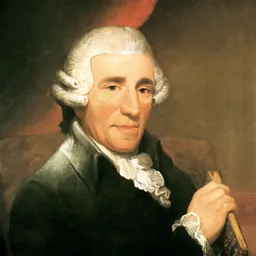
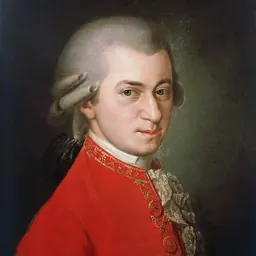
Gottfried Freiherr van Swieten (29 October 1733 – 29 March 1803) was a Dutch-born diplomat, librarian, and government official who served the Holy Roman Empire during the 18th century. He was an enthusiastic amateur musician and is best remembered today as the patron of several great composers of the Classical era, including Carl Phillip Emanuel Bach, Joseph Haydn, Wolfgang Amadeus Mozart, and Ludwig van Beethoven.
Life and career
Van Swieten was born Godefridus Bernardus "Godfried" van Swieten in Leiden and grew up in the Dutch Republic to the age of 11. The young van Swieten was educated for national service in an elite Jesuit school, the Theresianum.
As diplomat
According to Heartz, van Swieten had "excelled in his studies" and was fluent in many languages. Thus it was natural that he would pursue (following a brief stint in the civil service) a career as a diplomat. His first posting was to Brussels (1755–1757), then Paris (1760–1763), envoy in Warsaw (1763–1764) and ultimately (as ambassador) to the court of Frederick the Great of Prussia in Berlin (1770–77). Olleson adds that, because Joseph's reforms increased the freedom of the press, a "flood of pamphlets" was published critical of the Imperial government—thus increasing van Swieten's responsibilities in supervising the censorship apparatus of the government. war against the Turks, which put Austrian society in turmoil and undermined his earlier efforts at reform. Till writes:
Joseph attempted to pass the blame for events on to ... van Swieten. As President of the Censorship Commission, [he] had been more liberal than Joseph was willing to countenance. ... As Minister for Education [he] had aimed to strip education of any religious character; he was more concerned about the dangers of religious orthodoxy than heresy, and believed that students should be taught a system of secular values based upon "philosophy". But his reforms, which indicated a far more radical rejection of religious education than Joseph was prepared to accept, had failed. In 1790, Joseph wrote to Chancellor Kolowrat expressing his discontent: "since an essential aspect of the education of young people, namely religion and morality, is treated far too lightly, since ... no feeling for one's true duties is being developed, the state is deprived of the essential advantages of having raised right-thinking and well-behaved citizens." He also composed other operas as well as symphonies. These works are not considered of high quality and are seldom if ever performed today. The Grove Dictionary opines that "the chief characteristics of [his] conservative, three-movement symphonies are tautology and paucity of invention ... As a composer van Swieten is insignificant."
Known works include three comic operas: Les talents à la mode, Colas, toujours Colas, and the lost La chercheuse d'esprit. He also wrote ten symphonies, of which seven survive. Many were left incomplete, and even the completed ones are not often performed today; Olleson suggests they have "a dryness which is absent from most of [Mozart's] music." To this end, in 1786 van Swieten organized the Gesellschaft der Associierten ("Society of Associated Cavaliers" or "Society of Noblemen"), an organization of music-loving nobles. With the financial backing of this group, he was able to stage full-scale performances of major works. Generally, these concerts were first given in van Swieten's private rooms in the Vienna Hofburg, then in a public performance in the Burgtheater or Jahn's Hall.
Mozart took on the task of conducting these concerts in 1788. and notes that already in 1793, van Swieten was trying to get him to write an oratorio (to a text by ). The practice of cultivating the music of previous decades and centuries only gradually increased. By about 1870, older works had come to dominate the scene. The music publisher Johann Ferdinand von Schönfeld wrote in 1796: [Van Swieten is], as it were, looked upon as a patriarch of music. He has taste only for the great and exalted. ... When he attends a concert our semi-connoisseurs never take their eyes off him, seeking to read in his features, not always intelligible to everyone, what ought to be their opinion of the music.
A corollary of a "taste for the great and exalted" is the idea that concert audiences should maintain silence, so that each note can be heard by all. This was not the received view in the 18th century, but was clearly van Swieten's opinion. In his 1856 Mozart biography, Otto Jahn reported the following anecdote from Sigismund Neukomm: [He] exerted all his influence in the cause of music, even for so subordinate an end as to enforce silence and attention during musical performances. Whenever a whispered conversation arose among the audience, his excellence would rise from his seat in the first row, draw himself up to his full majestic height, measure the offenders with a long, serious look and then very slowly resume his seat. The proceeding never failed of its effect.
Assessment
Van Swieten has not fared well in assessments of his personal demeanor. In a frequently reprinted remark, Haydn remarked to Georg August Griesinger that van Swieten's symphonies were "as stiff as the man himself." He maintained a firm social distance between himself and the composers he patronized, a distance rooted in the system of aristocracy still in force in Austria in his day. Haydn's pupil and friend Sigismund Neukomm wrote that he was "not so much a friend as a very self-opinionated patron of Haydn and Mozart". Olleson suggests that "in his own time van Swieten won little affection" (adding: "but almost universal respect."). He also was not close to his fellow aristocrats; although his public roles in music and government were prominent, he avoided salon society, and after 1795 expressed content that he lived in "complete retirement".
Concerning van Swieten's contributions to music, posthumous judgment seems most critical of his role as librettist. Olleson observes that in the three successive oratorio libretti that van Swieten prepared for Haydn, his own involvement in the writing was greater for each than in the previous one. According to Olleson, "many critics would say that this progressive originality was disastrous".
Even van Swieten's musical taste has been harshly criticized, but here the consensus is perhaps more positive. Van Swieten seems to have singled out for his favor—from among many composers whose reputation is now obscure—the composers that posterity has judged very highly. As Olleson notes, "One could scarcely quarrel with his choice of composers of the past, Sebastian Bach and Handel; and of those of his own time, Gluck, Emanuel Bach, Haydn, Mozart and Beethoven."
In popular culture
Unlike his protégés Mozart and Beethoven, van Swieten is seldom portrayed in works of modern popular culture. He does appear as a supporting character in Peter Shaffer's 1979 play Amadeus and in Miloš Forman's 1984 film based on it, in which he was portrayed by actor Jonathan Moore.
Notes and references
Don’t just read it —
keep it.
Full-length biographies made to live with: read them, listen on the way to work, watch them tonight.
- E-book
- Audio
- Video
Instant download · yours to keep · every purchase keeps this site free
Important facts
People in Gottfried van Swieten's life
Named in this biography and alive at the same time


Related people
Same field, nearest in time


Contemporaries
People whose lives overlapped Gottfried van Swieten's



Frequently asked questions
Who was Gottfried van Swieten?
Dutch noble, diplomat, librettist and music patron (1733-1803)
When was Gottfried van Swieten born?
Gottfried van Swieten was born on 29 October 1733 in Leiden.
When did Gottfried van Swieten die?
Gottfried van Swieten died on 29 March 1803 in Vienna.
What was Gottfried van Swieten's occupation?
Gottfried van Swieten was a librarian, diplomat, librettist, composer and politician.
What nationality was Gottfried van Swieten?
Gottfried van Swieten was Dutch.
Sources & further reading
· Wikipedia: Gottfried van Swieten
· DBpedia: Gottfried van Swieten
Cite this page
APA: Biography.guide. (2026). Gottfried van Swieten. https://biography.guide/gottfried-van-swieten/
MLA: "Gottfried van Swieten." Biography.guide, https://biography.guide/gottfried-van-swieten/.
Chicago: "Gottfried van Swieten." Biography.guide. https://biography.guide/gottfried-van-swieten/.
Data last updated: 2026-09-25 · Spot an error? Report a correction.
Page generated 2026-09-27 05:12 UTC