
About Glenn Barr
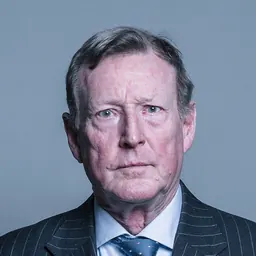
Lived 1932 – 2017 (aged 84–85). Glenn Barr was a British politician.
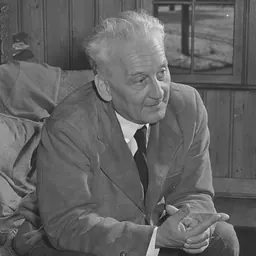
Albert Glenn Barr OBE (19 March 1942 – 24 October 2017) was a politician from Derry, Northern Ireland, who was an advocate of Ulster nationalism. For a time during the 1970s he straddled both Unionism and Loyalism due to simultaneously holding important positions in the Vanguard Unionist Progressive Party and the Ulster Defence Association.
UDA Initially a member of a general trade union, Barr first came to prominence at the very start of the Troubles in 1969 when he was involved in an initiative to ensure Protestant workers did not join in strikes called by the Northern Ireland Civil Rights Association. He went on to join the Loyalist Association of Workers in the early 1970s and from there became involved in the Ulster Defence Association (UDA). The loose associations of shop stewards that existed in Derry and the surrounding areas formed the basis of the UDA in this area.
Politics Around this time Barr also became involved in politics by joining the Vanguard Unionist Progressive Party (VPUP) and was elected to the Northern Ireland Assembly, which had been set up under the Sunningdale Agreement, in 1973. However, according to Ian S. Wood it had been Barr's profile as a trade unionist and community worker, rather than any UDA connections, that had won him the election.
He soon became a leading figure in the opposition to Sunningdale agreement and effectively led the Ulster Workers' Council strike that brought about the collapse of the new power-sharing government. Barr was chairman of the Ulster Loyalist Central Co-ordinating Committee, a group containing Ulster Workers' Council representatives, politicians and paramilitaries that directed the strike. He would later comment that it would have been feasible to establish a provisional government for an independent Northern Ireland from this body.
Always something of a maverick within Unionist politics, Barr served a three-month suspension from the United Ulster Unionist Council (UUUC) after endorsing the candidacy of Ken Gibson of the Volunteer Political Party for West Belfast in the October 1974 general election despite the Democratic Unionist Party's John McQuade representing the UUUC. In the course of this feud, Harding Smith placed Barr under a death threat, although nothing came of this as the pro-Tyrie forces quickly dispatched the challenge of Harding Smith.
When the VPUP split after leader William Craig suggested in the Northern Ireland Constitutional Convention that he would consider a power-sharing arrangement with the Social Democratic and Labour Party Barr was one of the few leading figures to remain loyal to Craig rather than decamping to Ernest Baird's United Ulster Unionist Party. Along with David Trimble he became deputy leader of the Vanguard and held this position until the party dissolution in 1978. He, however, did not follow Craig in joining the Ulster Unionist Party and instead returned to his UDA roots. Following the collapse of Vanguard Barr returned to a leading position in the UDA, becoming involved in the New Ulster Political Research Group (NUPRG). Whilst there, Barr took a leading role in the production of Beyond the Religious Divide, a document which sought to set out a framework for a move towards eventual independence for Northern Ireland. Barr became increasingly disillusioned with what he saw as the callousness of unionist politicians towards their electorate, and the blind loyalty of that electorate. He commented: "They could have sent a donkey with a Union Jack tied to its tail up the Shankill Road, and we would have voted for it." Barr was also chosen to break the self-imposed media blackout adopted by the NUPRG in late 1978 when he gave an interview to the Irish political magazine Magill during which he put forward the case for independence.
The UDA, however, failed to recommend the proposals to its members and, as a result, Barr drifted away from the NUPRG, leaving politics altogether in 1981 to return to community work in Derry. Barr also had a somewhat fractious relationship with the NUPRG's chairman John McMichael and following Barr's retirement McMichael changed the group, abandoning Barr's pet project of establishing a cross-community Northern Ireland Negotiated Independence Association, and instead set up the Ulster Loyalist Democratic Party.
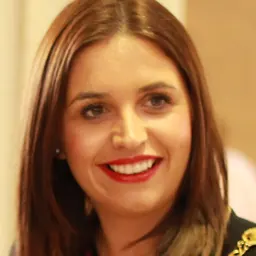
Barr briefly emerged from his political retirement in 1994 when he joined his old friend from the strike Andy Tyrie in heading up an initiative to gain funding for the Ulster Democratic Party. He appeared set for a more active return in 1998 when he took up a seat on the Parades Commission, a move roundly condemned by nationalists, given Barr's UDA past, and one that saw resignations from the board in protest. Ultimately, however, Barr himself resigned on 24 April 1998, along with loyalist Tommy Cheevers not long after the Commission had banned an Apprentice Boys parade from the nationalist lower Ormeau Road. Barr continued to work on community projects in Derry, running the Maydown Youth Training Project Ltd, which seeks to alleviate the high levels of unemployment amongst the young in the Derry. He had also worked closely with Paddy Harte, a former Irish Government minister, on promoting awareness of Irish Catholic participation in both World Wars. Sinn Féin MP Elisha McCallion described him as being "on a journey of reconciliation" and expressed her sorrow at his passing. Social Democratic and Labour Party leader Colum Eastwood praised his dedication to peace and reconciliation. He was interred in Altnagelvin cemetery after a service at Ebrington Presbyterian church in Derry.
He was married to Isa, with whom he had four children.
Don’t just read it —
keep it.
Full-length biographies made to live with: read them, listen on the way to work, watch them tonight.
- E-book
- Audio
- Video
Instant download · yours to keep · every purchase keeps this site free
Important facts
People in Glenn Barr's life
Named in this biography and alive at the same time






Related people
Same field, nearest in time



Contemporaries
People whose lives overlapped Glenn Barr's


Frequently asked questions
Who was Glenn Barr?
Northern Irish politician (1932-2017)
When was Glenn Barr born?
Glenn Barr was born in 1932 in Northern Ireland.
When did Glenn Barr die?
Glenn Barr died on 24 October 2017 in Derry, Northern Ireland.
What was Glenn Barr's occupation?
Glenn Barr was a politician.
What nationality was Glenn Barr?
Glenn Barr was British.
Sources & further reading
Cite this page
APA: Biography.guide. (2026). Glenn Barr. https://biography.guide/glenn-barr/
MLA: "Glenn Barr." Biography.guide, https://biography.guide/glenn-barr/.
Chicago: "Glenn Barr." Biography.guide. https://biography.guide/glenn-barr/.
Data last updated: 2026-09-25 · Spot an error? Report a correction.
Page generated 2026-09-27 05:11 UTC