
Glayde Whitney
American behavioral geneticist
About Glayde Whitney
Lived 1939 – 2002 (aged 62–63). Glayde Whitney was an American psychologist, geneticist and behavior geneticist.
Glayde D. Whitney (1939 – January 8, 2002) was an American behavioral geneticist and psychologist. He was professor at Florida State University. Beyond his work into the genetics of sensory system function in mice, in his later life he supported David Duke as well as research into race and intelligence and eugenics.
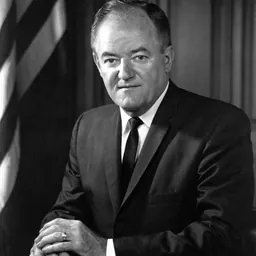
Biography Whitney was born in Montana and grew up in Minnesota. He considered himself to be a "Hubert Humphrey liberal."
Academic work Whitney was the author of over 60 papers on the genetics of taste sensitivity in inbred mice. Support for some of this work came from a Claude Pepper Award for Research Excellence from the National Institute on Deafness and Other Communication Disorders and in 1994 he received the Manheimer Lectureship Award from the Monell Chemical Senses Center, which recognizes career achievements of individuals in the chemosensory sciences.
By 1999, Whitney had shifted from studying mice to researching race and intelligence in humans. As part of this research, Whitney was supported by the Pioneer Fund, which has ties to scientific racism.
Whitney wrote the foreword for My Awakening (1998), an autobiography by David Duke, a white nationalist politician and former National Director of the Knights of the Ku Klux Klan. In the book, Duke uses scientific racism to push for the re-segregation of schools. Whitney did not specifically endorse Duke's re-segregation plan, but described Duke as "a Moses-like prophet".
Whitney said in a 1999 interview that the controversy distracted from what was meant to be a scientific discussion, saying "races are different for many genetic systems that influence everything from behavior and psychology to physiology, medicine and sports [...] Screaming nasty words does not change the reality." Following the publication of the book, faculty and students of FSU condemned Whitney's comments, with some calling for his resignation. The school rejected Whitney's position, but defended his right to teach as a matter of academic freedom. Whitney's views regarding race and intelligence prompted the Florida Senate to pass Resolution 2742 in 1999, "condemning the racism and bigotry espoused by Florida State University Professor Glayde Whitney."
Whitney acknowledged the scientific achievements of Jews, but accused "organized Jewry" of playing a prominent role in suppressing race behavioral genetics in response to racism directed toward them, resulting in a "dishonest and hypocritical version of egalitarianism."
Whitney was a member of the Institute for Historical Review, an organization promoting Holocaust revisionism, making a case that Jews invented the Holocaust for their own benefit.
Don’t just read it —
keep it.
Full-length biographies made to live with: read them, listen on the way to work, watch them tonight.
- E-book
- Audio
- Video
Instant download · yours to keep · every purchase keeps this site free
Important facts
People in Glayde Whitney's life
Named in this biography and alive at the same time


Related people
Same field, nearest in time





Contemporaries
People whose lives overlapped Glayde Whitney's






Frequently asked questions
Who was Glayde Whitney?
American behavioral geneticist (1939 – 2002)
When was Glayde Whitney born?
Glayde Whitney was born in 1939 in Montana.
When did Glayde Whitney die?
Glayde Whitney died on 8 January 2002 in Tallahassee.
What was Glayde Whitney's occupation?
Glayde Whitney was a psychologist, geneticist and behavior geneticist.
What nationality was Glayde Whitney?
Glayde Whitney was American.
Sources & further reading
Cite this page
APA: Biography.guide. (2026). Glayde Whitney. https://biography.guide/glayde-whitney/
MLA: "Glayde Whitney." Biography.guide, https://biography.guide/glayde-whitney/.
Chicago: "Glayde Whitney." Biography.guide. https://biography.guide/glayde-whitney/.
Data last updated: 2026-09-20 · Spot an error? Report a correction.
Page generated 2026-09-27 05:02 UTC