
About Giuseppe Pirovani
Born 1755. Giuseppe Pirovani was a painter.
Giuseppe (José) Perovani Rústica (1759-65, Pavia/Brescia - 1835, Mexico City) was an Italian painter of the Neoclassic period. He trained in Rome, and painted altarpieces in Brescia as a young man. He painted the altarpiece (and possibly the trompe l'oeil ceiling) of the Chapel of the Blessed Bernardo Tolomei in the Santa Francesca Romana in Rome.
Although Perovani was best known for his religious works, his most famous painting is his Portrait of George Washington (1796), a variation after Gilbert Stuart's Lansdowne portrait (1796).
In Italy According to an 1807 biographical sketch, Giuseppe Perovani was "accidentally" born in Pavia. Philadelphia then was serving as the temporary national capital, 1790-1800, while Washington, D.C. was under construction. Perovani's first commission in America was a painted ceiling for the residence (embassy?) of the Spanish Minister to the United States, José de Jáudenes y Nebot. PEROVANI, JOSEPH AND JACINT COCCHI, of the republic of Venice, Painters, have the honour to inform the public, that they arrived in this respectable city about two months ago. During a residence of several years in the city of Rome, they have given specimens of their art and talents in that city, as well as in several other cities in Italy, having been employed by Princes as well as private persons. Having understood that taste for the fine arts is rapidly increasing in these happy States, they resolved to quit Italy, and to try to satisfy the respectable citizens of America, by their productions. The kind of paintings they excel in, are as follows, viz. The first (Mr. Perovani) paints all kinds of Historical Pieces, Pourtraits of all sizes, and Landscapes, as well as in oil color as in fresco; the other Mr. Cocchi, all kinds of Perspective, Paintings and Ornaments; and both are able to paint any Theatre, Chambers, Departments, with Platforms in figures, and ornamented in the Italian taste: a small specimen whereof they have given in one of the saloons of the house of the Spanish minister here. The one of them likewise is a compleat architect, not only able to furnish the draft in the most compleat stile, but likewise to superintend the execution thereof. They may be found by enquiring at No. 87, Second street North.
Havana High Altar, Havana Cathedral. Perovani produced the architectural painting of the chancel. His Ascension fresco is at top
The arrival of Monseñor Juan José Díaz de Espada y Landa in Havana in 1802, "ushered in a series of art and architectural projects." In 1803, Espada commissioned Perovani to create a fresco for Havana's Church of the Holy Spirit, along with two works in oil.
Monseñor Espada's first major project was the Espada Cemetery (opened 1806, demolished 1908), built about a mile outside Havana's city walls. Espada commissioned the Brescian painter Giuseppe (or José) Perovani (1765–1835), who had come to Cuba via Philadelphia around 1801, to paint frescoes of allegorical figures and Christian narrative scenes. Describing Perovani's now-lost Resurrection scene, Romay Chacón notes an angel with a trumpet telling the souls: “Rise up, ye dead, and come to justice.” To the angel's right, souls departed from their graves; to its left, the damned were shown horrified by their fate. Over the door and the two lateral windows, Perovani painted images of the three theological virtues: Faith, Hope, and Charity. Perovani's appointment was published in the Havana newspaper El Aviso Papel: Tuesday, February 4, 1806. Perovani did trompe l'oeil painting on the high altar, making the carved-wood altar appear to have been carved from white marble and jasper. He painted a life-size, full-length, oil-on-canvas portrait of the Virgin of the Immaculate Conception.
About 1808-10, Perovani began work on three lunette frescos high above and to either side of the high altar: The Last Supper, The Ascension, and The Delivery of the Keys.
Perovani left Cuba in 1815, with interior work on the cathedral unfinished.
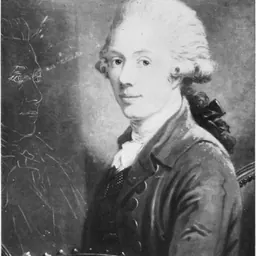
Mexico City In 1809, Spanish-born artist Rafael Ximeno y Planes received the commission to paint a large fresco of “The Assumption of the Virgin” for the Catedral Metropolitana in Mexico City. With his thorough knowledge of fresco, Perovani assisted Ximeno on the work. The school put a strong emphasis on drawing, educating architects, draftsmen and botanical illustrators, as well as painters. About that same year, Mrs. Perovani opened another lay academy for girls in the planned city of Cárdenas, Cuba (founded 1828). Their daughter Elvira seems to have lived nearby, and may have helped at the school. Jane Gordon Perovani died in Cárdenas in 1832. Memmo was a prominent Italian architect. Drawing: Orpheus, Singing His Bitter Pain at the Loss of Eurydice (1786). Pen, pencil, black ink and brown ink on paper. For sale at Galleria Carlo Virgillo & C., Via della Lupa, Rome, in 2020. Portrait of Cardinal Giovanni Andrea Archetti (1787), oil on canvas. Photo from Posterazzi. Collection: Castello Camozzi Vertova, Bergamo, Italy. Perovani's drawing of an ancient Roman anatomy school was made into an engraving by Antonio Fiori. This illustrated the 1788 edition of Bartolomeo Eustachi's Tabulae anatomicae, a textbook for surgeons and artists. Perovani apparently submitted architectural designs for a public hall in Philadelphia. Perovani may have also painted the trompe l'oeil "domed" ceiling of the sidechapel. Photo by David Macchi. A probable 1796 Philadelphia work by Perovani:“On Washington's birthday, Feb. 22, 1796, there was an exhibition of ‘The Temple of Minerva,’ with a statue of the goddess contemplating a bust of Washington, all of which was the work of Joseph Peruani, an Italian painter and architect.” [underline added] In 1803, Perovani created a painted ceiling and other work for the Coliseo of Havana, the city's opera house. Portrait of Viceroy Félix María Calleja (1815), oil on canvas, Museum of National History, Mexico City Self-Portrait (date unknown), 49 x 30 cm (19 ¼ x 11 ¾ inches).
The fanciful sculpture group upon which Washington rests his left forearm features allegorical figures of España and America embracing. Under the table are piled a shield, sword, and muscular breastplate, martial items set aside in peacetime. The pedestal of the sculpture group features an American eagle escutcheon and a flying dove carrying an olive branch. Perovani signed the portrait at the foot of the pedestal, as if it had been carved in marble: "JOSEPH PEROVANI ITALUS / IN PHILADELPHIA FECIT / MDCCXCVI ". The portrait is in the collection of the Royal Academy of Fine Arts of San Fernando in Madrid.
Personal
Giuseppe Perovani married Jane Balduari Gordon in Philadelphia. They had at least 4 children. In year, Mrs. Perovani became the first woman in Cuba granted a license to operate a school for girls, About 1828, she opened a school for girls in Cárdenas, Cuba, but unexpectedly died there four years later. Josè Eduardo Perovani Gordon, was born in Cuba, December 12, 1802, and baptized at the Cathedral de Havana, January 16, 1803. He married Rosa della Torre Armenteros, and the couple had 4 daughters and 2 sons. unnamed daughter (b. by 1806 - d. by 1868), buried in Espada Cemetery.
The ode's first and last stanzas:
Quién pudiera tu nombre con la lira llevar, Perovani, a la futura gente? Y en todo cuanto viva y cuanto siente Tanta vida inspirar como la inspirar Tu diestra diligente.
Yo también si pudiera, con la rama Que Minerva cultiva en sus vergeles, Coronara tu sien, y a tus pinceles Colocara en el templo de la fama Juntos con los de Apeles.
Who could proclaim your name with the lyre, Perovani, to the people of the future? And inspire in all who live and all who feel As much life as is inspired by your diligent right hand.
Also, if I could, with the branchThat Minerva grows in her orchards, I would crown your temple, And place your brushes in the Temple of Fame Together with those of Apelles.
Espada Cemetery itself inspired Zequeira to write the brooding canto El Cementerio.
Critical assessment A biographical sketch of Perovani was published in New York in 1878:
PEROVANI (JOSÉ)—We also see the name "Perouani" written, and in [Humboldt and] Thrasher's work it appears as “Peruani,” which is undoubtedly incorrect. He was born in Brescia, Italy, educated in Rome, married in Philadelphia with Juana Gordon, and moved to Havana, where he gave painting lessons in the spring [of 1801], while his wife opened an academy for girls, where for the first time they were taught French, English, and Italian. In Havana, Perovani painted his famous oil paintings “The Ascension” and “The Final Judgment” for the chapel of the new cemetery. He also painted several public and private buildings. The paintings that Zequiera most praised in a brilliant ode published under the pseudonym “Arnestio Garaique” in the Papel Periodico on February 4, 1806, are still preserved in the cathedral. Perovani accompanied the principal Frenchmen on their excursions around the island, and Count Beaujolais, who was fond of art, [had Perovani] paint his portrait. [Perovani] then left for Mexico, but was overtaken by the Revolution, and there, on the eve of returning to Havana, where he planned to establish an academy, he died at the age of 70 in 1835.
A sour appraisal of Perovani from a 20th-century critic:
“Already by 1805, Monseñor Espada had required for the decoration of our cathedral and some other churches and some chapels the services of that pathetic wandering Italian—José Perovani—whose dearest ideal in life had been that of founding an academy of art: something that he had not accomplished in the United States or in Cuba or in Mexico, where he at length left his septuagenarian bones. His stay among us was productive perhaps of not a little success and influence.”
Don’t just read it —
keep it.
Full-length biographies made to live with: read them, listen on the way to work, watch them tonight.
- E-book
- Audio
- Video
Instant download · yours to keep · every purchase keeps this site free
Important facts
Related people
Same field, nearest in time





Frequently asked questions
Who was Giuseppe Pirovani?
Italian painter
When was Giuseppe Pirovani born?
Giuseppe Pirovani was born in 1755 in Pavia.
What was Giuseppe Pirovani's occupation?
Giuseppe Pirovani was a painter.
Sources & further reading
· Wikipedia: Giuseppe Pirovani
Cite this page
APA: Biography.guide. (2026). Giuseppe Pirovani. https://biography.guide/giuseppe-pirovani/
MLA: "Giuseppe Pirovani." Biography.guide, https://biography.guide/giuseppe-pirovani/.
Chicago: "Giuseppe Pirovani." Biography.guide. https://biography.guide/giuseppe-pirovani/.
Data last updated: 2026-09-20 · Spot an error? Report a correction.
Page generated 2026-09-27 05:30 UTC