
About Giuseppe Pecci
Lived 1807 – 1890 (aged 82). Giuseppe Pecci was an Italian philosopher, catholic priest and librarian.
Giuseppe Pecci (13 December 1807 – 8 February 1890) was an Italian Jesuit Thomist theologian, whose younger brother, Gioacchino, became Pope Leo XIII and appointed him a cardinal. The Neo-Thomist revival, which Pecci and Leo XIII originated in 1879, remained the leading papal philosophy until Vatican II. He was the last papal relative elevated to cardinal.
Early years
Born in Carpineto Romano, near Rome, Giuseppe was one of the seven children of Count Dominico Ludovico Pecci (2 June 1767 – 8 March 1833), Patrician of Siena, Colonel of the French Army under Napoleon, and his wife Anna Francesca Prosperi-Buzzi (1773 – 9 August 1824). His uncle Giuseppe Pecci was an protonotary apostolic and referendary of the Signature of Justice and died in 1806. His brothers included Vincenzo Gioacchino Raffaele Luigi (future Pope Leo XIII) and Giovanni Battista or Giambattista Pecci (26 October 1802 - 28 March 1882), 1st Count Pecci (Comes Romanus in 1880 by Papal brief), who married on 8 August 1851 Angela Salina (7 February 1830 - 9 October 1899) and had issue, and sister Anna Maria Pecci, wife of Michelangelo Pecci. From 1807 to 1818 he lived at home with his family. Together with his younger brother Vincenzo, he studied in the Jesuit College in Viterbo from 1818 until 1824.
His siblings were: Carlo (1793–1879) Anna Maria (1798–1870) Caterina (1800–1867) Giovanni Battista (1802–1881) Pope Leo XIII (1810–1903) Fernando (1813–1830)
In 1824, their father called him and his brother Vincenzo home to Rome, where their mother was dying; he wanted his children to be with him after the loss of his wife, and so they remained in Rome, attending the Collegium Romanum, a college belonging to the Society of Jesus. In 1828, the question of occupational choice arose for the two brothers; Giuseppe Pecci professed the Jesuit order, while Vincenzo decided in favour of a diocesan priest.
Professor
Pecci taught Thomism, the theology and philosophy of St. Thomas Aquinas, at the Pontifical Gregorian University in Rome in 1847. At the request of his brother, who became Archbishop of Perugia, he was made a professor at the theological seminary in Perugia, where he remained from 1852 through 1859. After the city was taken over by Piedmont forces in 1860, Pope Pius IX called him to Rome and offered him a professorship in theology at La Sapienza University. Pope Pius also called him into the papal commission to prepare the First Vatican Council. Good Thomist theology was hard to come by at that time, with the result that young scholars from other countries were sent to Rome to learn from Pecci and Tommaso Maria Zigliara. In 1870 he resigned his professorship because he refused to take the anti-papal oath which was demanded by the new Italian government. He continued his prominent theological research independently.
Cardinal For the most part throughout his life, Pecci refused to be photographed: he considered painting a 'far superior and more benevolent presentation of a human being'.
In 1879, the College of Cardinals, led by Camillo, Cardinal di Pietro, insistently asked Pope Leo XIII to elevate his brother to their ranks, and at the age of 71 Giuseppe Pecci was created Cardinal-Deacon of Sant'Agata dei Goti on 12 May 1879 in his brother's first consistory. He was the last member of a pope's family made a cardinal.
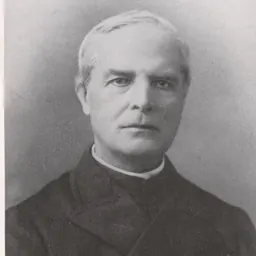
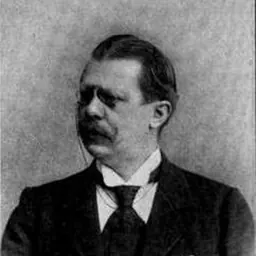
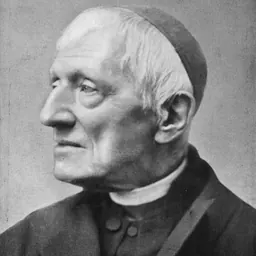
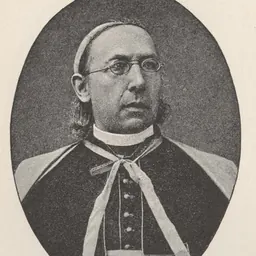
The ceremony was described by Ludwig von Pastor in his diary: "On 15 May at 11 am, Pope Leo XIII entered the hall in pontifical vestments, before him the College of Cardinals. The Swiss Guards stood to attention. After the Papal speech, each of the new cardinals, Pecci, John Henry Newman, Joseph Hergenröther and Tommaso Maria Zigliara, received the red hat, all of whom being well-known Church scholars."
Thomism The elevation of Pecci, a well-known Thomist, took place in the context of the determined efforts of Leo XIII to foster science and Thomist theology throughout the Catholic Church . Thomism had lost its role as a leading theology and Leo attempted to re-establish it "for the protection of faith, welfare of society and the advancement of science". What he envisaged were not sterile interpretations of it, but a return to the original sources. This new orientation at the beginning of his pontificate was welcomed by Dominicans, Thomist Jesuits like Pecci and numerous bishops throughout the world. Strong opposition also developed as well on several fronts within the Church: Some considered Thomism simply outdated, while others used it for petty condemnations of dissident views that they did not like. As traditional antagonists, Jesuits and Dominicans both claimed leadership in the renewal of Catholic theology. (On 28 January 1999, the academy was reoriented to more social issues by Pope John Paul II.) Pope Leo XIII appointed thirty members, ten each from Rome, from Italy, and from the rest of the world, and provided generous financial support to attract scholars from everywhere. The Pope also personally supported individual Thomist scholars and applauded numerous critical editions of the Angelic Doctor's texts. He greatly increased staff and organization and appointed Jesuit father Franz Ehrle and Giuseppe Pecci to head the new undertaking as prefect and librarian, respectively. They in turn opened the Vatican Library to the general public after establishing a consultation library of 300,000 volumes.
Death Cardinal Pecci continued his work as congregation and academy prefect and librarian until he died on 8 February 1890, aged 82, of complications from pneumonia. His body lay in repose in the Basilica of the Twelve Apostles (Basilica dei Santi Apostoli) in Rome, where his funeral took place on 12 February. He is buried in the chapel of the Society of Jesus in Campo Verano Cemetery, in Rome.
Don’t just read it —
keep it.
Full-length biographies made to live with: read them, listen on the way to work, watch them tonight.
- E-book
- Audio
- Video
Instant download · yours to keep · every purchase keeps this site free
Important facts
People in Giuseppe Pecci's life
Named in this biography and alive at the same time


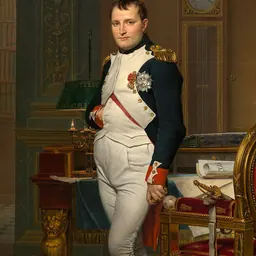
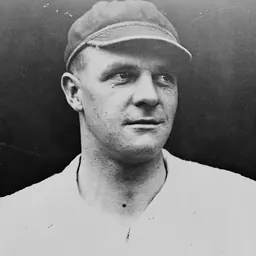
Related people
Same field, nearest in time
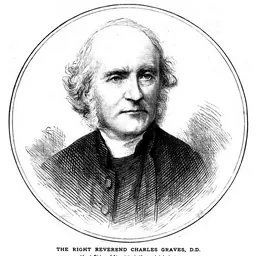


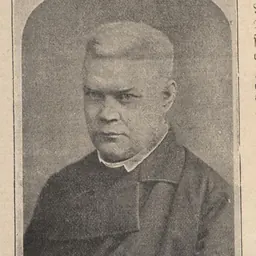


Contemporaries
People whose lives overlapped Giuseppe Pecci's






Frequently asked questions
Who was Giuseppe Pecci?
Italian cardinal (1807-1890)
When was Giuseppe Pecci born?
Giuseppe Pecci was born on 13 December 1807 in Carpineto Romano.
When did Giuseppe Pecci die?
Giuseppe Pecci died on 8 February 1890 in Rome.
What was Giuseppe Pecci's occupation?
Giuseppe Pecci was a philosopher, catholic priest and librarian.
What nationality was Giuseppe Pecci?
Giuseppe Pecci was Italian.
Sources & further reading
Cite this page
APA: Biography.guide. (2026). Giuseppe Pecci. https://biography.guide/giuseppe-pecci/
MLA: "Giuseppe Pecci." Biography.guide, https://biography.guide/giuseppe-pecci/.
Chicago: "Giuseppe Pecci." Biography.guide. https://biography.guide/giuseppe-pecci/.
Data last updated: 2026-09-20 · Spot an error? Report a correction.
Page generated 2026-09-27 05:33 UTC