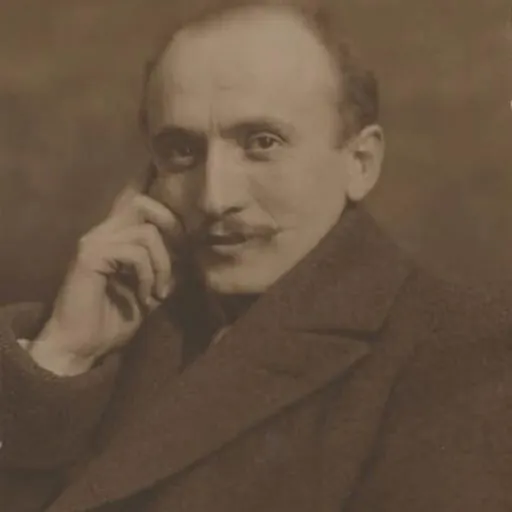
About Giuseppe Palanti
Lived 1881 – 1946 (aged 64). Giuseppe Palanti was an Italian painter, fashion figure artist and costume designer.
Giuseppe Palanti (30 July 1881 – 23 April 1946) was an Italian painter, illustrator, and urban planner, best known for his portraits, notably of Mussolini and Pius XI. He had a long collaboration with Teatro alla Scala in Milan, creating costume, set design and advertising material for multiple opera productions. He was also a major contributor towards the development of the seaside resort Milano Marittima.
Biography Early life Born in Milan to Giovanni Palanti, a carpenter and furniture maker and Virginia De Gaspari, a seamstress, Palanti was orphaned at a young age. Although he completed elementary and technical schools, he is soon forced to find a job, and by 1895 finds employment drawing sketches for the Milanese fabric company, Scotti. In 1899, while still a student, he won a competition to design the cover of the Milanese magazine La Promessa, and posters for the Esposizione Floricola di Monza (Monza Flower Exhibition). In 1900, he won the Zogheb competition for best student of the School of Applied Art. He also provided set and costume design for the 1905–06 opera season including The Marriage of Figaro and the La Dama di Picche; Simon Boccanegra in 1910–11, Romeo and Juliet and L'Armida; Don Carlos in 1912; Oberon in 1913; and La Battaglia di Legnano in 1916. He produced notable posters for performances of La fanciulla del West (1911), Isabeau (1912), and Parsifal (1914). In 1906, he was asked to design a series of postcards for the Milan International World Fair. He would go on to participate in both the Centennial International Exposition in Buenos Aires, decorating the façade of the Italian pavilion, and the Brussels International Exposition decorating the ceiling the Italian pavilion in 1910.
Milano Marittima Palanti was heavily involved in the development of the seaside resort Milano Marittima, north of Cervia. Originally an area of uncultivated coastal pine forests, in 1907 the Municipal Administration of Cervia ceded a vast area along the coast to the Maffei company, allowing them to build villas, parks and gardens in order to create a resort town. The Società Milano Marittima per lo sviluppo della spiaggia di Cervia (Milano Marittima Society for the development of the beach of Cervia) was created in 1911 to progress development, which Palanti quickly joined. He was an advocate of the garden city model, influenced by British urban planner Ebenezer Howard. His vision was of an urban project which would create a new city in which tourist accommodation blended with the surrounding nature. Designed to appeal to the middle class, it consisted of a series of decadent art nouveau villas set within the pine forest. In 1912 he drew up the master plan for the new municipality of Cervia and the plans for the first villas on the coast.
WW1 In 1915 Palanti attempted to enlist in the Italian Air Force as an aviator during World War I. His application was rejected as the Ministry of Education (Ministero della Pubblica Istruzione) felt he would be of more use as a teacher. He did however contribute to the war effort, designing illustrated postcards and pamphlets which celebrated Italy and provided a source of anti-German propaganda. In 1917, together with his brother Mario, he developed a project for a naval machine: the 'Invulnerable Destroyer' (Distruttore invulnerabile). His career continued successfully until the early 1940s when WW2 impacted his ability to work. He died in 1946 in Milan at the age of 64, having last exhibited at La Società Patriottica. He is buried in the Monumental Cemetery of Milan (Cimitero Monumentale di Milano).
Work and themes Palanti was an eclectic artist, notably producing oil paintings, preferring portraits and nudes, as well as landscapes and waterscapes. He also worked with decorative arts, including fabric design, ceramics, stained glass, wrought iron, metal objects and furniture. He was an illustrator who produced graphics for posters and book covers, in addition to creating sketches for costume and set design for the Teatro alla Scala. In later life, he worked as an architect and urban planner, integral to the design of the seaside town Milano Marittima. and was father to the architect Giancarlo Palanti and Maria Virginia. Loreley (soprano), costume design for Loreley act 1, 2, 3 (1905).
Legacy His pupils included Pina Sacconaghi, Francesco Carini, Carlo Ceci, Augusto Colombo, Goliardo Padova and Sigismondo Martini. Exhibitions recently dedicated to Palanti include the Spoleto Festival in 2001 the Civic Gallery Torre Avogadro in Lumezzane in 2003, and Giuseppe Palanti. Pittore, urbanista, illustratore in Cervia in 2012. The street Via Giuseppe Palanti in southern Milan is named after him, as is Viale Giuseppe Palanti in Cervia.
Notable works Ritratto di Dante Tomasini, 1942, oil on canvas 1905 Medaglia d'Oro, Augusto Baelz, Mostra d'Arte Applicata alla Pubblicità
Don’t just read it —
keep it.
Full-length biographies made to live with: read them, listen on the way to work, watch them tonight.
- E-book
- Audio
- Video
Instant download · yours to keep · every purchase keeps this site free
Important facts
People in Giuseppe Palanti's life
Named in this biography and alive at the same time

Related people
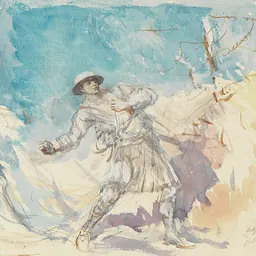
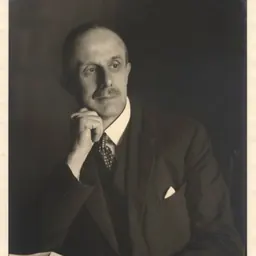
Same field, nearest in time


Contemporaries
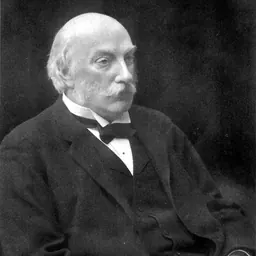
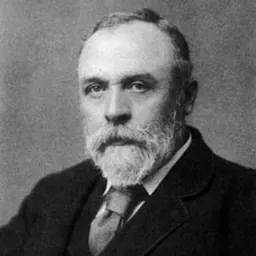
People whose lives overlapped Giuseppe Palanti's



Frequently asked questions
Who was Giuseppe Palanti?
Italian painter (1881-1946)
When was Giuseppe Palanti born?
Giuseppe Palanti was born on 30 July 1881 in Milan.
When did Giuseppe Palanti die?
Giuseppe Palanti died on 23 April 1946 in Milan.
What was Giuseppe Palanti's occupation?
Giuseppe Palanti was a painter, fashion figure artist and costume designer.
What nationality was Giuseppe Palanti?
Giuseppe Palanti was Italian.
Sources & further reading
Cite this page
APA: Biography.guide. (2026). Giuseppe Palanti. https://biography.guide/giuseppe-palanti/
MLA: "Giuseppe Palanti." Biography.guide, https://biography.guide/giuseppe-palanti/.
Chicago: "Giuseppe Palanti." Biography.guide. https://biography.guide/giuseppe-palanti/.
Data last updated: 2026-09-20 · Spot an error? Report a correction.
Portrait: Wikimedia Commons · author & licence
Page generated 2026-09-27 04:57 UTC