
About Giuseppe Arimondi
Lived 1846 – 1896 (aged 49). Giuseppe Arimondi was an Italian military personnel.
Giuseppe Edoardo Arimondi, OSML, OMS, OCI (26 April 1846 – 1 March 1896) was an Italian general, mostly known for his role during the First Italo-Ethiopian War. He was one of the few European commanders who gained a victory over the Mahdists before Kitchener's Expedition, soundly defeating them at Agordat in 1893. After a long and successful colonial service, he died in combat at Adwa, and was posthumously awarded the Gold Medal of Military Valour.
Early life Born in Savigliano on 26 April 1846, Arimondi attended the Royal Military Academy in Modena. After graduating in 1865, he was appointed sub-lieutenant in the Bersaglieri, and fought in the 1866 Italo-Austrian War. Upon reaching the rank of captain he served as a military observer during the Franco-Prussian War. He then attended the School of War and in 1874 was promoted major in the Army Staff.
Colonial service in Eritrea In 1887, Arimondi was assigned as a staff officer to the expeditionary corps of General Alessandro Asinari di San Marzano and left for Eritrea, where he stayed until 1890. In 1892, he was promoted to colonel and sent again to Eritrea with full command of all native troops in the colony. In this position, he won a series of minor clashes and defeated the Dervishes under Emir Ahmed Alì at the Second Battle of Agordat in December 1893. In this battle, he remarkably decided to deploy his men in an extended battle line, with reserves echeloned at the rear. This caught by surprise the Mahdists, who were expecting close square formations as the ones adopted by British infantry in previous engagements. For this victory he received a promotion to major general.
In 1894 he commanded the 2nd Operational Corps under General Oreste Baratieri, fighting the Battle of Kassala and the Battle of Coatit. Arimondi urged rapid and daring offensive manoeuvres and quarreled with Baratieri's more cautious plans. When the Governor refused to support his projects of a preventive attack against Menelik II in Tigray, he twice requested permission to return home. The Minister of War refused, not willing to replace one of the most experienced colonial officers. Arimondi estimated Menelik's forces at 50,000–60,000 warriors and, supported by his colleagues, urged for an aggressive approach.
At midnight it was found that the track followed by Albertone and Arimondi were converging. Arimondi stopped and let Albertone pass ahead. The Native Brigade marched faster than the two European formations and by 3:30 a.m. Albertone reached his position. His guides, though, informed him that the brigade was on Erarà Hill and not on the Kidane Meret, as intended. Albertone thus decided to resume the march until he reached what his guides reported as the 'real' Kidane Meret, away.
This decision opened a wide gap in the Italian lines, and isolated Albertone's force from Arimondi and Dabormida. The two Italian brigades had deployed on the Rebbi Arienni by 5:30 a.m., while on the Kidane Meret Albertone was launching his attack on the Ethiopian camp. The Native Brigade at first met little resistance, but was soon repulsed by the larger number of enemy troops.
Albertone's collapse At 6:30 a.m., Baratieri reached the Rebbi Arienni and heard the sounds of the fight on the left. He ordered Dabormida to relieve the pressure on Albertone, then brought up the reserve to occupy the position vacated by Dabormida. At 8:15 a.m. a message from Albertone (sent at 7:00 a.m.) reached Baratieri: the general was under heavy attack and in dire need of reinforcements. Baratieri ordered Arimondi to advance and form his line between Mount Rajo and Bellah, while Ellena occupied the Rebbi Arienni.
Due to the broken ground which slowed his progress, Arimondi completed his movement at 9:00 a.m. Almost immediately he came upon a trickle of wounded soldiers from Albertone's brigade, which had been forced to retreat on the nearby Mount Semaiata. Within half an hour the trickle became a stream and Baratieri sent Albertone orders to retire and reform under Arimondi's cover. It was too late: the Colonial Brigade, out of ammunition, disintegrated shortly afterwards. At 10:00 a.m. the Ethiopian forces, mixed with the fleeing Ascaris, launched their first assault on Arimondi's position.
Arimondi's stand and death After the initial Ethiopian attacks were repulsed, Menelik sent his guard to outflank the left side of Arimondi's forces. The colonial battalion of Galliano, the only unit Ellena could detach to guard Arimondi's right flank, was overwhelmed. But although the Ethiopian rifle fire was very ineffective, the Italians were dismayed by enemy groups that were attempting to outflank them. A group that had nestled on the Mount Belah forced two Bersaglieri battalions to retreat, while a Alpini reserve battalion sent to halt the advance was completely annihilated, with only 95 out of the 608 men managing to survive. Meanwhile, the Ethiopians were boldly advancing to the main Italian positions on Mount Rajo and were firing at the Italians at almost point-blank range.
With Arimondi's brigade hard-pressed on the front and outflanked on both sides, General Baratieri ordered a general retreat at 12:30. Once the retreat began, the Galla horsemen rushed forward and began slaughtering the fleeing Italians in large numbers. During this chaotic phase, Arimondi bravely attempted to save his artillery batteries. He was then killed in hand to hand fighting while trying to load a cannon carriage onto a mule.
Awards and decorations
80px Commander of the Order of the Crown of Italy – June 1895. Previously promoted Officer in January 1895.
Don’t just read it —
keep it.
Full-length biographies made to live with: read them, listen on the way to work, watch them tonight.
- E-book
- Audio
- Video
Instant download · yours to keep · every purchase keeps this site free
Important facts
People in Giuseppe Arimondi's life
Named in this biography and alive at the same time


Related people
Same field, nearest in time
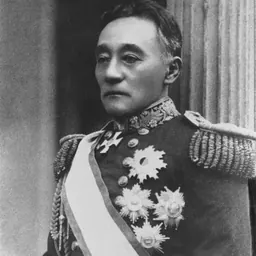
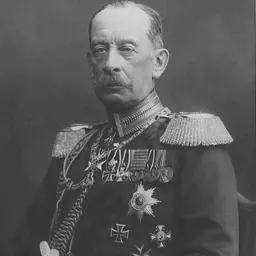


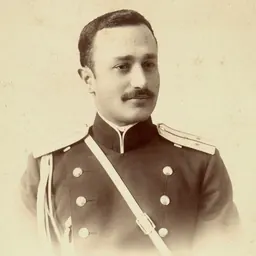
Contemporaries
People whose lives overlapped Giuseppe Arimondi's
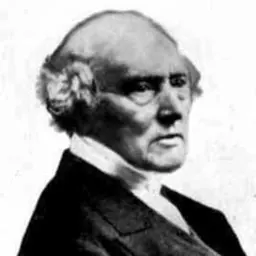



Frequently asked questions
Who was Giuseppe Arimondi?
Italian general officer (1846–1896)
When was Giuseppe Arimondi born?
Giuseppe Arimondi was born on 26 April 1846 in Savigliano.
When did Giuseppe Arimondi die?
Giuseppe Arimondi died on 1 March 1896 in Adwa.
What was Giuseppe Arimondi's occupation?
Giuseppe Arimondi was a military personnel.
What nationality was Giuseppe Arimondi?
Giuseppe Arimondi was Italian.
Sources & further reading
· Wikipedia: Giuseppe Arimondi
Cite this page
APA: Biography.guide. (2026). Giuseppe Arimondi. https://biography.guide/giuseppe-arimondi/
MLA: "Giuseppe Arimondi." Biography.guide, https://biography.guide/giuseppe-arimondi/.
Chicago: "Giuseppe Arimondi." Biography.guide. https://biography.guide/giuseppe-arimondi/.
Data last updated: 2026-09-20 · Spot an error? Report a correction.
Page generated 2026-09-27 05:21 UTC