
About Giselher Wirsing
Lived 1907 – 1975 (aged 67–68). Giselher Wirsing was a German journalist and author.
Giselher Wirsing (born Max Emanuel Wirsing; April 15, 1907 – September 23, 1975) was a right-wing German journalist, author, and foreign policy expert who was active during Nazi Germany and the Bonn Republic. He was a member of the Nazi party and contributed heavily to the creation and propagation of Nazi propaganda outside Germany.
Biography
Early life and studies Max Emanuel Wirsing was the son of wealthy parents Friedrich and Pauline Wirsing. He had one sibling, an older sister. He studied at various universities, including the Ludwig-Maximilians-Universität München, the University of Königsberg, the University of Latvia, the Humboldt University of Berlin, and the University of Vienna. During this period, he changed his name to Giselher, and was involved with the right wing student association Deutsche Gildenschaft.
Beginning in 1928, Wirsing travelled through Central and Eastern Europe. He wrote about his travels in conservative magazine Die Tat. He became friends with brothers Gregor and Otto Strasser, two early members of the Nazi Party and began to associate with others in Nazi circles. He also travelled to the United States in 1930 as an associate of the , a secret subsidiary of the Rockefeller Foundation.
He eventually completed his studies in economics at Heidelberg University in 1929, then obtained his doctorate in political science in 1931.
Nazi associations In 1932, he published his first book Zwischeneuropa und die deutsche Zukunft ("Inter-Europe and the German future"), followed by Deutschland in der Weltpolitik ("Germany in World Politics") in 1933. He continued to write for Die Tat in association with other right-wing figures such as Hans Zehrer, Ferdinand Zimmermann, and Ernst Wilhelm Eschmann. He was made editor of Die Tat in 1933. In October 1933, at the suggestion of Heinrich Himmler, he was appointed Head of Policy at the Münchner Neueste Nachrichten ("Munich's Latest News").
Also in 1934, Wirsing became an Anwärter, or candidate, for the Schutzstaffel (SS), and began working as an informant for the Nazi intelligence agency Sicherheitsdienst (SD).
On November 1, 1938, Wirsing was promoted to the rank of Hauptsturmführer of the SS (equivalent to captain), and was made chief editor of the Münchner Neuesten Nachrichten in addition to his continuing work as editor of Die Tat (which began publishing as Das XX in 1939). He travelled to the United States in 1938. He also worked as a consultant for the cultural policy department of the Federal Foreign Office, for which he wrote anti-Bolshevik language regulations until the end of World War II.
Nazi party involvement and propaganda Wirsing formally joined the Nazi Party in 1940. Wirsing gave a lecture at the Frankfurt opening of the Alfred Rosenberg-led Institute for Study of the Jewish Question on March 27, 1941.
He published his view of the government and culture of the United States in his 1942 book Der maßlose Kontinent (The Excessive Continent). The book contrasted the American system, which he believed was manipulated by Jewish influence, with a proposed "new world order" in the form of a German-dominated European hegemony. The book was favored by Nazi propaganda minister Joseph Goebbels, who discussed the book in his diary that year.
In 1943 Wirsing became editor of Nazi propaganda magazine Signal, later becoming its editor-in-chief in 1945. Until 1944, Wirsing wrote for the Deutsche Informationsstelle ("German Office of Information") in Berlin. The Deutsche Informationsstelle was an SS propaganda institute specializing in translations of propaganda into various European languages.
He occasionally published under the pen name Vindex, as with the 1944 French-language propaganda booklet Stalinisme: la politique sovietique pendant la deuxieme guerre mondiale ("Stalinism: Soviet politics during the Second World War"). This booklet argued that Soviet imperialism posed an immediate threat to the nations of Europe. A Swedish-language edition was also published, titled Stalinismen. Sovjetpolitiken under det andra världskriget. During the summer of 1944, the German Information Office in Stockholm distributed 7,700 copies of this booklet.
Egmont reports By September 1944, it had become clear to some Nazi officials that both political and military defeat were impending. General Walter Schellenberg commissioned Wirsing to begin preparing reports considering potential outcomes of such a defeat, based on various sources including SD information provided to Office VI of the Reich Security Main Office. In order to preserve his anonymity and allow for purportedly-accurate reporting, the reports were signed with the name Egmont and became known as the Egmont reports. Between October 1944 and March 1945, twelve or thirteen Egmont reports were written.
Later that year, Wirsing co-founded conservative Evangelical Christian weekly ,
In 1967, German magazine Der Spiegel reported that Wirsing had demanded the "violent elimination of the Jewish element" in the fourth edition of Der maßlose Kontinent, printed in 1943, which they argued had contributed to the "expediency of Auschwitz" and therefore implicating Wirsing in Nazi war crimes. Wirsing threatened Der Spiegel with legal action.
On April 16, 1959, Wirsing published an article in Christ und Welt which described a man he felt was "a second Albert Schweitzer" working in a remote area of Ghana, in West Africa. The man he was describing was actually the Nazi doctor and SS officer Horst Schumann, then a fugitive; he was extradited to Germany in 1966 to be prosecuted for Nazi war crimes.
Personal life Giselher Wirsing was married twice. His first wife was Ellen Rösler, with whom he had two daughters, including journalist . His second wife was publicist Gisela Bonn. Bonn and Wirsing wrote several books together.
Don’t just read it —
keep it.
Full-length biographies made to live with: read them, listen on the way to work, watch them tonight.
- E-book
- Audio
- Video
Instant download · yours to keep · every purchase keeps this site free
Important facts
People in Giselher Wirsing's life
Named in this biography and alive at the same time


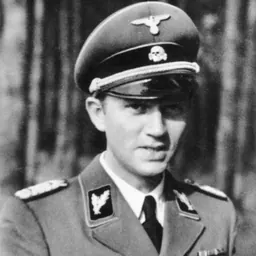
Related people
Same field, nearest in time



Contemporaries
People whose lives overlapped Giselher Wirsing's



Frequently asked questions
Who was Giselher Wirsing?
German journalist (1907–1975)
When was Giselher Wirsing born?
Giselher Wirsing was born in 1907 in Schweinfurt.
When did Giselher Wirsing die?
Giselher Wirsing died in 1975 in Stuttgart.
What was Giselher Wirsing's occupation?
Giselher Wirsing was a journalist and author.
What nationality was Giselher Wirsing?
Giselher Wirsing was German.
Sources & further reading
Cite this page
APA: Biography.guide. (2026). Giselher Wirsing. https://biography.guide/giselher-wirsing/
MLA: "Giselher Wirsing." Biography.guide, https://biography.guide/giselher-wirsing/.
Chicago: "Giselher Wirsing." Biography.guide. https://biography.guide/giselher-wirsing/.
Data last updated: 2026-09-20 · Spot an error? Report a correction.
Page generated 2026-09-27 05:08 UTC