
About Gisèle van Waterschoot van der Gracht
Lived 1912 – 2013 (aged 100). Gisèle van Waterschoot van der Gracht was a Dutch artist, publisher, painter, glass artist, resistance fighter and textile artist.
Gisèle d'Ailly van Waterschoot van der Gracht (11 September 1912 – 28 May 2013), also known by the mononym Gisèle, was a Dutch visual artist. During World War II, she operated a safe house out of her home for a group of young Jewish people in one of the apartments at the Herengracht 401, in the center of Amsterdam.
In 2019 a report was published by former judge Frans Bauduin about years of structural sexual abuse conducted by Wolfgang Frommel in the house of Gisele.
Biography
Early life Gisèle van Waterschoot van der Gracht was born in The Hague, Netherlands in 1912. She was the youngest of four children: Ides, Arthur and Walter. Her mother, Josephine von Hammer Purgstall, was an Austrian baroness. Her father, Willem van Waterschoot van der Gracht, was a geologist who worked for Royal Dutch Shell. Van Waterschoot spent the first three years of her life in the Netherlands, and then she and her family relocated to the United States due to her father’s work.
Throughout her childhood and young years, Gisèle and the rest of her family were rigorously exposed to Catholicism. Similarly to her mother, Gisèle attended the boarding school run by the sisters of The Sacred Heart when living in the U.S. In 1928, Gisèle and her parents travelled back to Europe and to Hainfeld’s castle in Austria, property of her mother’s family. Due to the move, Gisèle's formal education at the boarding school came to an end.
Art education and early career In 1930, she began to pursue a Fine Art education at Académie Julian, in Paris. At the Académie de la Grande Chaumière, Gisèle received lessons from Bernard Naudin. The study mainly involved working with models. At Edouard Henri Léon’s studio she learned various techniques of etching and engraving. Her examination piece, a large print after a self-portrait by Jean-Honoré Fragonard entitled L’Inspiration, gained her a Mention Honorable, Section Gravure at the 1931 Salon. By 1939 she had her own studio and received her first independent commission for seven stained glass windows in the church of Oostrom, Limburg. While in hiding, the group of artists and writers codenamed their shelter "Castrum Peregrini" and covertly studied art and literature. The members of the group survived the war.
Van Waterschoot supported herself and her lodgers during the war by selling commissioned paintings.
After the end of World War II, van Waterschoot bought the apartment building to convert to a single home where she lived and worked on and off for the rest of her life. She later donated the building to the Castrum Peregrini foundation, which operates as a cultural foundation under the name of Stichting Herengracht 401 (H401).
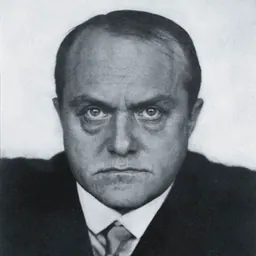
Later career After World War II, she had the chance to reunite with her family. Her father had died in 1943, but her mother in the Netherlands and two brothers in the U.S.A. were still alive. In June 1945, she was reunited with Ides in Amsterdam, who had served as a highly ranked officer in the American army during the liberation of Europe. For a short period, she went back to America with her brothers, and while there she supported the fund for Dutch art in the aftermath of the war. In 1946, her work was featured in a group exhibition at Schaeffer Galleries in New York. She introduced three of her friends: Simon van Keulen, Peter Goldschmidt and Haro op ‘T Veldt. In the frame of this exhibition the fundraising campaign “Let Dutch Art Flower again” (New York, U.S.A.) started. van Waterschoot was friends with artist Max Beckmann and stored some of his paintings during his long period of exile from Germany. Following her mother's death in 1955, Gisèle was no longer tied to extreme financial needs, and was able to explore different art and painting expressions.
Personal life and death In 1959, van Waterschoot married Arnold Jan d'Ailly, who was mayor of Amsterdam from 1946 to 1956. van Waterschoot died in 2013 in Amsterdam.
Recognitions and legacy In honor of her actions during the war, van Waterschoot was named a Knight of the Order of Orange-Nassau. She received the Righteous Among the Nations recognition in 1997. Several institutions hold her artwork including the Castrum Peregrini foundation, Centraal Museum Utrecht, and Museum Van Loon. In 2018, a biography of van Waterschoot titled De eeuw van Gisèle (The Century of Gisèle) was published by Annet Mooij.
Don’t just read it —
keep it.
Full-length biographies made to live with: read them, listen on the way to work, watch them tonight.
- E-book
- Audio
- Video
Instant download · yours to keep · every purchase keeps this site free
Important facts
People in Gisèle van Waterschoot van der Gracht's life
Named in this biography and alive at the same time


Related people
Same field, nearest in time




Contemporaries
People whose lives overlapped Gisèle van Waterschoot van der Gracht's





Frequently asked questions
Who was Gisèle van Waterschoot van der Gracht?
Dutch artist, publisher and painter (1912-2013)
When was Gisèle van Waterschoot van der Gracht born?
Gisèle van Waterschoot van der Gracht was born on 11 September 1912 in The Hague.
When did Gisèle van Waterschoot van der Gracht die?
Gisèle van Waterschoot van der Gracht died on 27 May 2013 in Amsterdam.
What was Gisèle van Waterschoot van der Gracht's occupation?
Gisèle van Waterschoot van der Gracht was an artist, publisher, painter, glass artist, resistance fighter and textile artist.
What nationality was Gisèle van Waterschoot van der Gracht?
Gisèle van Waterschoot van der Gracht was Dutch.
Sources & further reading
· Wikipedia: Gisèle van Waterschoot van der Gracht
· DBpedia: Gisèle d'Ailly van Waterschoot van der Gracht
Cite this page
APA: Biography.guide. (2026). Gisèle van Waterschoot van der Gracht. https://biography.guide/gisele-van-waterschoot-van-der-gracht/
MLA: "Gisèle van Waterschoot van der Gracht." Biography.guide, https://biography.guide/gisele-van-waterschoot-van-der-gracht/.
Chicago: "Gisèle van Waterschoot van der Gracht." Biography.guide. https://biography.guide/gisele-van-waterschoot-van-der-gracht/.
Data last updated: 2026-09-20 · Spot an error? Report a correction.
Page generated 2026-09-27 05:32 UTC