
About Gisela Hernández
Lived 1912 – 1971 (aged 58). Gisela Hernández was a Cuban composer, music educator, pedagogue and choir director.
Gisela Hernández Gonzalo (1912−1971) was a Cuban composer. Aware of political necessity, she established ties with the Castro government in return for recognition of her activities as a music teacher and composer. She was also a member of the nationalistic Grupo Minorista that led a movement to incorporate Afro-Cuban sounds into larger forms of music.
Hernández taught music at the Hubert de Blanck Conservatory, and with Olga De Blanck Martín, director of the conservatory, she developed a music education system that made significant changes in Mexican music education. With de Blanck, she also co-founded Ediciones de Blanck publishing and became instrumental in publishing critical editions of Ignacio Cervantes' music.
Works Hernández often used Afro-Cuban elements in her compositions. Selected works include: Triptico, song cycle, 1967 (Text: Guillén, poet) “Palma sola” “¡Ay, señora mi vencia!” “Sangres derramadas” Deprisa tierra, deprisa (in Nueve canciones) (Text: Juan Ramón Jiménez) Diálogo (in Nueve canciones) (Text: Dulce María Loynaz) Huerto de marzo (in Nueve canciones) (Text: Federico García Lorca) Mi corazón lo tragó el mar (in Nueve canciones) (Text: Mirta Aguirre Carreras) Romancillo (in Nueve canciones) (Text: Federico García Lorca) Sólo por el rocío (in Nueve canciones) (Text: Federico García Lorca) Tránsito (in Nueve canciones) (Text: Rabindranath Tagore) Única mar (in Nueve canciones) (Text: Mirta Aguirre Carreras) Voy a medirme el amor (in Nueve canciones) (Text: Dulce María Loynaz)
Other solo vocal works include: “Ay, señora, mi vecina!” “Canto X” (Cintio Vitier) “Cómo vendrás” “Dones” (C. Solis) Dos cantos de cuna “Gaucho de oro fino (Retrato del Ché)” “Iba yo por un camino” (Guillén) “La palma” (Jiménez) “Miraba la noche el alma” (Angel Gaztelu) “Miraba la noche el mar” “Si, acudiras” “Víspera” (Mariano Brull)
Hernández also composed chamber music and works for solo piano, orchestra, and choir.
Her works have been recorded and issued on CD, including: Juana Zayas:A Treasury of Cuban Piano Classics Audio CD (January 1, 2006) Music & Arts Programs of America, ASIN: B000050HYQ
Don’t just read it —
keep it.
Full-length biographies made to live with: read them, listen on the way to work, watch them tonight.
- E-book
- Audio
- Video
Instant download · yours to keep · every purchase keeps this site free
Important facts
People in Gisela Hernández's life
Named in this biography and alive at the same time
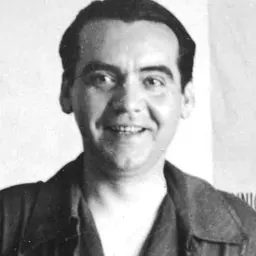



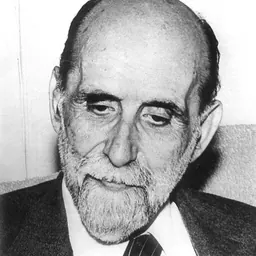
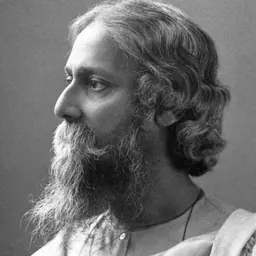
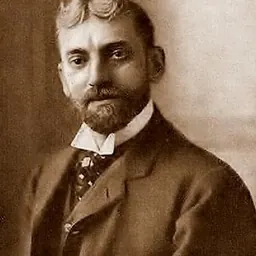
Related people
Same field, nearest in time



Contemporaries
People whose lives overlapped Gisela Hernández's





Frequently asked questions
Who was Gisela Hernández?
Cuban composer (1912–1971)
When was Gisela Hernández born?
Gisela Hernández was born on 15 September 1912 in Cárdenas.
When did Gisela Hernández die?
Gisela Hernández died on 23 August 1971 in Havana.
What was Gisela Hernández's occupation?
Gisela Hernández was a composer, music educator, pedagogue and choir director.
What nationality was Gisela Hernández?
Gisela Hernández was Cuban.
Sources & further reading
Cite this page
APA: Biography.guide. (2026). Gisela Hernández. https://biography.guide/gisela-hernandez/
MLA: "Gisela Hernández." Biography.guide, https://biography.guide/gisela-hernandez/.
Chicago: "Gisela Hernández." Biography.guide. https://biography.guide/gisela-hernandez/.
Data last updated: 2026-09-20 · Spot an error? Report a correction.
Page generated 2026-09-27 05:29 UTC