
Giovanni Battista Sommariva
Italian politician and patron
About Giovanni Battista Sommariva
Lived 1762 – 1826 (aged 63). Giovanni Battista Sommariva was a politician, patron of the arts, banker, aristocrat, jurist and count.
Giovanni or Gian Battista Sommariva (died 6 January 1826 in Milan) was an Italian politician of the Cisalpine Republic and a notable arts patron.
Biography Born in 1762 in Sant'Angelo Lodigiano, of a humble family, he eventually became a wealthy barrister. He was living in Milan by 1796 when Napoleon’s army entered the city. Sommariva took the side of the French and he was recruited to become secretary general of the directory of the Cisalpine Republic. In 1799, he fled from Milan to France to escape the armies of Suvorov. He returned to Italy after the Battle of Marengo and was the virtual dictator of Milan from 1800 to 1802, amassing a personal fortune and making many enemies due to his unscrupulous behaviour. When Napoleon replaced him with Francesco Melzi d'Eril, Sommariva turned his attention to building a collection of contemporary art, which he displayed in his villa (now the Villa Carlotta) at Tremezzo on Lake Como.
In 1806 he moved to Paris, bought a town house there, as well as large a country estate at Montmorency, north of the city, and increased his patronage of contemporary artists. He commissioned works from many important French and Italian artists of the early 19th century, including Jacques-Louis David (e.g. Cupid and Psyche, 1817; Cleveland Museum of Art). Sommariva preferred the Neoclassical style and mythological subjects, which often stress the theme of peace and its delights. He was the most important patron in France of Italian sculptors, especially of Antonio Canova, whose Penitent Magdalene (marble, 1794–6; Genoa, Museo di Sant'Agostino) he acquired. He also commissioned engravings and enamels after his paintings for the purpose of advertising his collection and furthering his social ambitions. His liaison with Sophie d'Houdetot placed him within the circle of her influential salon.
Following his death in 1826 his son Luigi Sommariva took part of the Paris collection to the villa on Lake Como, where he continued to add to it. After Luigi’s death in 1838 most of the paintings and sculptures remaining from his father’s collection in Paris, including many copies of Old Master paintings, were auctioned by Luigi’s widow. Three paintings by Pierre-Paul Prud'hon set record prices at auction; another painting, Transported by Zephyrs (1808), was donated to the Louvre.
Don’t just read it —
keep it.
Full-length biographies made to live with: read them, listen on the way to work, watch them tonight.
- E-book
- Audio
- Video
Instant download · yours to keep · every purchase keeps this site free
Important facts
People in Giovanni Battista Sommariva's life
Named in this biography and alive at the same time
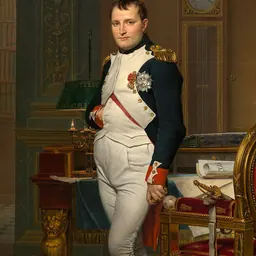
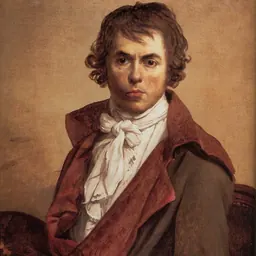

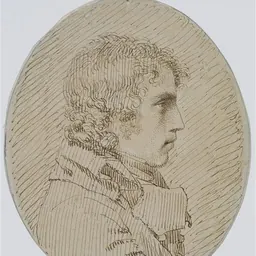
Related people
Same field, nearest in time


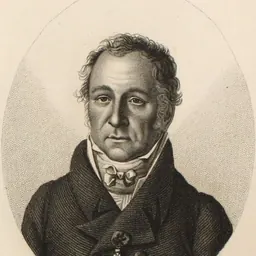

Contemporaries
People whose lives overlapped Giovanni Battista Sommariva's





Frequently asked questions
Who was Giovanni Battista Sommariva?
Italian politician and patron (1762-1826)
When was Giovanni Battista Sommariva born?
Giovanni Battista Sommariva was born on 12 August 1762 in Sant'Angelo Lodigiano.
When did Giovanni Battista Sommariva die?
Giovanni Battista Sommariva died on 6 January 1826 in Milan.
What was Giovanni Battista Sommariva's occupation?
Giovanni Battista Sommariva was a politician, patron of the arts, banker, aristocrat, jurist and count.
Sources & further reading
· Wikipedia: Giovanni Battista Sommariva
· DBpedia: Giovanni Battista Sommariva
Cite this page
APA: Biography.guide. (2026). Giovanni Battista Sommariva. https://biography.guide/giovanni-battista-sommariva/
MLA: "Giovanni Battista Sommariva." Biography.guide, https://biography.guide/giovanni-battista-sommariva/.
Chicago: "Giovanni Battista Sommariva." Biography.guide. https://biography.guide/giovanni-battista-sommariva/.
Data last updated: 2026-09-20 · Spot an error? Report a correction.
Page generated 2026-09-27 05:22 UTC