
About Giovanni Battista Rizza
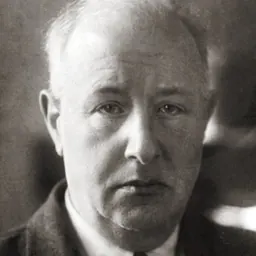
Lived 1924 – 2018 (aged 94). Giovanni Battista Rizza was an Italian mathematician, known for Hypercomplex analysis, Pluriharmonic function and Rizza manifold.
Giovanni Battista Rizza (7 February 1924 – 15 October 2018), officially known as Giambattista Rizza, was an Italian mathematician, working in the fields of complex analysis of several variables and in differential geometry: he is known for his contribution to hypercomplex analysis, notably for extending Cauchy's integral theorem and Cauchy's integral formula to complex functions of a hypercomplex variable, the theory of pluriharmonic functions and for the introduction of the now called Rizza manifolds.
Biography The International Symposium on Algebraic Geometry held in Rome in 1965. Enrico Bompiani talking to Giovanni Battista Rizza and Vittorio Dalla Volta.
Life and academic career Born in Piazza Armerina, the son of Giovanni and Angioletta Bocciarelli, he graduated from the Università degli Studi di Genova, earning his laurea degree in 1949 under the direction of Enzo Martinelli. In 1956 he was in Rome at the INdAM, having been awarded a scholarship for his early research activities. A year later, in 1957, he was elected "discepolo ricercatore" in the same institute. During the same year, he gave some lectures on topics belonging to the field of several complex variables, later included in the lecture notes . In Rome he also met Lucilla Bassotti, who eventually become his wife. In 1961, he won the competitive examination for the chair of "Geometria analitica con elementi di Geometria Proiettiva e Geometria Descrittiva con Disegno" of the University of Parma, scoring first out of the three finalists: a year later, in 1962, he became extraordinary professor, and then, in 1965, ordinary professor to the same chair. In 1979 he became ordinary professor of "Geometria superiore", holding that chair uninterruptedly until 1994: from 1994 up to his retirement in 1997, he was "professore fuori ruolo" in the same department of mathematics where he worked for more than 35 years.
Apart from his research and teaching work, he was actively involved as a member of the editorial board of the "Rivista di Matematica della Università di Parma", and served also as the journal director from 1992 to 1997.
Rizza died in Parma on 15 October 2018, at the age of 94.
Honors In 1954 he was awarded the Ottorino Pomini prize by the Unione Matematica Italiana, jointly with Gabriele Darbo: the judging commission was composed by Giovanni Sansone (as the president), Alessandro Terracini, Beniamino Segre, Giuseppe Scorza-Dragoni, Carlo Miranda, Mario Villa and Enzo Martinelli (as the secretary).
In 1995, to celebrate his 70th birthday, an international conference on differential geometry was organized in Parma: the proceedings were later published as a special issue of the "Rivista di Matematica della Università di Parma". In 1999 the University of Parma, where he worked for more than 35 years, awarded him the title of professor emeritus.
Rizza was an honorary member of the Balkan Society of Geometers and life member of the Tensor Society.
Personality traits Enzo Martinelli described Giovanni Battista Rizza as a passionate researcher with a "strong intellectual force", and his scientific work as rich of geometrical ideas, denoting his strong algorithmic ability. According to Martinelli, Rizza is also a skilled organizer: his ability in organizational tasks is also acknowledged and praised by , who also alludes the positive opinions of colleagues and students alike about his involvement in research, teaching and administrative duties at the mathematics department of the University of Parma.
Work
Research activity Giovanni Battista Rizza authored 53 research papers and 30 other scientific works, including research announcements, short notes, surveys and reports: he also wrote didactic notes and papers on historical topics, including commemorations of other scientists. His main fields of research were the theory of functions on algebras, the theory of functions of several complex variables, and differential geometry.
Theory of functions on algebras The theory of functions on algebras, also referred to as hypercomplex analysis, is the study of functions whose domain is a subset of an algebra. The first works of Giovanni Battista Rizza belong to this field of research, and he was awarded the Premio Ottorino Pomini for his contributions.
where is a 1-dimensional cycle homologous to zero, and also satisfying other technical conditions.
Few years later, he extended Cauchy's integral formula to every monogenic function on a commutative normed real algebra , isomorphic to a given complex algebra : precisely, he proves the formula
where identifies indifferently a point in the complex algebra or in its isomorphic real algebra , is again a 1-dimensional cycle homologous to zero, and satisfying other technical conditions, is the winding number of the cycle respect to the zero divisor locus for the considered algebra.
Theory of analytic functions of several complex variables
Rizza published only three work in this field: in the first one, the highly remarkable memoir , he extends to pluriharmonic functions of real variables, , the methods introduced by Enzo Martinelli in order to give new proof of a result of Luigi Amoroso for pluriharmonic functions of four real variables. Precisely, he proves the following formula
where is a polyharmonic function defined on a bounded domain , is a real analytic function defining the boundary of by the equation
is a linear combination of the Levi forms of relative to couples of complex variables, is a linear tangential operator defined on . Formula express a condition the normal derivative of the boundary value of a pluriharmonic function on domain with real analytic boundary must satisfy. It can be used to construct an integral representation for pluriharmonic functions on such kind of domains, by using the Green's formula for the Laplacian, and also to establish an integro-differential equation boundary values of pluriharmonic functions must satisfy. Rizza's result motivated other works on the same topic by Gaetano Fichera, Paolo de Bartolomeis and Giuseppe Tomassini.
Selected publications
Research works . In this work Rizza extends the classical Cauchy's integral theorem to monogenic functions on a general complex algebra.
. A short research announcement describing briefly the results proved in . , available at DigiZeitschirften. . In this work Rizza epitomizes all known extensions of the Levi invariant to hypersurfaces in for in a single tensor of hybrid type. This paper is also interesting since it traces the story of such extensions back to the pioneering work of Eugenio Elia Levi. . The notes from the lectures given by Giovanni Battista Rizza for a course held by Francesco Severi at the Istituto Nazionale di Alta Matematica: the full course notes, published as a monograph, include also a chapter by Enzo Martinelli and an appendix by Mario Benedicty). The topics he exposes are summarized by the two parts of the title, whose free English translations are "Explicit integral representation for –harmonic functions" and "Extension of the E. E. Levi invariant to the case of complex variables". . A short research announcement describing briefly the results proved in . . Another short presentation of the results proved in . . The article gives the proofs of the results previously announced in references and . . Shoshichi Kobayashi cites this article as the first one in the theory of Rizza manifolds. . . . In this work the authors introduce a new class of functions on a real algebra in the attempt of unifying the research trends on functions on real algebras in the seventies.
Historical, commemorative and survey papers . A short but comprehensive survey paper detailing the works on the field done by Italian mathematicians during the years from 1961 to 1973: however, it also includes several biographical references to other earlier works by non Italian mathematicians and to historical bibliographies on hypercomplex analysis. . The brief "participating address" presented to the International congress on the occasion of the celebration of the centenary of birth of Mauro Picone and Leonida Tonelli (held in Rome on May 6–9, 1985), by Giovanni Battista Rizza on behalf of the University of Parma: the scientific relations between Leonida Tonelli and the Department of Mathematics in Parma are described. . A celebrative paper written by Giovanni Battista Rizza to honor his former master. . . .
Don’t just read it —
keep it.
Full-length biographies made to live with: read them, listen on the way to work, watch them tonight.
- E-book
- Audio
- Video
Instant download · yours to keep · every purchase keeps this site free
Important facts
Family & relationships
People in Giovanni Battista Rizza's life
Named in this biography and alive at the same time





Related people
Same field, nearest in time



Contemporaries
People whose lives overlapped Giovanni Battista Rizza's


Frequently asked questions
Who was Giovanni Battista Rizza?
Italian mathematician (1924–2018)
When was Giovanni Battista Rizza born?
Giovanni Battista Rizza was born on 7 February 1924 in Piazza Armerina.
When did Giovanni Battista Rizza die?
Giovanni Battista Rizza died on 15 October 2018.
What was Giovanni Battista Rizza's occupation?
Giovanni Battista Rizza was a mathematician.
What was Giovanni Battista Rizza known for?
Giovanni Battista Rizza was known for Hypercomplex analysis, Pluriharmonic function and Rizza manifold.
What nationality was Giovanni Battista Rizza?
Giovanni Battista Rizza was Italian.
Sources & further reading
· Wikipedia: Giovanni Battista Rizza
· DBpedia: Giovanni Battista Rizza
Cite this page
APA: Biography.guide. (2026). Giovanni Battista Rizza. https://biography.guide/giovanni-battista-rizza/
MLA: "Giovanni Battista Rizza." Biography.guide, https://biography.guide/giovanni-battista-rizza/.
Chicago: "Giovanni Battista Rizza." Biography.guide. https://biography.guide/giovanni-battista-rizza/.
Data last updated: 2026-09-20 · Spot an error? Report a correction.
Page generated 2026-09-27 05:25 UTC