
About Giovanni Battista Borra
Lived 1713 – 1770 (aged 56). Giovanni Battista Borra was an Italian architect, engineer, visual artist, designer, draftsperson and illustrator.
Giovanni Battista Borra (27 December 1713 – November 1770) was an Italian architect, engineer and architectural draughtsman born in Dogliani and believed to have died in Turin.
Life Borra studied under Bernardo Antonio Vittone from 1733 to 1736 (producing 10 plates for his teacher's Istruzione elementari per indirizzo de' giovani allo studio dell'architettura civile, published in Lugano in 1760) In 1748 he published a work of his own, a handbook on the stability of buildings, practical in tone. He met Robert Wood in Rome, and joined his 1750–51 antiquarian expedition to Asia Minor and Syria as its architectural draughtsman. He returned with Wood to England, where he used his sketchbooks (now in the library of the Society for the Promotion of Hellenic Studies, London) to produce the original drawings (now in the Royal Institute of British Architects) for Wood's The Ruins of Balbec and The Ruins of Palmyra. From 1752 to 1760 he carried out commissions for English patrons. These works and their images led to motifs from Baalbek and Palmyra becoming fashionable for ceiling and interior decorations in England and Italy (Borra used them, for example, in his own work on the south facade of the Palazzo Isnardi and the interior decoration of its Sala d'Ercole and Sala di Diana, on the piano nobile).
Works Norfolk House, St James's Square, London (destroyed in 1938; Music Room reconstructed at the V&A) - Rococo interiors, 1755, commissioned by Mary Howard, Duchess of Norfolk Stowe House interior decoration, commissioned by Richard Grenville, 2nd Earl Temple. alterations to and execution of Robert Adam's design for the south front alterations to the garden buildings by John Vanbrugh and James Gibbs, so that they conformed to Grenville's taste for the Neo-classical Guarino Guarini's Castello dei Racconigi, near Turin (1676–83) - remodelling and extension, commissioned by Prince Ludovico di Carignano. Piedmontese palazzi, notably the Palazzo Isnardi di Caraglio in Turin (from c. 1766-7), in collaboration with Benedetto Innocente Alfieri Piedmontese churches chapel of Santo Sudario with a Palladian facade for the senate of Nice, 1763 1760-1770 - designed fortifications at Alessandria and several Piedmontese hydraulic projects
Don’t just read it —
keep it.
Full-length biographies made to live with: read them, listen on the way to work, watch them tonight.
- E-book
- Audio
- Video
Instant download · yours to keep · every purchase keeps this site free
Important facts
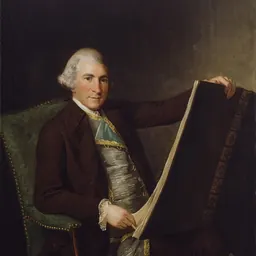
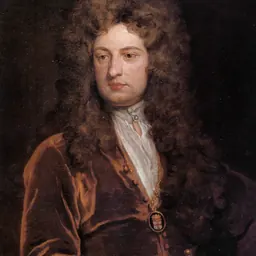
People in Giovanni Battista Borra's life
Named in this biography and alive at the same time




Related people
Same field, nearest in time


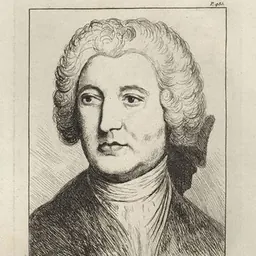
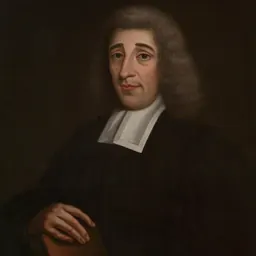
Contemporaries
People whose lives overlapped Giovanni Battista Borra's

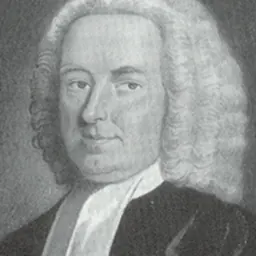


Frequently asked questions
Who was Giovanni Battista Borra?
Italian architect and engineer (1713–1770)
When was Giovanni Battista Borra born?
Giovanni Battista Borra was born on 27 December 1713 in Dogliani.
When did Giovanni Battista Borra die?
Giovanni Battista Borra died on 1 November 1770 in Turin.
What was Giovanni Battista Borra's occupation?
Giovanni Battista Borra was an architect, engineer, visual artist, designer, draftsperson and illustrator.
What nationality was Giovanni Battista Borra?
Giovanni Battista Borra was Italian.
Sources & further reading
· Wikipedia: Giovanni Battista Borra
· DBpedia: Giovanni Battista Borra
Cite this page
APA: Biography.guide. (2026). Giovanni Battista Borra. https://biography.guide/giovanni-battista-borra/
MLA: "Giovanni Battista Borra." Biography.guide, https://biography.guide/giovanni-battista-borra/.
Chicago: "Giovanni Battista Borra." Biography.guide. https://biography.guide/giovanni-battista-borra/.
Data last updated: 2026-09-20 · Spot an error? Report a correction.
Page generated 2026-09-27 05:20 UTC